
Ingredients
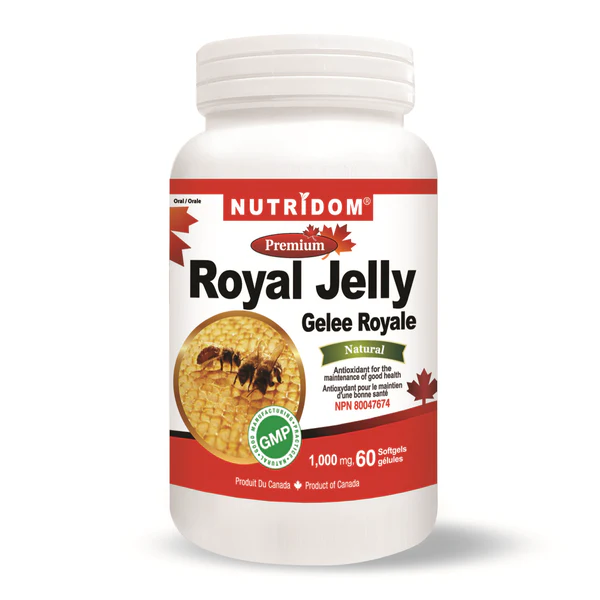
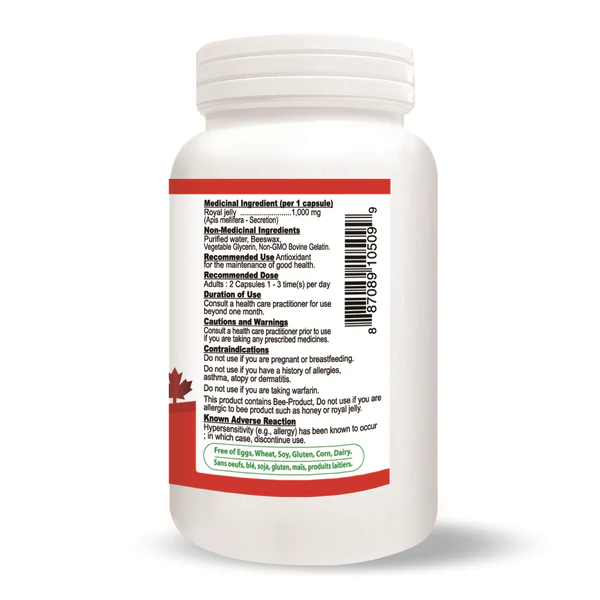
Medicinal Ingredients (per dose unit):
Royal Jelly (Apis mellifera- Secretion)…1000mg
Non-Medicinal Ingredients:
Purified water, Beeswax, Gelatin, Glycerin
Recommended use
Antioxidant for the maintenance of good health.
How to use
Duration of Use
Consult a health care practitioner for use beyond one month.
Recommended Dose
Adults : 2 Capsule(s) 1 – 3 time(s) per day
Cautions and Warnings
Consult a health care practitioner prior to use if you are taking any prescribed medicines.
Contraindications
Do not use if you are pregnant or breastfeeding.
Do not use if you have a history of allergies, asthma, atopy or dermatitis.
Do not use if you are taking warfarin.
This product contains Bee-Product, Do not use if you are allergic to bee product such as honey or royal jelly.
Known Adverse Reactions
Hypersensitivity (e.g., allergy) has been known to occur; in which case, discontinue use.
Description
What Is Royal Jelly?
Royal Jelly is the substance used by bees to feed and nurture the queen bee of the hive- as a result, she lives 40 times longer than regular bees. As a honey bee secretion, the jelly is used in the nutrition of bee larvae and adult queen bees. Knowing this, you would think that it’s only meant for the bees. However, what we’re finding is royal jelly is actually beneficial for people too. Royal jelly possesses various biological attributes beneficial for human health, such as antioxidant activities, antibacterial effects, and enhancement of immune activity.
What’s In Royal Jelly?
Royal jelly contains all the B vitamins, Vitamins A,C,D,E and contains 18 amino acids necessary for making protein in your body. In addition, royal jelly also contains potassium, magnesium, calcium, copper, sulfur, zinc, iron and manganese. Although the benefits of royal jelly have not yet been fully explored and utilized, studies suggest it may improve blood health, fight cancer, and lengthen life.
Royal jelly may cause allergic reactions in humans ranging from hives, asthma, to even fatal anaphylaxis. The incidence of allergic side effect in people that consume royal jelly is unknown. However, it has been suggested that the risk of having an allergy to royal jelly is higher in people who already have known allergies.


