Description:
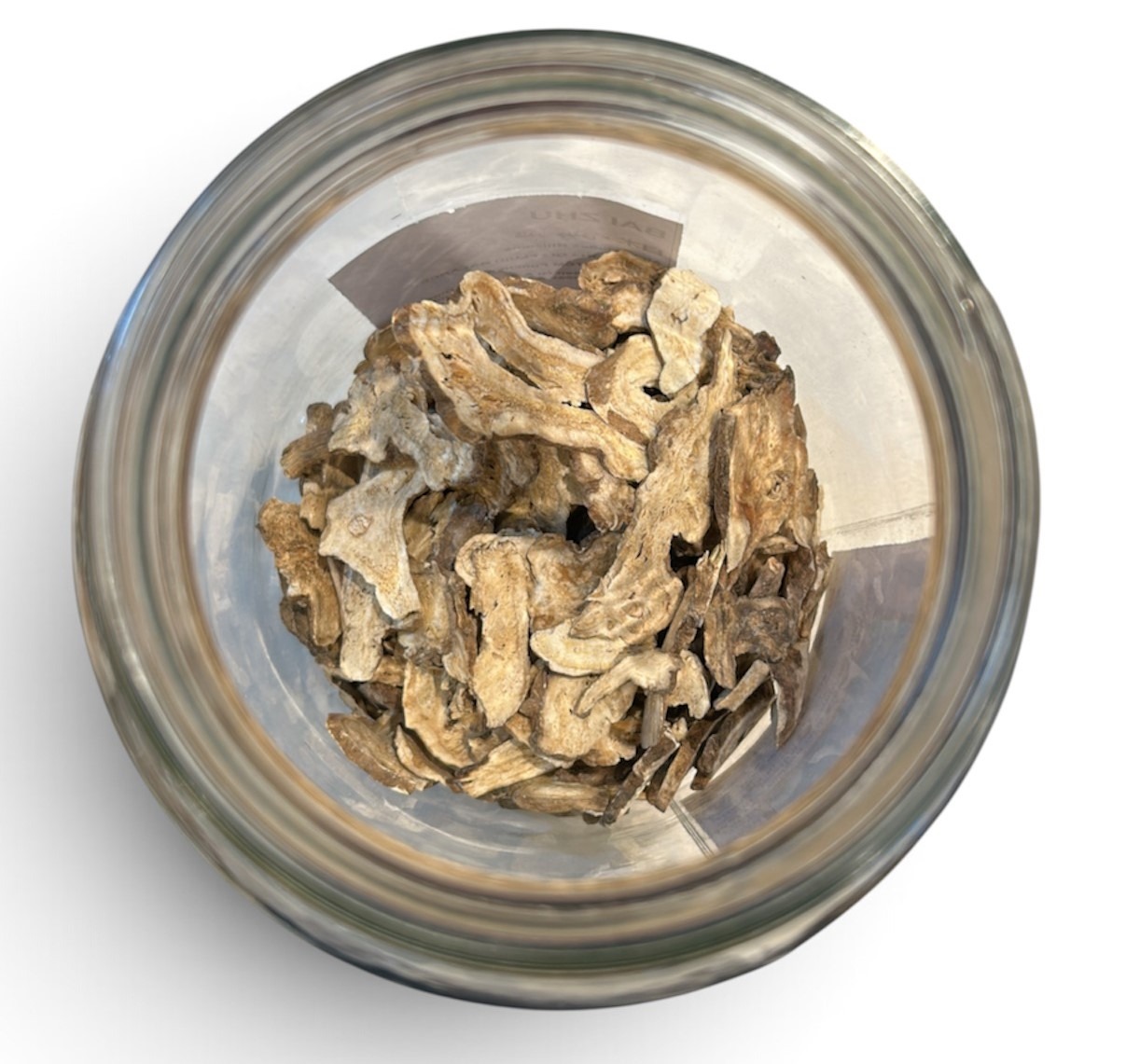
Bai Zhu (Atractylodes macrocephala) by Integrity Health Naturals is a traditional Chinese herbal medicine prepared from the dried rhizome of Atractylodes macrocephala Koidz., commonly known as Bai Zhu, White Atractylodes, or Largehead Atractylodes. Health Canada recognizes Atractylodes macrocephala as Bai Zhu and lists the medicinal ingredient as Rhizoma Atractylodis Macrocephalae within its Traditional Chinese Medicine ingredient database.
In Traditional Chinese Medicine (TCM), Bai Zhu is traditionally valued for its strengthening and drying properties, particularly its traditional affinity for the Spleen and Stomach. It is traditionally used to tonify Qi, strengthen the Spleen, dry Dampness, and promote the movement of fluids.
Bai Zhu is traditionally used for patterns associated with Spleen Qi deficiency, including reduced appetite, abdominal fullness or distension, loose stools or diarrhea, fatigue, and weakness. It is also traditionally used when Dampness and impaired fluid metabolism are associated with symptoms such as edema, heaviness, dizziness, or excessive sweating.
Benefits:
- Traditional Chinese herbal medicine prepared from Bai Zhu (Atractylodes macrocephala)
- Traditionally used to tonify Qi
- Traditionally used to strengthen the Spleen
- Traditionally used to support healthy digestive function associated with Spleen Qi deficiency
- Traditionally used for reduced appetite associated with Spleen Qi deficiency
- Traditionally used for abdominal fullness or distension
- Traditionally used for loose stools and diarrhea associated with Spleen deficiency
- Traditionally used to dry Dampness
- Traditionally used to promote urination and the movement of fluids
- Traditionally used for edema associated with Dampness
- Traditionally used to address weakness and fatigue associated with Spleen Qi deficiency
- Traditionally used to support fluid metabolism and reduce excessive sweating associated with traditional Spleen deficiency patterns
Other Names:
Bai Zhu, Bai Zhu (白术), Baizhu, White Atractylodes, Largehead Atractylodes, Atractylodes Rhizome, Atractylodes macrocephala, Atractylodes macrocephala Koidz., Rhizoma Atractylodis Macrocephalae, Atractylodis Macrocephalae Rhizoma, and Dong Bai Zhu.
Indian names: White Atractylodes, Atractylodes Rhizome.
Persian name: Bai Zhu (بای ژو), Atractylodes (آترکتیلودس).
Traditional Uses:
In Traditional Chinese Medicine, Bai Zhu is traditionally used to tonify Qi, strengthen the Spleen, dry Dampness, and promote the movement of fluids. It is traditionally selected according to an individual’s TCM pattern and constitution. Traditional literature particularly associates Bai Zhu with digestive weakness, poor appetite, abdominal distension, loose stools, diarrhea, and Dampness-related symptoms.
Side Effects:
Bai Zhu may cause unwanted effects in some individuals, including gastrointestinal discomfort, nausea, dry mouth, abdominal discomfort, or other digestive symptoms. Individual sensitivity can vary depending on the preparation, dose, and constitution.
Discontinue use and consult a healthcare practitioner if unwanted symptoms occur.
Precautions:
Consult a healthcare practitioner prior to use if you are taking prescription medications or other natural health products, or if you have a medical condition.
Do not use during pregnancy or breastfeeding unless directed by a qualified healthcare practitioner. Health Canada’s licensed Bai Zhu product information includes a contraindication against use during pregnancy or breastfeeding.
Consult a healthcare practitioner before use if you have a serious or major medical condition, acute infection, or a TCM pattern involving deficiency or excess. Health Canada’s licensed Bai Zhu product information advises consultation with a healthcare practitioner in these circumstances.
Discontinue use and consult a healthcare practitioner if symptoms persist or worsen or if new symptoms develop.
Interactions:
Consult a healthcare practitioner before using Bai Zhu with prescription medications or other natural health products, as potential interactions may occur. Human clinical interaction data for traditional Bai Zhu preparations remain limited.
Dosing:
Use according to the product label or as directed by a qualified healthcare practitioner or Traditional Chinese Medicine practitioner. Dosage may vary depending on whether Bai Zhu is used as a whole dried herb, powder, granule, extract, or within a traditional formula.
Storage:
Store in a cool, dry place away from direct sunlight. Keep tightly closed and out of reach of children.
Preparation:
If using dried Bai Zhu, prepare according to the directions provided by your Traditional Chinese Medicine practitioner or product instructions. Traditionally, the dried rhizome may be prepared as a decoction or used as part of a TCM herbal formula. Preparation and processing may vary depending on the intended traditional application.
Scientific Support:
Atractylodes macrocephala (Bai Zhu) has a long history of use in Traditional Chinese Medicine. Modern research has investigated its phytochemical constituents and potential biological activities, including effects related to gastrointestinal function, inflammation, fluid metabolism, and immune activity. Current scientific evidence includes traditional-use research, laboratory studies, animal studies, and reviews, while clinical evidence for specific medical conditions remains limited.
Health Canada lists Atractylodes macrocephala as a medicinal ingredient in licensed Bai Zhu products and recognizes its traditional use within TCM. View Health Canada Bai Zhu reference.
PubMed – A Review of the Ethnopharmacology, Phytochemistry, Pharmacology, Application, Quality Control, Processing, Toxicology, and Pharmacokinetics of the Dried Rhizome of Atractylodes macrocephala. This comprehensive review examines Bai Zhu’s traditional uses, chemical constituents, pharmacological research, processing, toxicology, and pharmacokinetics. View research.
PubMed – Isolation, Structure and Bioactivity of Polysaccharides from Atractylodes macrocephala: A Review. This review examines polysaccharides from Bai Zhu and their investigated biological activities, including research involving gastrointestinal function and other potential pharmacological effects. View research.