
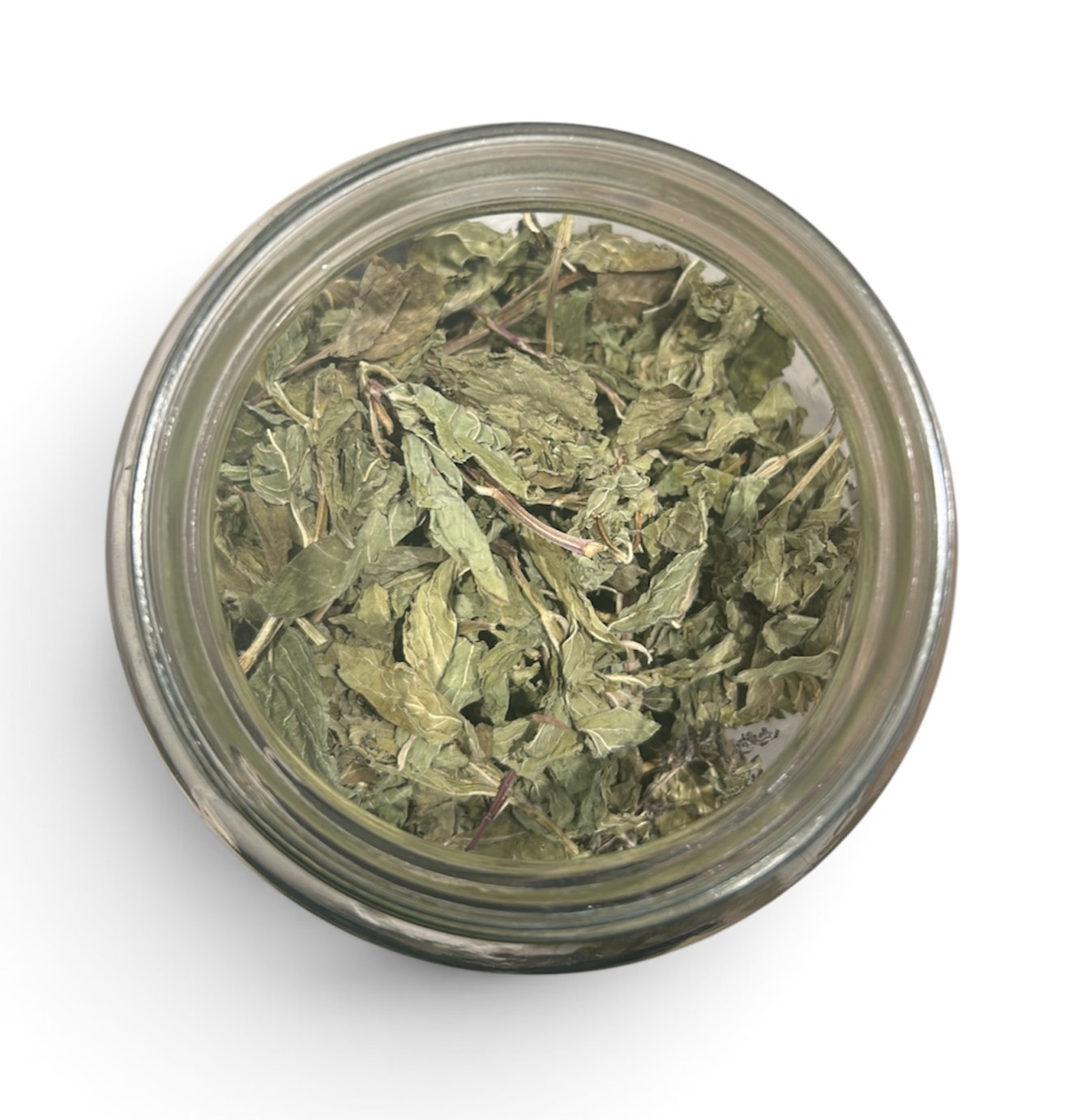
Description:
Bo He (Mentha haplocalyx) by Integrity Health Naturals is a traditional Chinese herbal medicine prepared from the dried aerial parts of Mentha haplocalyx Briq., commonly known as Bo He, Mint Leaf, Chinese Mint, or Field Mint. In Traditional Chinese Medicine (TCM), Bo He is traditionally valued for its aromatic, cooling, and dispersing properties. Health Canada lists Mentha haplocalyx among medicinal ingredients used in licensed natural health products in Canada.
In Traditional Chinese Medicine, Bo He is traditionally used to disperse Wind-Heat, clear and soothe the throat, promote the free flow of Liver Qi, and support the normal expression of rashes and eruptions. It is traditionally selected according to an individual’s TCM pattern and constitution.
Bo He is traditionally used for patterns associated with Wind-Heat, including symptoms such as headache, sore throat, fever, and a sensation of heat. It is also traditionally used to support comfortable digestion and to relieve the traditional pattern of Liver Qi constraint.
Benefits:
- Traditional Chinese herbal medicine prepared from Bo He (Mentha haplocalyx)
- Traditionally used to disperse Wind-Heat
- Traditionally used to clear and soothe the throat
- Traditionally used for headache associated with Wind-Heat
- Traditionally used to support healthy respiratory comfort during traditional Wind-Heat patterns
- Traditionally used to promote the free flow of Liver Qi
- Traditionally used to support digestive comfort
- Traditionally used to relieve abdominal fullness and discomfort associated with Liver Qi constraint
- Traditionally used to promote the expression of rashes and eruptions associated with Wind-Heat
- Traditionally used for its cooling and aromatic properties
- Traditionally used to support overall comfort during seasonal Wind-Heat patterns
Other Names:
Bo He, Bo He Ye (薄荷叶), Herba Menthae Haplocalycis, Mentha haplocalyx, Mentha haplocalyx Briq., Chinese Mint, Mint Leaf, Field Mint, Asian Field Mint, Corn Mint, Wild Mint, Menthae Haplocalycis Herba, Mint Herb, and Mint.
Indian names: Pudina (पुदीना), Mint Leaf.
Persian name: نعناع (Nana), پونه (Puneh), نعناع چینی.
Traditional Uses:
In Traditional Chinese Medicine, Bo He is traditionally used to disperse Wind-Heat, clear and soothe the throat, promote the free flow of Liver Qi, and promote the expression of rashes and eruptions. It is traditionally selected according to an individual’s TCM pattern and constitution.
Side Effects:
Bo He may cause unwanted effects in some individuals, including gastrointestinal discomfort, nausea, heartburn, headache, dizziness, or allergic reactions. Mint preparations may also cause irritation in sensitive individuals.
Discontinue use and consult a healthcare practitioner if unwanted symptoms occur.
Precautions:
Consult a healthcare practitioner prior to use if you are taking prescription medications or other natural health products, or if you have a medical condition.
Do not use during pregnancy or breastfeeding unless directed by a qualified healthcare practitioner.
Consult a healthcare practitioner before use if you have a serious or major medical condition, gastroesophageal reflux, gallbladder disease, or a known sensitivity to mint or other plants in the Lamiaceae family.
Keep out of reach of children. Discontinue use and seek medical attention if an allergic reaction or other serious unwanted symptoms occur.
Interactions:
Consult a healthcare practitioner before using Bo He with prescription medications or other natural health products, as potential interactions may occur. Clinical interaction data for whole-herb Bo He preparations remain limited.
Dosing:
Use according to the product label or as directed by a qualified healthcare practitioner or Traditional Chinese Medicine practitioner. Dosage may vary depending on whether Bo He is used as a whole dried herb, tea, powder, extract, or as part of a traditional herbal formula.
Storage:
Store in a cool, dry place away from direct sunlight. Keep tightly closed and out of reach of children.
Preparation:
If using dried Bo He, prepare according to the directions provided by your Traditional Chinese Medicine practitioner or product instructions. Traditionally, the dried herb may be prepared as a tea or decoction or used as part of a TCM herbal formula. Because Bo He is an aromatic herb, traditional preparation methods may vary depending on the intended use.
Scientific Support:
Mentha haplocalyx has a long history of use in Traditional Chinese Medicine and has been investigated for its phytochemical composition and potential biological activities. Research has identified terpenoids, flavonoids, phenolic acids, and other constituents in the plant. Modern studies have investigated potential antioxidant, anti-inflammatory, antimicrobial, gastrointestinal, respiratory, and other biological activities. Current evidence includes traditional-use research, laboratory studies, animal studies, and reviews, while further clinical research is needed to establish efficacy for specific medical conditions.
References & Scientific Support:
Health Canada – Licensed Natural Health Product Database (LNHPD). Health Canada lists Mentha haplocalyx as a medicinal ingredient in licensed natural health products in Canada. View Health Canada reference.
PubMed – Mentha haplocalyx Briq. (Mint): a comprehensive review on the botany, traditional uses, nutritional value, phytochemistry, health benefits, and applications. This recent review examines the traditional uses, phytochemical constituents, and researched biological activities of Mentha haplocalyx. View research.
PubMed – Peppermint and menthol: a review on their biochemistry, pharmacological activities, clinical applications, and safety considerations. This review examines mint-derived constituents, including menthol and flavonoids, and summarizes research concerning gastrointestinal, anti-inflammatory, antioxidant, antimicrobial, and other potential activities, as well as safety considerations. View research.


