
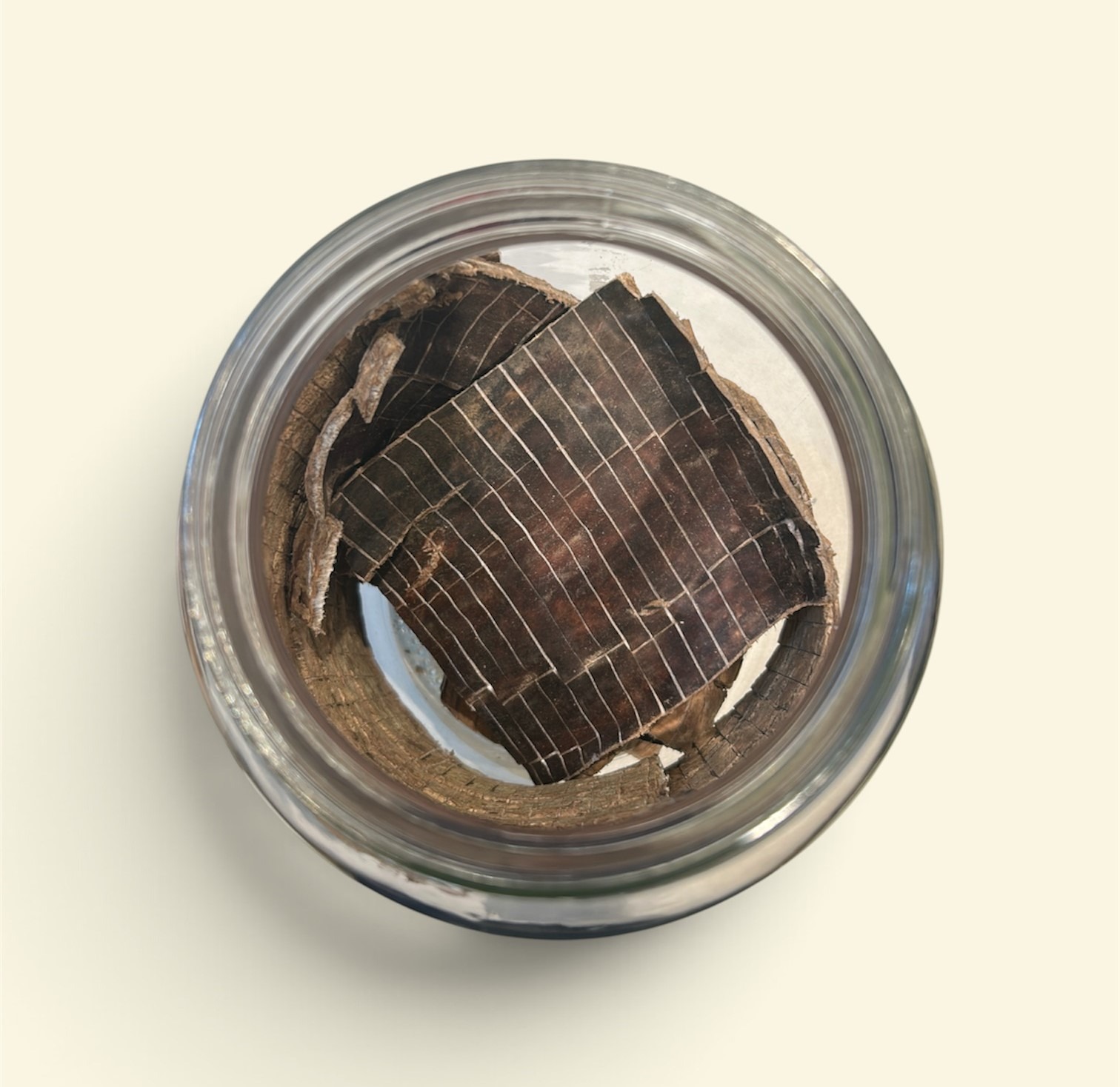
Description:
Du Zhong (Eucommia ulmoides) by Integrity Health Naturals is a traditional Chinese herbal medicine prepared from the dried bark of Eucommia ulmoides Oliv., commonly known as Du Zhong, Eucommia Bark, or Gutta-Percha Tree Bark. Health Canada recognizes Eucommia ulmoides as Du Zhong and identifies Cortex Eucommiae as the corresponding pharmacopoeial ingredient in its Traditional Chinese Medicine ingredient database. Health Canada also identifies the stem bark and root bark as source materials for Eucommia ulmoides.
In Traditional Chinese Medicine (TCM), Du Zhong is traditionally valued for its strengthening and supportive properties, particularly its traditional affinity for the Liver and Kidney. It is traditionally used to tonify the Liver and Kidney, strengthen the muscles and bones, and support the lower back and knees. It is also traditionally used in traditional patterns associated with weakness or soreness of the lower back and knees.
Du Zhong is traditionally used to strengthen the sinews and bones and to support physical strength and stability. In TCM, it is also traditionally used to secure the Chong and Ren vessels and support pregnancy in traditional patterns associated with Kidney deficiency.
Benefits:
- Traditional Chinese herbal medicine prepared from Du Zhong (Eucommia ulmoides)
- Traditionally used to tonify the Liver and Kidney
- Traditionally used to strengthen the muscles and bones
- Traditionally used to strengthen the sinews and tendons
- Traditionally used to support the lower back and knees
- Traditionally used for weakness or soreness of the lower back and knees associated with traditional Kidney deficiency patterns
- Traditionally used to support physical strength and mobility
- Traditionally used to support healthy bone and connective-tissue function
- Traditionally used to support the Liver and Kidney in traditional TCM patterns
- Traditionally used to secure the Chong and Ren vessels
- Traditionally used to support pregnancy in traditional TCM patterns associated with Kidney deficiency
Other Names:
Du Zhong, Du Zhong (杜仲), Duzhong, Tu Chung, Eucommia, Eucommia Bark, Eucommiae Cortex, Cortex Eucommiae, Eucommia ulmoides, Eucommia ulmoides Oliv., Gutta-Percha Tree, Gutta-Percha Tree Bark, Chinese Rubber Tree, and Chinese Du Zhong.
Indian names: यूकोमिया की छाल (Eucommia Bark), डु झोंग (Du Zhong).
Persian name: Du Zhong (دو ژونگ), پوست درخت اوکومیا.
Traditional Uses:
In Traditional Chinese Medicine, Du Zhong is traditionally used to tonify the Liver and Kidney, strengthen the sinews and bones, support the lower back and knees, and secure the Chong and Ren vessels. It is traditionally selected according to an individual’s TCM pattern and constitution. Modern reviews describe its long-standing traditional use for strengthening the muscles and bones and supporting conditions associated with traditional Liver and Kidney deficiency patterns.
Side Effects:
Du Zhong may cause unwanted effects in some individuals, including gastrointestinal discomfort, nausea, dizziness, headache, or other individual sensitivity reactions. Unwanted effects may vary depending on the preparation, dose, and individual constitution.
Discontinue use and consult a healthcare practitioner if unwanted symptoms occur.
Precautions:
Consult a healthcare practitioner prior to use if you are taking prescription medications or other natural health products, or if you have a medical condition.
Do not use during pregnancy or breastfeeding unless directed by a qualified healthcare practitioner. Du Zhong has traditional use during pregnancy in specific TCM patterns, but this does not mean that unsupervised use during pregnancy is appropriate.
Consult a healthcare practitioner before use if you have a serious or major medical condition or if you are taking medications for blood pressure, blood sugar, blood clotting, or other cardiovascular conditions, as Eucommia extracts have demonstrated biological activities involving these systems in experimental research.
Discontinue use and consult a healthcare practitioner if symptoms persist or worsen or if new symptoms develop.
Interactions:
Consult a healthcare practitioner before using Du Zhong with prescription medications or other natural health products. Experimental research suggests that Eucommia ulmoides may have effects involving blood pressure, blood glucose, lipid metabolism, and other physiological pathways, so caution is appropriate when it is combined with medications affecting these systems. Human clinical interaction data for whole-herb Du Zhong preparations remain limited.
Dosing:
Use according to the product label or as directed by a qualified healthcare practitioner or Traditional Chinese Medicine practitioner. Dosage may vary depending on whether Du Zhong is used as whole dried bark, powder, granule, extract, or as part of a traditional herbal formula.
Storage:
Store in a cool, dry place away from direct sunlight. Keep tightly closed and out of reach of children.
Preparation:
If using dried Du Zhong bark, prepare according to the directions provided by your Traditional Chinese Medicine practitioner or product instructions. Traditionally, the bark may be prepared as a decoction or used as part of a TCM herbal formula. Preparation and processing may vary depending on the intended traditional application.
Scientific Support:
Eucommia ulmoides has been used in Traditional Chinese Medicine for nearly two thousand years and contains numerous bioactive constituents, including lignans, iridoids, flavonoids, phenolic compounds, and other phytochemicals. Modern research has investigated potential antioxidant, anti-inflammatory, cardiovascular, metabolic, bone-supportive, and neuroprotective activities. Much of the current evidence comes from laboratory, animal, and pharmacological studies, and further clinical research is needed to establish efficacy for specific medical conditions.
References & Scientific Support:
Health Canada – Natural Health Products Ingredients Database (NHPID). Health Canada identifies Eucommia ulmoides as Du Zhong and Cortex Eucommiae as the corresponding Traditional Chinese Medicine pharmacopoeial ingredient. View Health Canada reference.
PubMed – Health-Promoting Properties of Eucommia ulmoides: A Review. This review examines the traditional use, phytochemical constituents, and researched biological activities of Eucommia ulmoides, including antioxidant, anti-inflammatory, cardiovascular, metabolic, and bone-related research. View research.
PubMed – Ethnobotany, Phytochemistry and Pharmacological Properties of Eucommia ulmoides: A Review. This review summarizes the traditional applications, phytochemical constituents, and pharmacological research surrounding Eucommia ulmoides. View research.


