Description:
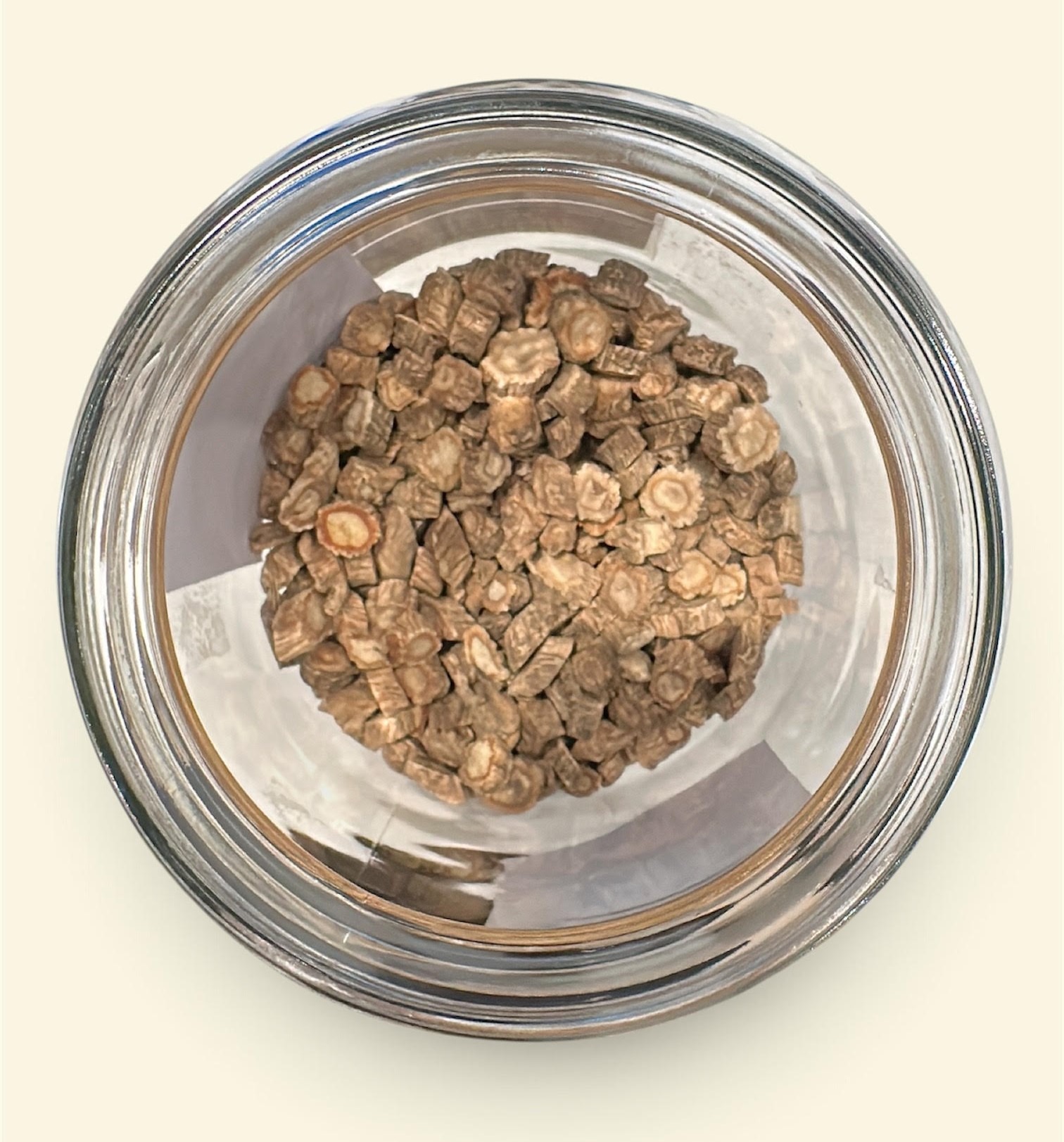
Fang Feng (Saposhnikovia divaricata / Radix Saposhnikoviae) is a traditional Chinese herbal medicine prepared from the dried root of Saposhnikovia divaricata, a perennial plant in the Apiaceae family. It is commonly known as Fang Feng, Saposhnikovia Root, Saposhnikovia divaricata, or Radix Saposhnikoviae. The name Fang Feng literally refers to “preventing” or “resisting” Wind and reflects its traditional role in TCM.
In Traditional Chinese Medicine, Fang Feng is traditionally valued for its ability to release the exterior, dispel Wind, relieve Dampness, alleviate pain, and relieve spasms. It is traditionally associated primarily with the Liver, Spleen, and Urinary Bladder meridians.
Fang Feng is traditionally used when external Wind is associated with symptoms such as chills, fever, headache, nasal congestion, or body aches. It is commonly included in traditional formulas for Wind-Cold and Wind-related exterior patterns.
Fang Feng is also traditionally used to dispel Wind-Dampness and relieve musculoskeletal discomfort. In TCM, it may be selected for stiffness, aching joints, rheumatic discomfort, and pain associated with Wind-Damp patterns. Traditional applications include rheumatoid-type arthralgia and other Wind-Damp presentations.
Fang Feng is traditionally used to relieve itching and other Wind-related skin symptoms. It may be included in traditional formulas for itching, rashes, and conditions characterized by Wind and Dampness.
Benefits:
- Traditional Chinese herbal medicine prepared from Fang Feng (Saposhnikovia Root)
- Traditionally used to dispel Wind according to TCM principles
- Traditionally used to release the exterior
- Traditionally used to support healthy response to seasonal environmental influences
- Traditionally used for headache associated with traditional Wind patterns
- Traditionally used for chills and fever associated with exterior Wind patterns
- Traditionally used to relieve nasal and respiratory discomfort associated with exterior Wind patterns
- Traditionally used to dispel Wind-Dampness
- Traditionally used to relieve joint and muscular discomfort associated with Wind-Damp patterns
- Traditionally used for rheumatic-type aches and pains according to traditional TCM principles
- Traditionally used to relieve stiffness and discomfort
- Traditionally used to relieve itching associated with traditional Wind patterns
- Traditionally used to support healthy skin comfort
- Traditionally used to alleviate spasms according to traditional TCM principles
- Traditionally used in traditional formulas for musculoskeletal discomfort
- Traditionally used as a harmonizing ingredient in traditional herbal formulas
Other Names:
Fang Feng, Fang Feng (防风), Saposhnikovia Root, Saposhnikovia divaricata, Saposhnikovia divaricata (Turcz.) Schischk., Radix Saposhnikoviae, Radix Saposhnikoviae Divaricatae, Saposhnikovia Root, Wind-Preventing Herb, Wind-Dispelling Root, and Siler Root.
Indian names: फांग फेंग (Fang Feng), सपोशनिकोविया डिवारिकाटा (Saposhnikovia divaricata), सपोशनिकोविया रूट (Saposhnikovia Root).
Persian name: فانگ فنگ (Fang Feng), ریشه فانگ فنگ (Fang Feng Root), ساپوشنیکوویا دیواریکاتا (Saposhnikovia divaricata).
Traditional Uses:
In Traditional Chinese Medicine, Fang Feng is traditionally used to release the exterior and dispel Wind, particularly for symptoms associated with external Wind-Cold or Wind-related patterns. It is traditionally used for headache, chills, fever, body aches, and nasal discomfort associated with exterior patterns.
Fang Feng is also traditionally used to dispel Wind-Dampness and relieve pain. It may be selected for aching joints, stiffness, rheumatic discomfort, and musculoskeletal symptoms associated with traditional Wind-Damp patterns.
Fang Feng is traditionally used to relieve itching and may be incorporated into formulas for skin discomfort associated with Wind. It is also traditionally used to alleviate spasms and as a supporting ingredient in various classical TCM formulas.
Side Effects:
Fang Feng is generally used as part of traditional herbal preparations, but individual tolerance may vary. Some individuals may experience gastrointestinal discomfort, nausea, abdominal discomfort, or other digestive symptoms.
Allergic reactions are possible with herbal preparations. Health Canada product information for products containing Saposhnikovia divaricata advises discontinuation if an allergic reaction occurs.
Discontinue use and consult a healthcare practitioner if unwanted symptoms occur.
Precautions:
Consult a healthcare practitioner prior to use if you are taking prescription medications or other natural health products, or if you have a medical condition.
Consult a healthcare practitioner before use if you have a serious or major medical condition or an acute infection.
Do not use during pregnancy or breastfeeding unless directed by a qualified healthcare practitioner or Traditional Chinese Medicine practitioner. Canadian licensed products containing Saposhnikovia divaricata commonly carry pregnancy and breastfeeding contraindications.
Consult a healthcare practitioner before use if you have an autoimmune disorder or are taking medications that significantly affect immune function. Product-specific precautions may differ depending on the formulation and other medicinal ingredients.
Traditional TCM selection should take the individual’s pattern and constitution into account. Fang Feng is traditionally used primarily for exterior and Wind-related patterns and may not be appropriate for every individual or condition.
Discontinue use and consult a healthcare practitioner if symptoms persist or worsen or if new symptoms develop.
Interactions:
Consult a healthcare practitioner before using Fang Feng with prescription medications or other natural health products.
Although preclinical research has identified multiple pharmacologically active constituents in Saposhnikovia divaricata, clinically established drug-interaction data for whole-herb Fang Feng preparations remain limited. The herb contains chromones, coumarins, polyacetylenes, and other constituents that have demonstrated biological activities in laboratory and animal research.
Because interaction information for whole-herb preparations is limited, individuals taking prescription medications—particularly medications affecting immune function, blood clotting, or other major physiological systems—should consult a healthcare practitioner before use.
Dosing:
Use according to the product label or as directed by a qualified healthcare practitioner or Traditional Chinese Medicine practitioner.
Traditional Chinese Medicine references commonly use approximately 3–9 g of dried Fang Feng root in a decoction, although the appropriate amount depends on the preparation, formula, individual constitution, and clinical circumstances.
For a 50 g bulk-herb product, the package quantity should not be interpreted as a recommended daily dose.
Storage:
Store in a cool, dry place away from direct sunlight. Keep tightly closed and out of reach of children.
Preparation:
If using dried Fang Feng root, prepare according to the directions provided by your Traditional Chinese Medicine practitioner or product instructions. Traditionally, Fang Feng is commonly prepared as a decoction or used as part of a TCM herbal formula.
The dried root may be sliced or cut for decoction. Preparation methods and dosage may vary according to the intended traditional application and the other herbs included in the formula.
Scientific Support:
Fang Feng is the dried root of Saposhnikovia divaricata (Turcz.) Schischk., a perennial member of the Apiaceae family. The root has a long history of use in Traditional Chinese Medicine and other East Asian traditional medicine systems. Modern phytochemical research has identified chromones, coumarins, polyacetylenes, polysaccharides, and other constituents in the plant.
Modern laboratory and animal research has investigated potential anti-inflammatory, analgesic, antioxidant, immunoregulatory, antimicrobial, and other biological activities of Saposhnikovia divaricata. These findings provide scientific interest regarding some of its traditional applications, but much of the evidence remains preclinical and should not be interpreted as proof of clinical effectiveness for specific diseases.
A recent comprehensive review identified approximately 160 compounds from S. divaricata, with chromones and coumarins among the major investigated constituents. Research has examined potential mechanisms involving inflammatory and immune pathways, but additional high-quality human clinical research is needed to establish efficacy, optimal dosing, and therapeutic applications.
References & Scientific Support:
PubMed – Saposhnikoviae divaricata: a phytochemical, pharmacological, and pharmacokinetic review. This review summarizes the traditional use, phytochemistry, pharmacology, and pharmacokinetics of Saposhnikovia divaricata, including research into anti-inflammatory, analgesic, immunoregulatory, and antioxidant activities. View research.
PubMed – Saposhnikovia divaricata: An Ethnopharmacological, Phytochemical and Pharmacological Review. This review discusses the traditional medicinal applications of S. divaricata, its major chemical constituents, and investigated pharmacological activities. View research.
Health Canada – Licensed Natural Health Product Database (LNHPD). Canadian licensed products containing Saposhnikovia divaricata demonstrate its inclusion as a medicinal ingredient in Traditional Chinese Medicine products and provide product-specific safety information and contraindications. View Health Canada Reference.