
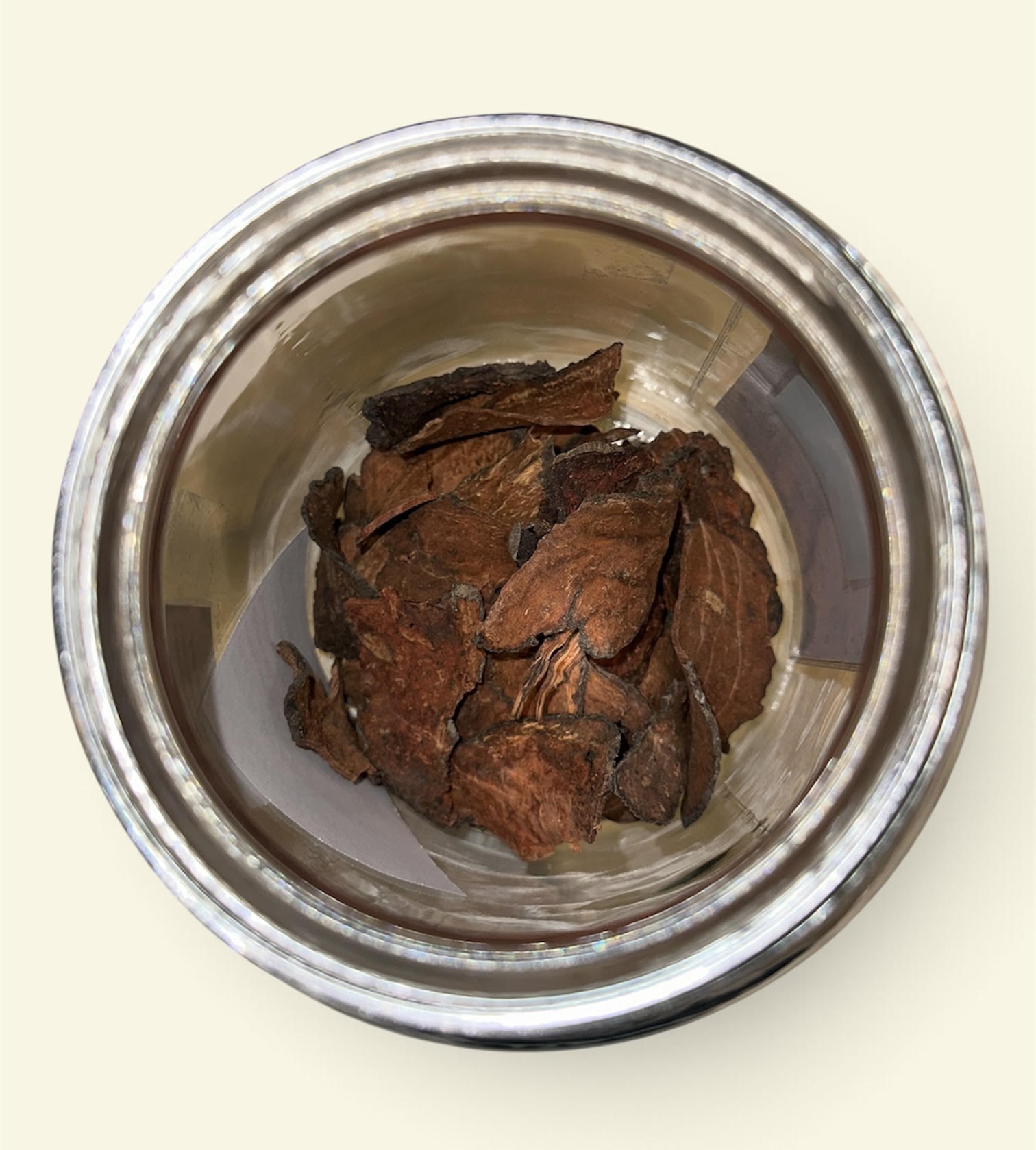
Description:
He Shou Wu (Processed Fo-Ti Root) is a traditional Chinese herbal medicine prepared from the processed root of Polygonum multiflorum Thunb., also known as Fallopia multiflora. The processed form is traditionally known as Zhi He Shou Wu (制何首乌) or Polygoni Multiflori Radix Praeparata. In Traditional Chinese Medicine (TCM), He Shou Wu is traditionally valued for nourishing Liver and Kidney Yin, supporting Blood, promoting healthy hair, and supporting overall vitality and healthy aging.
He Shou Wu is traditionally considered an important tonic herb associated primarily with the Liver and Kidney meridians. It is traditionally used in formulas intended to nourish Liver and Kidney Yin, support Blood nourishment, maintain healthy hair and natural hair pigmentation, and promote general strength and vitality.
He Shou Wu is traditionally used to nourish the Liver and Kidney and support traditional patterns associated with Yin and Blood deficiency. In TCM, it may be selected in traditional formulas for weakness, dizziness, soreness or weakness of the lower back and knees, and other symptoms associated with traditional Liver and Kidney deficiency patterns.
He Shou Wu is also traditionally associated with supporting healthy hair. It is commonly included in traditional formulas intended to maintain hair strength, healthy growth, and natural hair color, particularly when these concerns are associated with traditional Liver and Kidney deficiency patterns.
Processed He Shou Wu is traditionally used to support Blood nourishment and healthy aging. It may be incorporated into traditional tonic formulas intended to replenish traditional Liver and Kidney vitality, support physical strength, and promote overall wellness.
The processed form is different from raw He Shou Wu. Traditional processing changes the herb’s chemical composition and is intended to reduce certain undesirable properties and modify its traditional characteristics. Scientific studies indicate that processing can reduce some measures of toxicity, although processed He Shou Wu is not considered free of liver-safety concerns.
Benefits:
- Traditionally used to nourish Yin according to Traditional Chinese Medicine principles
- Traditionally used to support healthy Liver function according to TCM principles
- Traditionally used to support healthy Kidney function according to TCM principles
- Traditionally used to tonify and nourish the Liver and Kidney
- Traditionally used to nourish Blood according to traditional TCM principles
- Traditionally used to support healthy hair growth and hair vitality
- Traditionally used to support healthy hair strength and natural hair color
- Traditionally used to support healthy skin and overall tissue vitality
- Traditionally used to support healthy aging and general vitality
- Traditionally used to support physical strength and nourishment
- Traditionally used to support traditional Liver and Kidney Yin deficiency patterns
- Traditionally used to support traditional Blood deficiency patterns
- Traditionally used to support healthy lower-back and knee function associated with traditional deficiency patterns
- Traditionally used as a nourishing ingredient in traditional herbal formulas
- Traditionally used in formulas intended to support overall wellness and vitality
- Traditionally used to support healthy hair and natural pigmentation according to traditional TCM principles
Other Names:
He Shou Wu, He Shou Wu (制何首乌), Zhi He Shou Wu, Zhiheshouwu, Processed He Shou Wu, Processed Fo-Ti, Fo-Ti Root, Fo-Ti, Chinese Knotweed, Polygonum multiflorum, Fallopia multiflora, Polygoni Multiflori Radix, Polygoni Multiflori Radix Praeparata, Radix Polygoni Multiflori Praeparata, and Polygonum multiflorum Thunb.
Chinese names: 何首乌 (He Shou Wu), 制何首乌 (Zhi He Shou Wu), 何首乌根 (He Shou Wu Root), and 制首乌 (Zhi Shou Wu).
Persian names: فوتی (Fo-Ti), هه شو وو (He Shou Wu), ریشه فوتی (Fo-Ti Root), و ریشه هه شو وو (He Shou Wu Root).
Traditional Uses:
In Traditional Chinese Medicine, processed He Shou Wu is traditionally used to nourish Yin and tonify the Liver and Kidney. It is traditionally selected for weakness, dizziness, soreness or weakness of the lower back and knees, and other symptoms associated with traditional Liver and Kidney Yin deficiency patterns.
He Shou Wu is traditionally used to nourish Blood and may be included in traditional formulas for concerns associated with traditional Blood deficiency patterns.
He Shou Wu is particularly well known in traditional herbal practice for supporting healthy hair. It may be included in traditional formulas for premature graying, thinning hair, weak hair, and other hair concerns associated with traditional Liver and Kidney deficiency patterns.
Traditionally, He Shou Wu may also be used to support healthy aging, physical vitality, and general nourishment. It is commonly combined with other TCM herbs according to the individual’s traditional pattern, constitution, and specific symptoms.
Processed He Shou Wu is traditionally preferred for tonic applications, while raw He Shou Wu has different traditional characteristics and applications. Processing is intended to modify the herb’s properties and reduce certain undesirable effects.
Side Effects:
He Shou Wu is generally used as a traditional herbal preparation under the guidance of a qualified practitioner. Some individuals may experience gastrointestinal discomfort, nausea, abdominal discomfort, diarrhea, or other digestive symptoms.
More importantly, Polygonum multiflorum has been associated with drug-induced liver injury, including clinically significant hepatitis. Cases have been reported with both raw and processed preparations.
Possible warning symptoms of liver injury include unusual fatigue, weakness, nausea, vomiting, abdominal or stomach pain, loss of appetite, dark urine, yellowing of the skin or whites of the eyes, and other unexplained changes in health.
Allergic reactions or hypersensitivity may also occur in susceptible individuals.
Discontinue use and consult a healthcare practitioner if unwanted symptoms occur, particularly if symptoms suggestive of liver injury develop.
Precautions:
Consult a healthcare practitioner prior to use if you are taking prescription medications or other natural health products, or if you have a medical condition.
Consult a healthcare practitioner before use if you have a current or previous liver disorder, abnormal liver enzymes, or a history of liver injury.
Discontinue use and consult a healthcare practitioner if yellowing of the skin or whites of the eyes, dark urine, nausea, vomiting, unusual tiredness, weakness, stomach or abdominal pain, or loss of appetite occurs, as these may be symptoms of liver disease. Health Canada product records containing Polygonum multiflorum also include liver-related warnings of this type.
Consult a healthcare practitioner before use if you regularly consume alcohol or are taking medications that may affect liver function.
Do not use during pregnancy or breastfeeding unless directed by a qualified healthcare practitioner or Traditional Chinese Medicine practitioner.
Consult a qualified healthcare practitioner before prolonged or high-dose use.
Use only properly identified and appropriately processed He Shou Wu. Processing may reduce certain toxicity measures, but it does not eliminate the possibility of liver injury.
Consult a healthcare practitioner before use if you have a serious or major medical condition.
Discontinue use and consult a healthcare practitioner if symptoms persist or worsen or if new symptoms develop.
Interactions:
Consult a healthcare practitioner before using He Shou Wu with prescription medications or other natural health products.
Human clinical interaction data for whole-herb He Shou Wu preparations are limited. The potential for interactions may vary according to the preparation, processing method, dose, duration of use, and other ingredients used in a formula.
Particular caution is appropriate when He Shou Wu is combined with medications or other substances that may affect liver function because of the herb’s documented hepatotoxicity concerns.
Individuals taking anticoagulant or antiplatelet medications, medications metabolized extensively by the liver, or other medications with significant hepatic effects should seek professional guidance before use.
Individuals taking multiple medications or combining He Shou Wu with other concentrated herbal preparations should consult a qualified healthcare practitioner before use.
Dosing:
Use according to the product label or as directed by a qualified healthcare practitioner or Traditional Chinese Medicine practitioner.
Traditional Chinese Medicine references commonly describe processed He Shou Wu in an approximate range of 6–12 g when used as a decoction, although the appropriate amount depends on the preparation, formula, individual constitution, and clinical circumstances.
For a 50 g bulk-herb product, the package quantity should not be interpreted as a recommended daily dose.
Because of the documented liver-safety concerns associated with Polygonum multiflorum, prolonged or high-dose use should be professionally supervised.
Storage:
Store in a cool, dry place away from direct sunlight. Keep tightly closed and out of reach of children.
Preparation:
If using dried processed He Shou Wu, prepare according to the directions provided by your Traditional Chinese Medicine practitioner or product instructions. Traditionally, processed He Shou Wu is commonly prepared as a decoction or used as part of a TCM herbal formula.
He Shou Wu may also be powdered or incorporated into traditional herbal preparations. Preparation methods can vary according to the intended traditional application and the other herbs included in the formula.
Only appropriately processed He Shou Wu should be used for traditional tonic applications.
Scientific Support:
He Shou Wu is primarily derived from Polygonum multiflorum Thunb., also known as Fallopia multiflora. The plant has a long history of use in Traditional Chinese Medicine, particularly in traditional applications involving Liver and Kidney nourishment, Blood support, healthy hair, and healthy aging.
Polygonum multiflorum contains naturally occurring phytochemicals including stilbene glycosides, anthraquinones, flavonoids, phospholipids, polysaccharides, and other constituents. Scientific research has investigated compounds including tetrahydroxystilbene glucoside, emodin, physcion, and related constituents.
Modern pharmacological research has investigated Polygonum multiflorum extracts and constituents for potential antioxidant, anti-inflammatory, hepatoprotective, metabolic, neuroprotective, and other biological activities. These findings are primarily based on laboratory, animal, or preclinical research and should not be interpreted as proof that whole-herb He Shou Wu treats specific medical conditions in humans.
Processing significantly changes the chemical composition of Polygonum multiflorum. Experimental studies have found that processing can reduce certain measures of toxicity and alter the concentrations of important constituents. However, research also indicates that both raw and processed forms can be associated with liver injury.
Clinical and pharmacovigilance literature has documented cases of liver injury associated with Polygonum multiflorum, including processed preparations. The exact mechanisms and individual risk factors remain under investigation.
Clinical evidence for He Shou Wu remains limited compared with its long history of traditional use. Research varies according to the plant material, processing method, extract, dose, and health condition studied. Additional high-quality human clinical studies are needed to establish specific therapeutic applications, effectiveness, safety, and dosing.
References & Scientific Support:
PubMed – Traditional usages, botany, phytochemistry, pharmacology and toxicology of Polygonum multiflorum Thunb.: a review. This comprehensive review examines the traditional uses, phytochemical constituents, pharmacological research, processing considerations, and toxicology of Polygonum multiflorum, including its traditional association with hair, Liver and Kidney nourishment, and healthy aging. View Research.
PubMed – A review of the processed Polygonum multiflorum (Thunb.) for hepatoprotection: Clinical use, pharmacology and toxicology. This review specifically examines processed Polygonum multiflorum, including its traditional Liver-tonifying and Blood-nourishing uses, pharmacology, clinical applications, and both hepatoprotective and hepatotoxicity research. View Research.
Health Canada – Licensed Natural Health Product Database (LNHPD). Health Canada product records demonstrate that Polygonum multiflorum is used as a medicinal ingredient in licensed natural health products in Canada and include important safety information concerning liver-related symptoms and consultation with a healthcare practitioner. View Health Canada Reference.


