
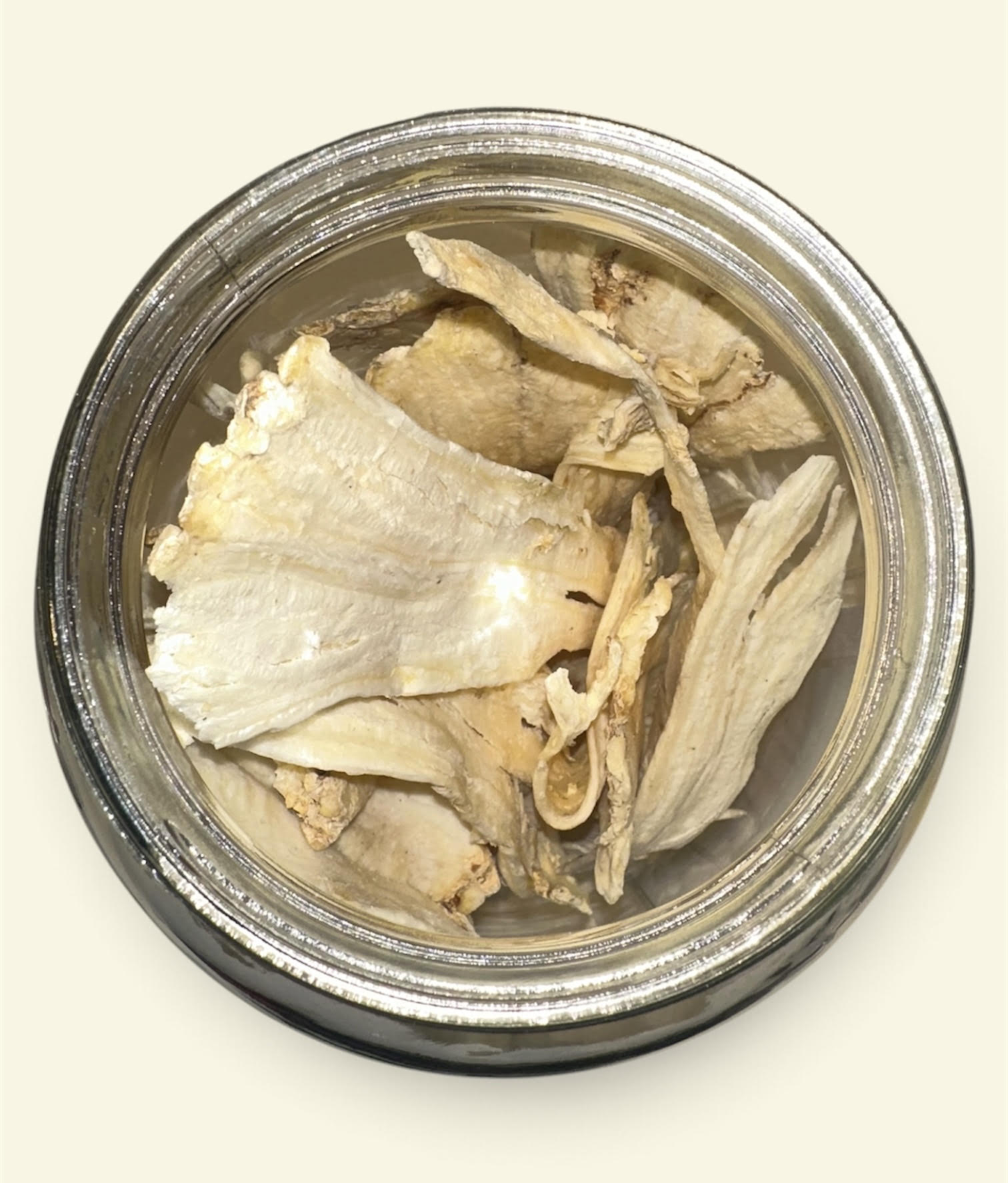
Description:
Jie Geng (桔梗) (Platycodon grandiflorus) is a traditional Chinese herbal medicine prepared from the dried root of Platycodon grandiflorus (Jacq.) A. DC., a flowering plant in the Campanulaceae family. It is commonly known as Jie Geng, Platycodon Root, Platycodon Grandiflorus Root, Balloon Flower Root, Chinese Bellflower Root, Balloon Flower, Platycodi Radix, and Radix Platycodi. In Traditional Chinese Medicine (TCM), Jie Geng is traditionally valued for its ability to support respiratory function, transform Phlegm, relieve cough, soothe the throat, and promote the movement of Qi in the Lung system according to traditional TCM principles.
Jie Geng is traditionally considered an important herb for patterns involving cough, excessive Phlegm, chest discomfort, and throat irritation. It is traditionally associated primarily with the Lung meridian and is commonly included in formulas intended to support healthy respiratory function, promote the expectoration of Phlegm, and relieve throat discomfort.
Jie Geng is traditionally used to support respiratory comfort by helping transform Phlegm and relieve cough. In TCM, it may be selected in traditional formulas for cough with Phlegm, chest congestion, and other symptoms associated with traditional Lung patterns.
Jie Geng is also traditionally used to soothe the throat. It may be included in traditional formulas for sore throat, hoarseness, and throat discomfort according to traditional TCM pattern differentiation.
Another distinctive traditional function of Jie Geng is its ability to promote the upward movement and outward distribution of Lung Qi. In traditional formulas, it may help direct the action of other herbs toward the upper body and respiratory system.
Jie Geng is also traditionally used to support the movement of Lung Qi and address Phlegm-related chest discomfort. It is commonly combined with other herbs according to the individual’s traditional pattern, constitution, and specific symptoms.
Benefits:
- Traditionally used to support healthy respiratory function according to TCM principles
- Traditionally used to help transform Phlegm
- Traditionally used to support the expectoration of Phlegm
- Traditionally used to relieve cough according to traditional TCM principles
- Traditionally used to soothe the throat
- Traditionally used to support throat comfort during seasonal respiratory discomfort
- Traditionally used to support comfortable breathing
- Traditionally used to address traditional Lung Qi patterns
- Traditionally used to support the movement and distribution of Lung Qi
- Traditionally used to address chest congestion associated with Phlegm
- Traditionally used to support chest comfort
- Traditionally used in traditional formulas for sore throat
- Traditionally used in traditional formulas for hoarseness
- Traditionally used to direct the action of other herbs toward the Lung and upper body
- Provides naturally occurring triterpenoid saponins, including platycodins
- Provides naturally occurring polysaccharides, flavonoids, and phenolic compounds
- Contains naturally occurring phytochemicals investigated for antioxidant and anti-inflammatory activities
- Traditionally used as an ingredient in classical TCM herbal formulas
- Traditionally used to support overall respiratory wellness according to TCM principles
Other Names:
Jie Geng, Jie Geng (桔梗), Jiegeng, Platycodon Root, Platycodon Grandiflorus Root, Balloon Flower Root, Chinese Bellflower Root, Balloon Flower, Chinese Platycodon, Platycodi Radix, Radix Platycodi, Platycodon grandiflorus (Jacq.) A. DC., and Campanula grandiflora.
Persian names: گل بالونی (Gol-e Bālونی), ریشه گل بالونی (Balloon Flower Root), and ریشه پلاتیکودون (Platycodon Root). Persian common names can vary; the botanical name is the clearest identifier.
Traditional Uses:
In Traditional Chinese Medicine, Jie Geng is traditionally used to support Lung function and transform Phlegm. It may be included in traditional formulas for cough with Phlegm, chest congestion, and other symptoms associated with traditional Lung patterns.
Jie Geng is traditionally used to relieve cough and promote the expectoration of Phlegm. It may be selected for traditional patterns involving cough with difficult-to-expectorate sputum or a sensation of congestion in the chest.
Jie Geng is traditionally used to soothe the throat and support throat comfort. It may be included in traditional formulas for sore throat, hoarseness, and other forms of throat discomfort according to traditional TCM pattern differentiation.
Another important traditional function of Jie Geng is to promote the movement and distribution of Lung Qi. In multi-herb formulas, it is traditionally used to direct the action of other ingredients toward the Lung and upper body.
Jie Geng may also be included in traditional formulas for chest discomfort associated with Phlegm accumulation. Its selection depends on the individual’s TCM pattern, accompanying symptoms, constitution, and the other herbs used in the formula.
Traditionally, Jie Geng is generally selected by a qualified TCM practitioner according to the individual’s presentation. Its traditional uses should not be interpreted as proof that it treats or cures a particular respiratory illness.
Side Effects:
Jie Geng may cause gastrointestinal discomfort in some individuals. Nausea, stomach discomfort, or other digestive symptoms may occur, particularly with excessive intake or in sensitive individuals.
Platycodon root contains saponins that may irritate the digestive tract in some circumstances. The likelihood of unwanted effects may depend on the amount consumed, the preparation, and individual sensitivity.
Allergic reactions are possible in sensitive individuals. Discontinue use and seek medical advice if a rash, swelling, or other signs of an allergic reaction occur.
Reliable human safety data for long-term use of whole dried Jie Geng root remain limited. Research involving concentrated extracts or isolated compounds cannot automatically establish the safety of the whole herb in every preparation or dose.
Seek prompt medical attention for difficulty breathing, severe chest pain, coughing up blood, or other serious or worsening respiratory symptoms.
Precautions:
Consult a qualified healthcare practitioner or Traditional Chinese Medicine practitioner before use if you are taking prescription medications, using other natural health products, or have a medical condition.
Do not use during pregnancy or breastfeeding unless advised by a qualified healthcare practitioner. Safety information for the whole dried root in these circumstances is insufficient to establish that use is safe.
Consult a healthcare practitioner before giving Jie Geng to children. Appropriate dosing and safety information depend on age, preparation, and individual circumstances.
Use caution if you have a sensitive digestive system or a history of reactions to herbal products.
If you have a chronic respiratory condition, persistent cough, asthma, or another diagnosed medical condition, seek professional guidance before using Jie Geng. Do not use it as a substitute for prescribed treatment.
Seek medical assessment if a cough persists, worsens, or is accompanied by fever, shortness of breath, chest pain, or bloody sputum.
Discontinue use and consult a healthcare practitioner if symptoms persist or worsen or if new symptoms develop.
Interactions:
Reliable clinical information about interactions between whole dried Jie Geng root and prescription medications is limited. The absence of well-documented interactions should not be interpreted as proof that interactions cannot occur.
Prescription medications: Consult a healthcare practitioner before combining Jie Geng with prescription or over-the-counter medications, especially when taking multiple medications or managing a chronic condition.
Other herbal products: Combining Jie Geng with other herbs may alter the overall effects or tolerability of a traditional formula. Use combinations under the guidance of a qualified TCM practitioner.
Medications affecting the digestive tract: Because Platycodon root contains saponins and may cause digestive discomfort, individuals taking medications that can irritate the gastrointestinal tract should seek professional advice if symptoms develop.
Pregnancy and breastfeeding: Avoid combining Jie Geng with medications or other herbal products for self-treatment during pregnancy or breastfeeding unless a qualified healthcare practitioner has assessed the circumstances.
Individuals taking multiple medications or using concentrated Platycodon extracts should consult a qualified healthcare practitioner before use.
Dosing:
Use according to the product label or as directed by a qualified healthcare practitioner or Traditional Chinese Medicine practitioner.
Traditional Chinese Medicine references commonly describe Jie Geng in an approximate range of 3–10 g when used as a dried herb in a decoction. The appropriate amount depends on the preparation, formula, individual constitution, symptoms, and clinical circumstances.
This traditional range is not a universally appropriate dose for every person or product. Higher amounts should not be used without professional guidance.
For a 50 g bulk-herb product, the package quantity should not be interpreted as a recommended daily dose.
Storage:
Store in a cool, dry place away from direct sunlight. Keep tightly closed and out of reach of children.
Protect dried Jie Geng from moisture, humidity, insects, and excessive heat. Discard if there are signs of mold, unusual odor, insect contamination, or spoilage.
Preparation:
If using dried Jie Geng root, prepare according to the directions provided by your Traditional Chinese Medicine practitioner or product instructions.
Traditionally, Jie Geng is prepared as a decoction by simmering the dried root with water. It is commonly combined with other herbs in traditional TCM formulas according to the individual’s pattern and intended use.
Preparation time, quantity, and combinations may vary depending on the formula. Do not assume that a preparation used in a traditional formula is interchangeable with a concentrated extract or a commercially prepared supplement.
Scientific Support:
Jie Geng is primarily derived from Platycodon grandiflorus (Jacq.) A. DC., a member of the Campanulaceae family. The dried root, known as Platycodi Radix, has a long history of use in traditional East Asian herbal medicine and is also consumed as a food in some Asian cuisines.
Platycodon root contains several classes of naturally occurring compounds, including triterpenoid saponins, polysaccharides, flavonoids, phenolic acids, and polyacetylenes. Platycodins, particularly platycodin D and related saponins, have received considerable attention in pharmacological research.
Modern laboratory and preclinical studies have investigated Platycodon grandiflorus and its constituents for potential antitussive, expectorant, anti-inflammatory, antioxidant, immunomodulatory, and other biological activities. These findings provide scientific interest in the plant but do not establish that whole dried Jie Geng root is effective for treating specific medical conditions in humans.
Reviews of the available research describe traditional use for cough, Phlegm, and sore throat, alongside investigations into the plant’s chemical composition, potential pharmacological mechanisms, and safety. Much of the evidence concerns laboratory studies, animal experiments, or extracts and isolated compounds rather than clinical trials of whole dried root.
A randomized, double-blind, placebo-controlled human study investigated a specific red Platycodon grandiflorus root extract and immune-related outcomes. Results from that study cannot automatically be applied to ordinary dried Jie Geng root because the preparation and intended use differ.
Clinical evidence for Jie Geng varies according to the preparation, dose, duration, and health condition studied. More high-quality human clinical trials are needed to establish specific therapeutic applications, effectiveness, appropriate dosing, long-term safety, and potential interactions.
References & Scientific Support:
PubMed – Platycodon grandiflorum: An Ethnopharmacological, Phytochemical and Pharmacological Review. This review examines the traditional uses, botanical characteristics, chemical constituents, pharmacological activities, and toxicity of Platycodon grandiflorum. It describes traditional use for cough, Phlegm, sore throat, and other conditions, while reviewing preclinical findings related to its naturally occurring compounds. View Research.
PubMed – Platycodon grandiflorum (Jacq.) A. DC.: A Review of Phytochemistry, Pharmacology, Toxicology and Traditional Use. This review summarizes research into the chemical composition, traditional applications, potential pharmacological effects, and toxicology of Platycodon root. It discusses triterpenoid saponins and reported antitussive, anti-inflammatory, antioxidant, and immunomodulatory activities, while highlighting the need for further research to clarify clinical effectiveness and safety. View Research.
Health Canada – Licensed Natural Health Products Database: Jie Geng Extract Granule. This Health Canada licensing record identifies a licensed product containing Platycodon grandiflorus extract granules and provides Canadian regulatory information, including the product’s licence status, dosage form, medicinal ingredient, and product-specific recommended-use and risk-information references. This record concerns a licensed extract-granule product, not this 50 g package of whole dried root, so its licensing status should not be interpreted as approval of this specific bulk herb. View Health Canada Reference.


