Description:
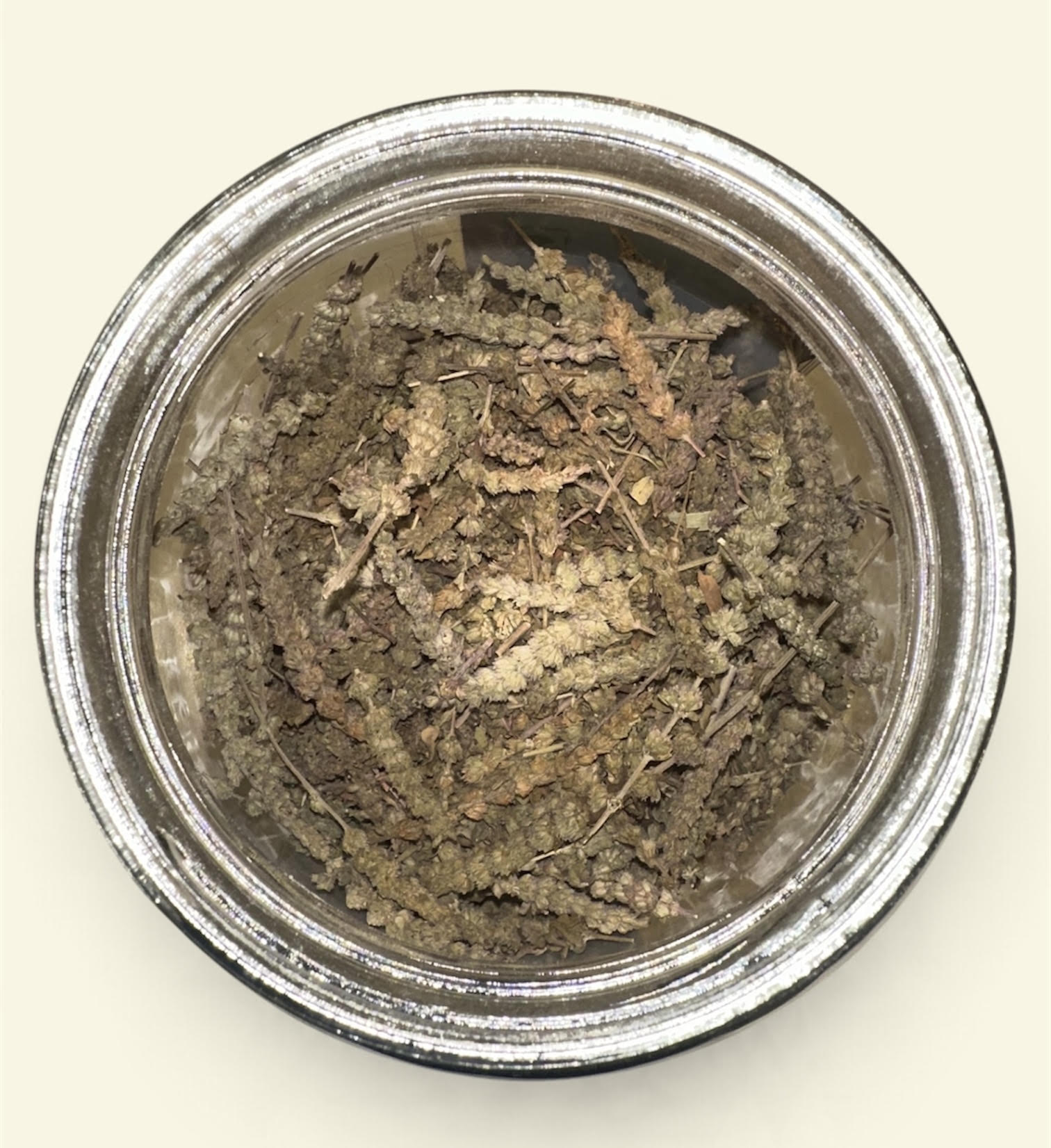
Jing Jie (Schizonepeta tenuifolia (Benth.) Briq.) is a traditional Chinese herbal medicine prepared primarily from the dried aerial parts of a plant belonging to the Lamiaceae family. It is commonly known as Jing Jie, Schizonepeta Herb, Japanese Catnip, Fineleaf Schizonepeta, Schizonepeta Spike, Herba Schizonepetae, and Schizonepetae Herba. In Traditional Chinese Medicine (TCM), Jing Jie is traditionally valued for its ability to release the Exterior, disperse Wind, promote the resolution of early-stage exterior patterns, and support healthy skin according to traditional TCM principles.
Jing Jie is traditionally considered an important herb for patterns involving Wind-Cold or Wind-Heat at the Exterior, itching, and certain skin conditions. It is traditionally associated primarily with the Lung and Liver meridians and is commonly included in herbal formulas intended to address early-stage exterior patterns, seasonal discomfort, itching, and other symptoms identified through traditional TCM pattern differentiation.
Jing Jie is traditionally used to release the Exterior and disperse Wind. It may be included in traditional formulas for symptoms associated with the early stages of a common cold, including chills, fever, headache, and general discomfort, depending on the individual’s TCM pattern.
Jing Jie is also traditionally used to support healthy skin and relieve itching. It may be included in traditional formulas for itching, rashes, and certain skin conditions according to traditional TCM principles.
Jing Jie is traditionally used to promote the resolution of exterior patterns involving Wind. It is commonly combined with other herbs, such as Fang Feng (防风) and other appropriate ingredients, according to the individual’s symptoms and traditional pattern.
Jing Jie is also traditionally valued for its role in formulas addressing certain superficial inflammatory and skin-related presentations. Its traditional use should not be interpreted as proof that it treats infections, allergic disorders, or other medical conditions.
Benefits:
- Traditionally used to release the Exterior according to Traditional Chinese Medicine principles
- Traditionally used to disperse Wind
- Traditionally used to support the body’s response to early-stage exterior patterns
- Traditionally used in formulas for symptoms associated with the common cold
- Traditionally used to support respiratory comfort during seasonal discomfort
- Traditionally used to support comfort when experiencing headache associated with exterior patterns
- Traditionally used to support healthy skin
- Traditionally used to relieve itching according to traditional TCM principles
- Traditionally used in formulas for certain rashes and skin presentations
- Traditionally used to address Wind-related patterns affecting the skin
- Traditionally used to support comfort during seasonal changes
- Traditionally used in traditional formulas for Wind-Cold patterns
- Traditionally used in traditional formulas for selected Wind-Heat patterns
- Traditionally combined with other herbs to support traditional exterior-releasing formulas
- Provides naturally occurring volatile oils and aromatic compounds
- Provides naturally occurring monoterpenes and sesquiterpenes
- Provides naturally occurring flavonoids and other plant constituents
- Contains phytochemicals investigated in laboratory and pharmacological research
- Traditionally used as an ingredient in classical Chinese herbal formulas
- Traditionally used to support overall wellness according to TCM principles
These benefits describe traditional uses and research interests; they do not establish that Jing Jie is clinically effective for treating a specific disease.
Other Names:
Jing Jie, Schizonepeta Herb, Fineleaf Schizonepeta, Japanese Catnip, Schizonepeta Spike, Herba Schizonepetae, Schizonepetae Herba, and Schizonepeta tenuifolia (Benth.) Briq.
Persian name: جینگ جی (Jing Jie).
Indian names: No reliably verified traditional Hindi or Sanskrit name identified for this specific botanical species. The Chinese herbal name Jing Jie is used to identify the medicinal herb.
Traditional Uses:
In Traditional Chinese Medicine, Jing Jie is traditionally used to release the Exterior and disperse Wind. It may be included in formulas for early-stage exterior patterns involving symptoms such as chills, fever, headache, and general discomfort, depending on the individual’s traditional pattern.
Jing Jie is traditionally used in formulas addressing Wind-Cold patterns. It may be combined with other herbs selected to support the release of the Exterior and address the individual’s specific presentation.
Jing Jie is also traditionally used in selected Wind-Heat patterns. Its use depends on the overall symptom presentation and the combination of herbs in the formula rather than on a single symptom alone.
Jing Jie is traditionally used to support healthy skin and relieve itching. It may be included in formulas for certain rashes and superficial skin presentations according to traditional TCM pattern differentiation.
Jing Jie is sometimes combined with Fang Feng (防风), Bo He (薄荷), or other herbs when appropriate to the intended traditional formula. The choice of ingredients depends on the individual’s constitution, symptoms, and the practitioner’s assessment.
Traditionally, Jing Jie is selected according to the individual’s TCM pattern and may be prepared as a decoction or incorporated into a multi-herb formula. It should not be used as a substitute for appropriate medical assessment when symptoms are severe, persistent, or worsening.
Side Effects:
Jing Jie may be tolerated when used appropriately in traditional preparations, but comprehensive clinical safety data for the single herb remain limited. Safety may vary with the botanical source, preparation, amount used, duration of use, and individual susceptibility.
Possible unwanted effects may include gastrointestinal discomfort or hypersensitivity reactions. The frequency and likelihood of these effects have not been adequately established for all preparations.
Allergic reactions are possible in individuals sensitive to Jing Jie or related plants in the Lamiaceae family.
The safety of concentrated extracts, essential oils, and prolonged use should not be assumed to be equivalent to that of traditional dried-herb preparations.
Discontinue use and seek medical advice if unwanted or persistent symptoms occur.
Precautions:
Consult a qualified healthcare practitioner or Traditional Chinese Medicine practitioner before use if you are taking prescription medications, using other herbal products, or have a medical condition.
Do not use during pregnancy or breastfeeding unless advised by a qualified healthcare practitioner. Reliable safety data for these populations are insufficient.
Individuals with known allergies to Jing Jie or related plants should avoid use unless a qualified healthcare practitioner has assessed the potential risk.
Use caution with concentrated extracts or essential oil preparations. A dried-herb product is not interchangeable with an essential oil, and essential oils should not be ingested unless specifically directed by a suitably qualified professional using an appropriate product.
Seek medical advice for a high or persistent fever, breathing difficulties, severe headache, a spreading or infected-looking rash, facial swelling, or other concerning symptoms.
Discontinue use and consult a healthcare practitioner if symptoms persist or worsen or if new symptoms develop.
Interactions:
Reliable clinical information on interactions between Jing Jie and prescription medications is limited. The absence of well-documented interactions should not be interpreted as proof that interactions cannot occur.
Prescription medications: Consult a healthcare practitioner or pharmacist before combining Jing Jie with prescription or non-prescription medications, particularly if you take several medications or have a chronic medical condition.
Other herbal products: Combining Jing Jie with other herbs may alter the overall effects or tolerability of a formula. Use combinations according to the guidance of a qualified TCM practitioner.
Allergy-sensitive individuals: People with known plant allergies should review the product’s botanical identity and discuss possible cross-sensitivity with a healthcare professional.
Concentrated extracts and essential oils: These preparations may differ substantially from traditional dried herb in concentration and safety. Do not assume that their interaction profile is the same as that of a decoction.
Because clinical interaction studies are limited, professional guidance is recommended when Jing Jie is used alongside medications or multiple herbal products.
Dosing:
Use according to the product label or as directed by a qualified healthcare practitioner or Traditional Chinese Medicine practitioner.
Traditional Chinese Medicine references commonly describe Jing Jie in an approximate range of 3–10 g when used as a dried herb or decoction. The appropriate amount depends on the preparation, formula, individual constitution, clinical circumstances, and practitioner guidance.
Traditional preparation methods and amounts may differ depending on the intended use. The appropriate amount should be determined by a qualified practitioner rather than selected solely on the basis of a general reference range.
For a 50 g bulk-herb product, the package quantity should not be interpreted as a recommended daily dose.
Storage:
Store in a cool, dry place away from direct sunlight. Keep tightly closed and out of reach of children.
Protect dried Jing Jie from moisture, humidity, insects, and excessive heat. Discard if there are signs of mold, unusual odor, insect contamination, or spoilage.
Preparation:
If using dried Jing Jie, prepare according to the directions provided by your Traditional Chinese Medicine practitioner or product instructions.
Traditionally, Jing Jie is prepared as a decoction by simmering the dried herb in water. It is frequently combined with other herbs in traditional TCM formulas according to the individual’s pattern and intended use.
Preparation methods may vary according to the formula and the part of the plant used. Follow professional instructions for the amount of herb, preparation time, and frequency of use.
Jing Jie should not be confused with essential oil preparations or products derived from other plants that may have similar common names.
Scientific Support:
Jing Jie is primarily associated with Schizonepeta tenuifolia (Benth.) Briq., a member of the Lamiaceae family. The dried aerial parts are used in Traditional Chinese Medicine. Botanical identification and the specific plant material used are important when evaluating research because different species and preparations may have different chemical profiles.
Jing Jie contains naturally occurring volatile oils and other phytochemicals, including monoterpenes, sesquiterpenes, flavonoids, and related plant constituents. The chemical composition can vary according to the plant material, geographical origin, harvesting conditions, and extraction method.
Modern research has investigated Schizonepeta tenuifolia and its constituents for potential anti-inflammatory, antioxidant, antipyretic, analgesic, antimicrobial, and other pharmacological activities. Much of this evidence comes from laboratory experiments, animal research, or reviews of preclinical studies. These findings do not establish that whole dried Jing Jie is effective for treating specific medical conditions in humans.
A 2022 review in Molecules summarizes the chemical constituents and pharmacological activities reported for Schizonepeta tenuifolia, including research on its volatile oils and other compounds. An earlier review in the Journal of Clinical Pharmacology examined the herb’s traditional uses, chemical constituents, pharmacology, and clinical applications while noting that further research was needed to clarify its efficacy and safety.
Clinical evidence for Jing Jie varies according to the preparation, dose, formula, and health condition studied. Findings from isolated compounds, laboratory extracts, or multi-herb formulas should not automatically be applied to a 50 g whole-herb product. More high-quality human clinical studies are needed to establish specific therapeutic applications, effectiveness, interactions, and safety.
References & Scientific Support:
PubMed – Review on Chemical Constituents of Schizonepeta tenuifolia Briq. and Their Pharmacological Effects. This review summarizes research on the chemical constituents of Schizonepeta tenuifolia, including volatile oils, monoterpenes, sesquiterpenes, and other phytochemicals, and examines reported pharmacological activities. The findings provide scientific background but do not independently establish clinical effectiveness for the whole dried herb. View Research.
PubMed – Schizonepeta tenuifolia: Chemistry, Pharmacology, and Clinical Applications. This review examines the traditional uses, chemical constituents, pharmacological activities, and clinical applications of Jing Jie. It also highlights limitations in the available evidence, particularly the need for further research into efficacy, mechanisms of action, adverse effects, drug interactions, and contraindications. View Research.
Health Canada – Licensed Natural Health Products Database. Health Canada’s database provides regulatory information about natural health products licensed for sale in Canada, including traditional medicines and herbal products. Product-specific licensing, approved uses, directions, and safety warnings should be verified for the exact product. This database reference does not establish that this particular bulk Jing Jie herb has a product licence or that Health Canada has approved specific medicinal claims for it. View Health Canada Reference.