
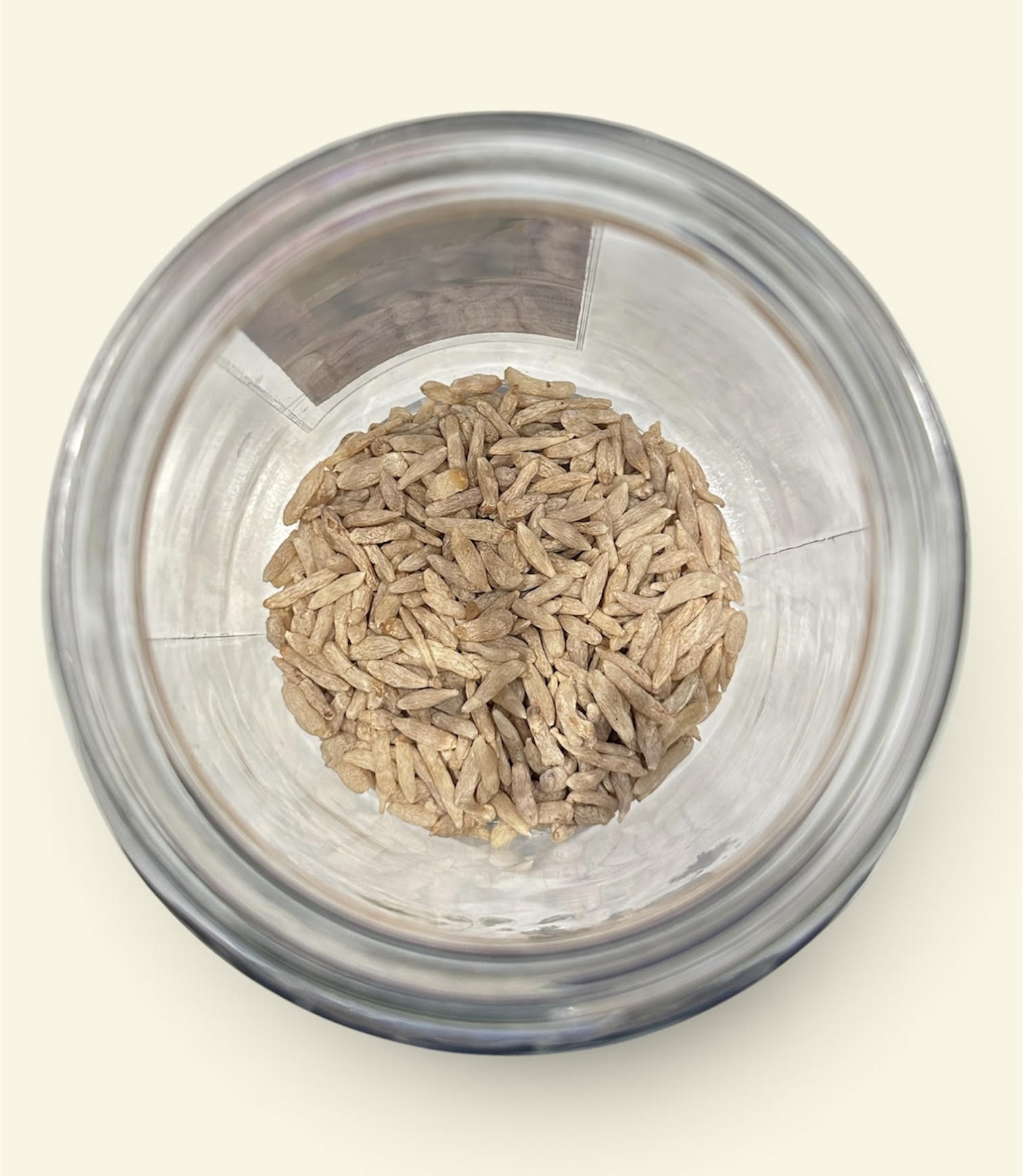
Description:
Mai Men Dong (麦门冬) is a traditional Chinese herbal medicine prepared from the dried tuberous roots of Ophiopogon japonicus (Thunb.) Ker Gawl., a perennial herb in the Asparagaceae family. It is commonly known as Mai Men Dong, Mai Dong, Ophiopogon Root, Ophiopogon Tuber, Dwarf Lilyturf Tuber, Lilyturf Root, Radix Ophiopogonis, Ophiopogonis Radix, and Maidong. In Traditional Chinese Medicine (TCM), Mai Men Dong is traditionally valued for nourishing Yin, generating body fluids, moistening the Lungs, nourishing the Stomach, and clearing Heat associated with traditional Yin deficiency patterns.
Mai Men Dong is traditionally considered an important herb for patterns involving Lung Yin deficiency, Stomach Yin deficiency, dryness, thirst, dry cough, and discomfort associated with insufficient body fluids. It is traditionally associated primarily with the Lung, Stomach, and Heart meridians and is commonly included in herbal formulas intended to moisten dryness, replenish fluids, support respiratory comfort, and nourish Yin according to traditional TCM principles.
Mai Men Dong is traditionally used to nourish Lung Yin and moisten the respiratory system. It may be selected in traditional formulas for dry cough, dry throat, and other symptoms associated with Lung Yin deficiency and dryness.
Mai Men Dong is also traditionally used to nourish Stomach Yin and promote the production of body fluids. In TCM, it may be included in traditional formulas for thirst, dry mouth, and digestive discomfort associated with Stomach Yin deficiency.
Mai Men Dong is traditionally used to clear Heat and nourish Yin. It may be incorporated into formulas for irritability, restlessness, and discomfort associated with traditional Yin deficiency Heat patterns.
Mai Men Dong is also traditionally valued for nourishing Heart Yin and clearing Heart Heat according to TCM principles. It may be included in traditional formulas for restlessness and feelings of internal heat when these symptoms correspond to an appropriate traditional pattern.
Mai Men Dong is commonly combined with other Chinese herbs, such as Sha Shen (Glehnia littoralis or Adenophora species, depending on the materia medica source), Wu Wei Zi (Schisandra chinensis), and other ingredients selected according to the individual’s TCM pattern. The suitability of these combinations depends on the person’s constitution, symptoms, and the formula being used.
Benefits:
- Traditionally used to nourish Yin according to Traditional Chinese Medicine principles
- Traditionally used to nourish Lung Yin
- Traditionally used to moisten the Lungs and support respiratory comfort
- Traditionally used to support comfortable breathing in traditional dryness patterns
- Traditionally used to soothe dryness associated with the throat
- Traditionally used to support relief from dry cough according to traditional TCM principles
- Traditionally used to nourish Stomach Yin
- Traditionally used to promote the production of body fluids
- Traditionally used to support hydration-related comfort associated with traditional fluid deficiency patterns
- Traditionally used to support comfortable digestion associated with Stomach Yin deficiency
- Traditionally used to support relief from dry mouth and thirst in traditional TCM patterns
- Traditionally used to clear Heat associated with Yin deficiency
- Traditionally used to nourish Heart Yin according to traditional TCM principles
- Traditionally used to support calmness and comfort in patterns associated with Heart Yin deficiency
- Traditionally used to support the body’s traditional Yin and fluid balance
- Provides naturally occurring steroidal saponins
- Provides naturally occurring polysaccharides
- Contains naturally occurring homoisoflavonoids and other phytochemicals
- Contains plant-derived compounds investigated for antioxidant and anti-inflammatory activities
- Contains polysaccharides investigated in laboratory and preclinical research for
- immunomodulatory and other biological activities
- Traditionally used as an ingredient in classical Chinese herbal formulas
- Traditionally used to support overall wellness according to TCM principles
Other Names:
Mai Men Dong, Mai Men Dong (麦门冬), Mai Dong (麦冬), Maidong, Ophiopogon Root, Ophiopogon Tuber, Dwarf Lilyturf Tuber, Lilyturf Tuber, Lilyturf Root, Radix Ophiopogonis, Ophiopogonis Radix, Ophiopogon japonicus Root, Ophiopogon japonicus Tuber, Ophiopogon japonicus (Thunb.) Ker Gawl., and Dwarf Lilyturf.
Persian names: ریشه اوفیـوپوگون (Ophiopogon Root), ریشه لیلیتورف (Lilyturf Root), غده اوفیـوپوگون (Ophiopogon Tuber), and گیاه اوفیـوپوگون (Ophiopogon Plant).
Indian names: ओफिओपोगोन की जड़ (Ophiopogon Root), ओफिओपोगोन कंद (Ophiopogon Tuber), लिलिटर्फ कंद (Lilyturf Tuber), and मै मैन डोंग (Mai Men Dong).
Traditional Uses:
In Traditional Chinese Medicine, Mai Men Dong is traditionally used to nourish Yin and replenish body fluids, particularly in patterns involving Lung Yin deficiency and Stomach Yin deficiency. It may be included in traditional formulas for dryness, thirst, dry mouth, and other symptoms associated with insufficient body fluids.
Mai Men Dong is traditionally used to moisten the Lungs and support respiratory comfort. It may be included in traditional formulas for dry cough, dry throat, and respiratory discomfort associated with traditional Lung Yin deficiency patterns.
Mai Men Dong is traditionally used to nourish Stomach Yin and generate fluids. It may be selected in traditional formulas for thirst, dry mouth, and digestive discomfort associated with dryness or Stomach Yin deficiency.
Mai Men Dong is also traditionally used to clear Heat associated with Yin deficiency. In TCM, it may be included in formulas for irritability, restlessness, and feelings of internal heat when these symptoms correspond to the appropriate traditional pattern.
Another traditional application of Mai Men Dong is nourishing Heart Yin and clearing Heart Heat. It may be included in formulas intended to support emotional calmness and comfort when symptoms are attributed to a traditional Heart Yin deficiency or Heart Heat pattern.
Mai Men Dong is frequently combined with other herbs in classical Chinese formulas. The specific combination depends on whether the primary traditional pattern involves Lung dryness, Stomach Yin deficiency, fluid depletion, or another pattern identified by a qualified TCM practitioner.
Traditionally, Mai Men Dong is selected according to the individual’s TCM pattern, constitution, symptoms, and the other herbs included in the formula. Its traditional uses should not be interpreted as established clinical evidence that the herb treats a specific disease.
Side Effects:
Mai Men Dong is traditionally used in Chinese herbal medicine, but comprehensive clinical safety data for the dried root used on its own remain limited. Tolerability may vary depending on the preparation, amount consumed, duration of use, individual sensitivity, and other herbs or medications taken concurrently.
Possible adverse effects may include gastrointestinal discomfort, nausea, loose stools, or diarrhea. These effects are not necessarily experienced by everyone, and the frequency of adverse reactions to the whole dried herb has not been firmly established in high-quality human studies.
In Traditional Chinese Medicine, Mai Men Dong is traditionally considered moistening and nourishing. It may be unsuitable for certain patterns involving Spleen and Stomach weakness with loose stools or digestive symptoms attributed to Cold and Dampness. These traditional considerations are not equivalent to established biomedical contraindications.
Allergic reactions are possible in sensitive individuals.
Discontinue use and consult a healthcare practitioner if unwanted or persistent symptoms occur. Seek prompt medical attention if you experience signs of a serious allergic reaction.
Precautions:
Consult a healthcare practitioner prior to use if you are taking prescription medications or other natural health products, or if you have a medical condition.
Consult a qualified healthcare practitioner before using Mai Men Dong if you have a chronic gastrointestinal condition, persistent diarrhea, or unexplained digestive symptoms.
Individuals with diabetes or those taking glucose-lowering medications should consult a healthcare practitioner before using concentrated Ophiopogon extracts. Some laboratory and animal studies have investigated potential glucose-regulating effects of Ophiopogon constituents, but the clinical significance for the whole dried root in humans remains uncertain.
Do not use during pregnancy or breastfeeding unless directed by a qualified healthcare practitioner or Traditional Chinese Medicine practitioner. Reliable safety information for medicinal doses of Mai Men Dong during pregnancy and breastfeeding is limited.
Consult a healthcare practitioner before use if you have a serious or major medical condition, or if you are scheduled for surgery.
Do not use Mai Men Dong as a substitute for medical evaluation or treatment for persistent cough, breathing difficulties, severe thirst, unexplained weight loss, or other ongoing symptoms.
Discontinue use and consult a healthcare practitioner if symptoms persist or worsen or if new symptoms develop.
Interactions:
Clinical information about interactions involving Mai Men Dong used alone is limited. Consult a healthcare practitioner before combining it with prescription medications, over-the-counter medicines, or other natural health products.
Blood-sugar medications: Some experimental studies have investigated glucose-related effects of Ophiopogon constituents. The clinical relevance is uncertain, but individuals taking insulin or other glucose-lowering medications should seek professional guidance before using concentrated extracts.
Other herbal medicines: Mai Men Dong is frequently combined with other herbs in Traditional Chinese Medicine. The overall safety and interaction profile depends on the complete formula, the specific ingredients, and the amount used.
Medications processed by the liver: Laboratory research has investigated the biological activities of Ophiopogon constituents, but clinically significant interactions with drug-metabolizing enzymes have not been sufficiently established for the whole dried root. Consult a healthcare practitioner if you take medications with a narrow therapeutic range.
Other natural health products: Combining Mai Men Dong with products intended to affect blood sugar, digestion, or other physiological functions may complicate the assessment of adverse effects. Professional guidance is advisable when using multiple products.
Individuals taking multiple medications, using concentrated herbal extracts, or receiving treatment for a chronic medical condition should consult a qualified healthcare practitioner before use.
Dosing:
Use according to the product label or as directed by a qualified healthcare practitioner or Traditional Chinese Medicine practitioner.
Traditional Chinese Medicine references commonly describe Mai Men Dong in an approximate range of 6–12 g of dried herb when used in a traditional decoction. The appropriate amount may vary according to the preparation, formula, individual constitution, and clinical circumstances.
This traditional dosage range is provided for general reference and is not a personalized treatment recommendation. It should not automatically be applied to powdered products, concentrated extracts, or other preparations with different strengths.
For a 50 g bulk-herb product, the package quantity should not be interpreted as a recommended daily dose. A qualified practitioner can help determine the appropriate amount and duration of use.
Storage:
Store in a cool, dry place away from direct sunlight. Keep tightly closed and out of reach of children.
Protect dried Mai Men Dong from moisture, humidity, insects, and excessive heat. Store in clean, food-grade packaging to preserve the quality of the dried herb.
Discard if there are signs of mold, unusual odor, insect contamination, discoloration inconsistent with the product’s normal appearance, or other evidence of spoilage.
Preparation:
If using dried Mai Men Dong, prepare according to the product instructions or the directions provided by your Traditional Chinese Medicine practitioner.
Traditionally, Mai Men Dong is prepared as a decoction by simmering the dried tuberous roots in water, often together with other herbs selected for a specific TCM pattern. Preparation time, quantity of water, and the use of other ingredients may vary according to the formula.
Mai Men Dong may also be incorporated into traditional herbal soups and multi-herb preparations where appropriate.
The dried tuberous root of Ophiopogon japonicus should not be confused with other botanically related plants sold under similar common names. Confirm the botanical identity of the product before preparation.
Scientific Support:
Mai Men Dong is primarily derived from Ophiopogon japonicus (Thunb.) Ker Gawl., a perennial plant native to East Asia. Its dried tuberous roots, known as Ophiopogonis Radix or Maidong, are widely used in Traditional Chinese Medicine.
The tubers contain a variety of naturally occurring compounds, including steroidal saponins, polysaccharides, homoisoflavonoids, and other phytochemicals. The composition of these compounds can vary according to botanical source, growing conditions, harvesting practices, processing methods, and storage.
Modern scientific research has investigated Ophiopogon japonicus and its constituents for potential antioxidant, anti-inflammatory, cardiovascular, immunomodulatory, metabolic, and other biological activities. Research on its polysaccharides has also examined potential effects on immune responses, glucose metabolism, and other physiological processes. These findings provide scientific interest in the plant but do not establish that whole dried Mai Men Dong is effective for treating specific medical conditions in humans.
A comprehensive review of Ophiopogon japonicus describes its traditional medicinal applications, phytochemical constituents, pharmacological activities, and clinical research. The review identifies traditional uses associated with nourishing Yin, promoting body-fluid production, moistening the Lungs, and clearing Heart Heat, while highlighting the need for further investigation into its mechanisms and clinical applications.
Additional reviews have examined the pharmacological activities and safety of Ophiopogon japonicus and related plants in the genera Ophiopogon and Liriope. Although experimental studies have reported promising biological effects, some research has limitations involving study design, experimental doses, and the extent to which laboratory findings translate into human health outcomes.
Health Canada maintains records for licensed natural health products containing Ophiopogon japonicus, including multi-ingredient traditional herbal preparations. These records provide information about specific licensed products and their authorized conditions of use. A licence for a multi-ingredient product should not be interpreted as proof that standalone dried Mai Men Dong has been approved for every traditional or experimentally investigated use.
Clinical evidence for Mai Men Dong varies according to the preparation, dose, botanical material, and health condition studied. Findings involving isolated compounds, concentrated extracts, or animal models should not automatically be applied to a 50 g whole-herb product. Additional high-quality human clinical trials are needed to establish specific therapeutic applications, effectiveness, safety, and appropriate dosing.
References & Scientific Support:
PubMed – Ophiopogon japonicus—A Phytochemical, Ethnomedicinal and Pharmacological Review. This review examines the traditional uses, botanical characteristics, chemical constituents, pharmacological activities, and clinical research concerning Ophiopogon japonicus. It discusses steroidal saponins, homoisoflavonoids, and polysaccharides, as well as experimental research into antioxidant, anti-inflammatory, cardiovascular, antimicrobial, and other biological activities. The authors also identify areas requiring further scientific investigation. View Research.
PubMed – Liriopogons (Genera Ophiopogon and Liriope): A Critical Review of the Phytochemical and Pharmacological Research. This review evaluates the phytochemical and pharmacological research on Ophiopogon and Liriope species, including research into cardiovascular protection, inflammation, glucose metabolism, antioxidant activity, and other biological effects. It also discusses limitations in the available evidence, including methodological concerns and the difficulty of translating experimental findings into established clinical benefits. View Research.
Health Canada – Licensed Natural Health Products Database: Product Information for a Licensed Formula Containing Ophiopogon japonicus. This Health Canada record identifies Ophiopogon japonicus as a medicinal ingredient in a licensed multi-ingredient natural health product and provides product-specific information about its composition, authorized uses, and risk information. The record is a regulatory reference for the listed formula and should not be interpreted as a standalone approval of bulk Ophiopogon root for all medicinal purposes. View Health Canada Reference.


