Description:
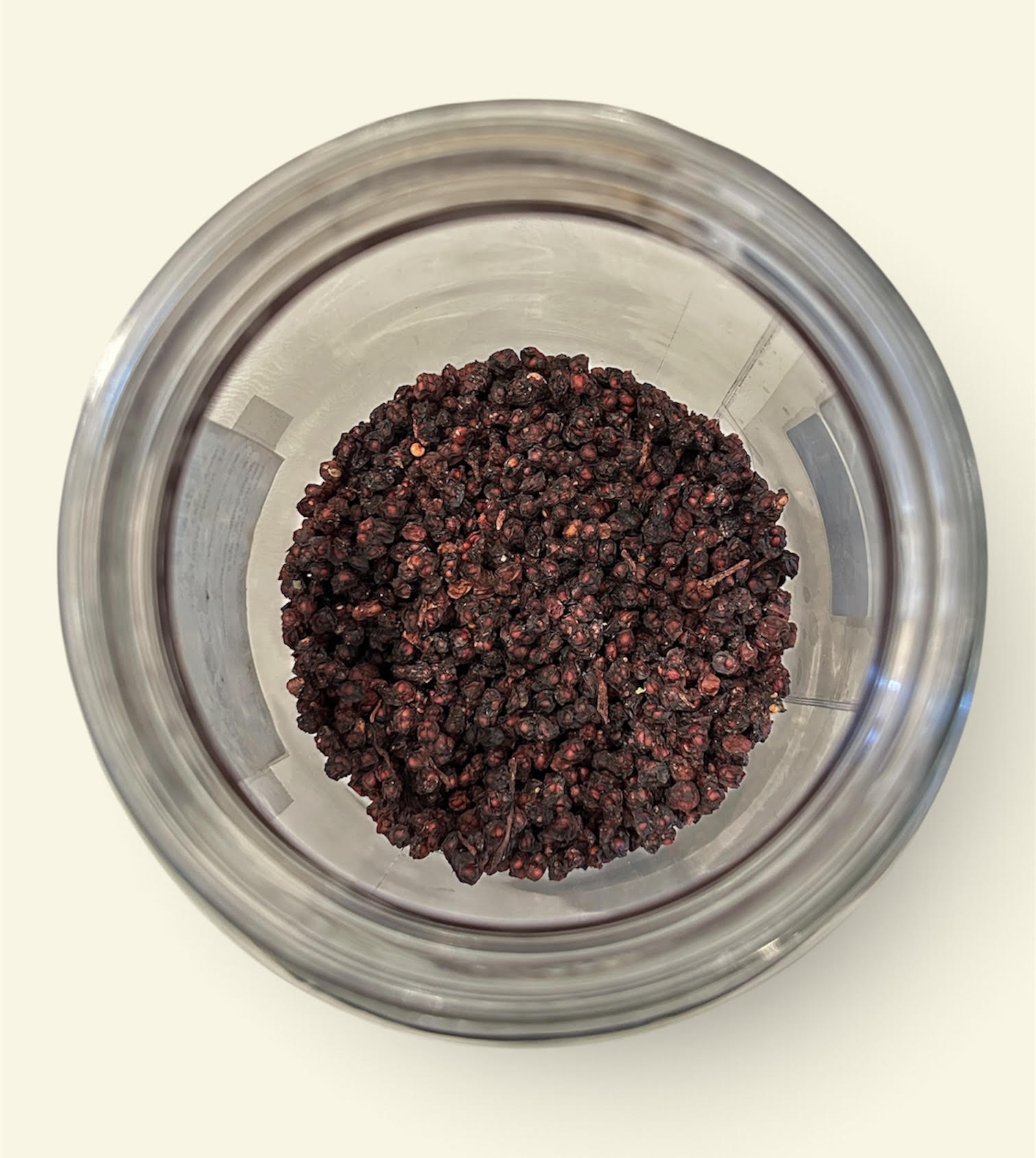
Wu Wei Zi (五味子) (Schisandra chinensis) is a traditional Chinese herbal medicine prepared from the dried, ripe fruits of Schisandra chinensis (Turcz.) Baill., a climbing vine in the Schisandraceae family. It is commonly known as Wu Wei Zi, Schisandra Berry, Schisandra Fruit, Chinese Schisandra, Chinese Magnolia Vine Berry, Five-Flavor Fruit, Five-Taste Berry, and Fructus Schisandrae. The name Wu Wei Zi translates approximately to “Five-Flavor Fruit,” reflecting the traditional description of its combination of sour, sweet, bitter, pungent, and salty tastes. In Traditional Chinese Medicine (TCM), Wu Wei Zi is traditionally valued for its astringent properties, its ability to support Lung Qi and Kidney function, promote the generation of fluids, and help contain excessive sweating according to traditional TCM principles.
Wu Wei Zi is traditionally considered an important herb for patterns involving chronic cough, wheezing, spontaneous sweating, night sweating, thirst, and certain symptoms associated with Kidney deficiency. It is traditionally associated primarily with the Lung, Heart, and Kidney meridians and is commonly included in formulas intended to support respiratory function, conserve fluids, calm the Heart, and support traditional Kidney functions. These uses are based on traditional TCM theory and should not be interpreted as established treatments for medical conditions.
Wu Wei Zi is traditionally used to astringe the Lung and support respiratory comfort. In TCM, it may be selected in traditional formulas for chronic cough, wheezing, and other symptoms associated with Lung Qi deficiency or Lung Qi failing to descend, according to traditional pattern differentiation.
Wu Wei Zi is also traditionally used to astringe and conserve fluids. It may be included in traditional formulas for spontaneous sweating, night sweating, excessive fluid loss, and thirst associated with traditional patterns of fluid deficiency.
Wu Wei Zi is traditionally used to support Kidney functions according to TCM principles. It may be selected in traditional formulas for certain symptoms associated with Kidney deficiency, including frequent urination and other patterns involving the traditional Kidney system.
Wu Wei Zi is also traditionally valued for calming the Heart and supporting mental and emotional balance according to traditional TCM principles. It has traditionally been included in formulas for palpitations, restlessness, and insomnia when these symptoms correspond to an appropriate traditional pattern.
Modern phytochemical research has identified lignans, including schisandrin and related compounds, as characteristic constituents of Schisandra fruit. Researchers have investigated these compounds for potential antioxidant, hepatoprotective, neuroprotective, and other biological activities. However, findings from laboratory studies, animal research, and concentrated extracts do not establish that dried Schisandra berries are effective for treating specific medical conditions in humans.
Benefits:
- Traditionally used to astringe the Lung and support respiratory comfort according to TCM principles
- Traditionally used to support Lung Qi in appropriate traditional patterns
- Traditionally used to support comfortable breathing in traditional TCM formulations
- Traditionally used for chronic cough associated with traditional Lung patterns
- Traditionally used to help conserve body fluids
- Traditionally used to support fluid balance according to traditional TCM principles
- Traditionally used for excessive sweating, including spontaneous sweating and night sweating, in appropriate traditional patterns
- Traditionally used to relieve thirst associated with traditional fluid deficiency patterns
- Traditionally used to support traditional Kidney functions
- Traditionally used to support the body’s traditional astringent functions
- Traditionally used to support Heart-related patterns involving palpitations and restlessness
- Traditionally used to support calmness and sleep when indicated by traditional TCM pattern differentiation
- Traditionally used to support overall vitality according to traditional TCM principles
- Provides naturally occurring lignans, including schisandrin and related Schisandra compounds
- Provides naturally occurring organic acids and other plant phytochemicals
- Contains naturally occurring antioxidant compounds investigated in modern scientific research
- Contains plant compounds studied for potential liver-protective biological activity
- Contains plant compounds investigated for potential neuroprotective and anti-inflammatory activities
- Traditionally used as an ingredient in classical TCM herbal formulas
- Traditionally used to support overall wellness according to traditional Chinese medicine principles
Other Names:
Wu Wei Zi, Wu Wei Zi (五味子), Wuweizi, Wu Wei Zi Berry, Schisandra Berry, Schisandra Fruit, Schisandra chinensis Fruit, Chinese Schisandra, Chinese Magnolia Vine Berry, Five-Flavor Fruit, Five-Taste Berry, Five-Flavour Berry, Five-Taste Fruit, Fructus Schisandrae, Fructus Schizandrae, Schizandra Berry, Schizandra Fruit, Northern Schisandra, Bei Wu Wei Zi (北五味子), Schisandra chinensis (Turcz.) Baill., and Chinese Magnolia Vine.
Persian names: توت پنج طعم (Five-Flavor Berry), میوه پنج طعم (Five-Flavor Fruit), شیزاندرا (Schisandra), and میوه شیزاندرا (Schisandra Fruit).
Indian names: पंचस्वाद फल (Panchaswad Phal, meaning “Five-Flavor Fruit”), वू वेई ज़ी (Wu Wei Zi), शिसांद्रा फल (Schisandra Phal), and चाइनीज़ मैगनोलिया वाइन (Chinese Magnolia Vine). These are descriptive or transliterated names rather than universally established traditional Ayurvedic drug names. Wu Wei Zi is primarily associated with Traditional Chinese Medicine rather than classical Ayurveda.
Traditional Uses:
In Traditional Chinese Medicine, Wu Wei Zi is traditionally used to astringe the Lung and support respiratory function. It may be included in traditional formulas for chronic cough, wheezing, and other symptoms associated with traditional Lung Qi deficiency patterns.
Wu Wei Zi is traditionally used to conserve body fluids and reduce excessive fluid loss. It may be selected in traditional formulas for spontaneous sweating, night sweating, thirst, and symptoms associated with traditional fluid deficiency patterns.
Wu Wei Zi is traditionally used to support Kidney functions according to TCM principles. It may be included in traditional formulas for frequent urination and certain symptoms associated with traditional Kidney deficiency patterns.
Wu Wei Zi is also traditionally used to calm the Heart and support emotional balance and sleep. It may be included in traditional formulas for palpitations, restlessness, and insomnia when these symptoms correspond to an appropriate TCM pattern.
Traditionally, Wu Wei Zi is selected according to the individual’s TCM pattern, constitution, symptoms, and the other herbs included in the formula. It is commonly combined with other herbs to support the intended functions of a traditional herbal prescription.
Side Effects:
Wu Wei Zi may be well tolerated by some adults when used appropriately, but side effects and individual responses can vary depending on the preparation, amount consumed, duration of use, and concurrent medications.
Possible adverse effects may include gastrointestinal discomfort, abdominal discomfort, heartburn, reduced appetite, or other digestive symptoms.
Schisandra contains biologically active lignans that may influence the activity of drug-metabolizing enzymes and transport proteins, including CYP3A and P-glycoprotein. These effects may alter the absorption, metabolism, or blood concentrations of certain medications and could potentially increase adverse effects or reduce treatment effectiveness.
Some individuals may experience sensitivity or allergic reactions to herbal products containing Schisandra.
The safety of long-term use of dried Schisandra berries has not been established for every population or medical condition. Evidence from standardized extracts should not automatically be applied to whole dried berries.
Discontinue use and consult a healthcare practitioner if unwanted or persistent symptoms occur.
Precautions:
Consult a qualified healthcare practitioner before using Wu Wei Zi if you take prescription medications, use other herbal products, or have an existing medical condition.
Do not use during pregnancy or breastfeeding unless directed by a qualified healthcare practitioner. Safety information for the specific dried-berry preparation may be limited.
Consult a healthcare practitioner before use if you have liver disease, kidney disease, a chronic gastrointestinal condition, or another significant medical condition.
Seek professional guidance before using Wu Wei Zi if you take medications with a narrow therapeutic range or medicines whose effectiveness depends on maintaining stable blood concentrations.
Individuals scheduled for surgery should inform their healthcare practitioner about their use of Schisandra and ask whether it should be discontinued beforehand.
Do not use Wu Wei Zi as a substitute for prescribed medication or appropriate medical care for persistent cough, breathing difficulties, palpitations, insomnia, or other ongoing symptoms.
Discontinue use and consult a healthcare practitioner if symptoms persist, worsen, or new symptoms develop.
Interactions:
Consult a healthcare practitioner or pharmacist before combining Wu Wei Zi with prescription medications or other natural health products.
CYP3A-metabolized medications: Schisandra constituents may inhibit CYP3A activity and alter the metabolism of certain medicines. The potential clinical significance depends on the specific medication and preparation.
P-glycoprotein substrates: Schisandra may affect P-glycoprotein, a transporter involved in drug absorption and elimination. This could alter the blood concentrations of certain medications.
Immunosuppressants: Some immunosuppressive medications depend on CYP3A and/or P-glycoprotein for their metabolism or transport. Combining them with Schisandra may affect drug exposure and requires medical supervision.
Anticoagulants and antiplatelet medications: The evidence for clinically significant interactions with whole dried Schisandra berries is limited. Individuals taking blood-thinning medications should seek professional guidance before use.
Other prescription medications: Because Schisandra may affect drug-metabolizing enzymes and transporters, individuals taking multiple medications should consult a pharmacist or healthcare practitioner to assess possible interactions.
Do not start, stop, or change the dose of a prescribed medication based on the use of Wu Wei Zi without professional advice.
Dosing:
Use according to the product label or as directed by a qualified healthcare practitioner or Traditional Chinese Medicine practitioner.
Traditional Chinese Medicine references commonly describe Wu Wei Zi in an approximate range of 2–6 g of dried fruit when used as a decoction. The appropriate amount depends on the preparation, formula, individual constitution, symptoms, and clinical circumstances.
Because Schisandra may interact with medications, the appropriate amount and duration of use should be determined carefully, especially for individuals taking prescription medicines.
For a 50 g bulk-herb product, the package quantity should not be interpreted as a recommended daily dose.
Storage:
Store in a cool, dry place away from direct sunlight. Keep tightly closed and out of reach of children.
Protect dried Wu Wei Zi berries from moisture, humidity, insects, and excessive heat. Discard if there are signs of mold, unusual odor, insect contamination, or spoilage.
Preparation:
If using dried Wu Wei Zi berries, prepare according to the product instructions or directions provided by your Traditional Chinese Medicine practitioner.
Traditionally, Wu Wei Zi is prepared as a decoction by simmering the dried fruit in water. It may be used alone or combined with other herbs in traditional TCM formulas according to the individual’s pattern and intended use.
The berries may also be incorporated into traditional herbal preparations following appropriate practitioner guidance. Use only products intended for consumption, and do not assume that concentrated extracts and whole dried berries have equivalent effects or dosing requirements.
Scientific Support:
Wu Wei Zi is primarily derived from the dried ripe fruit of Schisandra chinensis (Turcz.) Baill., a climbing plant native to East Asia. The related species Schisandra sphenanthera is also used in traditional Chinese medicine, but it is a distinct botanical source and should not automatically be treated as interchangeable with Schisandra chinensis.
Schisandra berries contain numerous naturally occurring compounds, including dibenzocyclooctadiene lignans, such as schisandrin and related compounds, as well as triterpenoids, organic acids, essential oils, and other phytochemicals. Research has investigated these constituents for potential antioxidant, anti-inflammatory, hepatoprotective, neuroprotective, and other biological activities.
Modern pharmacological research has also investigated Schisandra’s potential effects on the central nervous system, liver function, stress responses, and metabolic processes. However, the findings vary according to the plant species, preparation, concentration, and study design. Results from laboratory experiments, animal studies, or concentrated extracts do not establish that a 50 g whole-herb product is effective for treating specific medical conditions in humans.
Research has identified a potential for Schisandra constituents to influence CYP3A and P-glycoprotein, which are involved in the metabolism and transport of numerous medications. These findings highlight the importance of evaluating potential herb–drug interactions before combining Schisandra with prescription medicines.
Clinical evidence varies by health condition, preparation, dose, and duration of use. Additional high-quality human clinical studies are needed to establish the effectiveness, safety, and appropriate dosing of whole dried Wu Wei Zi berries for specific therapeutic applications.
References & Scientific Support:
PubMed – Schisandra chinensis and its phytotherapeutical applications. This review summarizes research on Schisandra chinensis, including its traditional use in Chinese medicine, characteristic lignans and polysaccharides, and investigations into adaptogenic, central nervous system, hepatoprotective, and other biological activities. It also discusses the available clinical literature and the limitations of translating experimental findings into established therapeutic uses. View Research.
PubMed – A comprehensive review of ethnopharmacology, phytochemistry, pharmacology, and pharmacokinetics of Schisandra chinensis and Schisandra sphenanthera. This review examines the traditional uses, chemical constituents, pharmacological activities, and pharmacokinetics of two Schisandra species. It discusses research into antioxidant, anti-inflammatory, hepatoprotective, neuroprotective, and other potential biological effects, while highlighting possible drug interactions associated with CYP3A and P-glycoprotein inhibition. View Research.
Health Canada – Natural Health Products Ingredients Database: Schisandra chinensis. This Health Canada database provides ingredient information for Schisandra chinensis, a botanical source of Wu Wei Zi. It serves as a reference for identifying the ingredient and its traditional herbal classification. This ingredient-database reference does not constitute approval or therapeutic endorsement of this specific 50 g bulk-herb product. View Health Canada Reference.