Description:
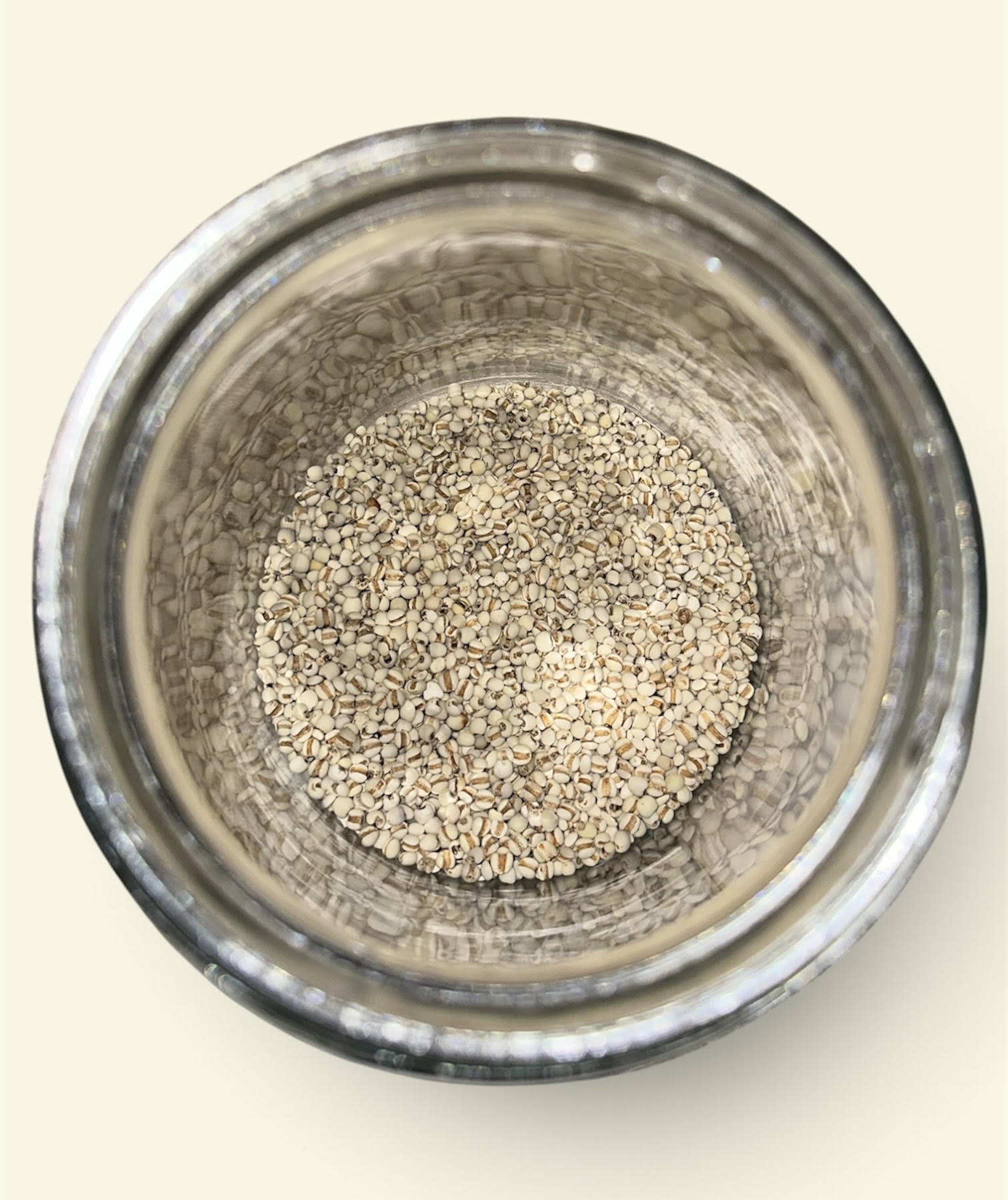
Yi Yi Ren (薏苡仁), also known as Coix Seed, Job’s Tears, or Adlay, is a traditional Chinese herbal medicine prepared from the dried mature seed kernel of Coix lacryma-jobi var. ma-yuen, a plant in the Poaceae (grass) family. It is used both as a traditional herbal ingredient and as a food.
In Traditional Chinese Medicine (TCM), Yi Yi Ren is traditionally valued for promoting urination, helping drain Dampness, supporting Spleen function, and relieving certain types of discomfort associated with Dampness patterns. It is traditionally associated with the Spleen, Stomach, and Lung meridians.
Yi Yi Ren is commonly included in traditional formulas for fluid retention, loose stools associated with Spleen deficiency, and certain patterns involving joint discomfort. It is also traditionally used to clear Heat and help resolve Dampness according to TCM principles.
Coix seeds contain naturally occurring compounds, including polysaccharides, fatty acids, and other phytochemicals. Modern research has investigated these compounds for potential biological activities, but more clinical evidence is needed to establish specific health benefits in humans.
Benefits:
- Traditionally used to promote urination and help relieve fluid retention
- Traditionally used to drain Dampness according to TCM principles
- Traditionally used to support Spleen function
- Traditionally used to support comfortable digestion
- Traditionally used for loose stools associated with traditional Spleen deficiency patterns
- Traditionally used to support joint comfort in certain Dampness-related patterns
- Traditionally used to clear Heat and help resolve Dampness
- Traditionally used in formulas for selected skin concerns
- Provides naturally occurring polysaccharides and fatty acids
- Contains coixol and other naturally occurring plant compounds
- Contains phytochemicals investigated for antioxidant and anti-inflammatory activities
- Used as both a traditional herbal ingredient and a food
Other Names:
Yi Yi Ren, Yi Yi Ren (薏苡仁), Coix Seed, Job’s Tears, Job’s Tears Seed, Adlay, Adlay Seed, Chinese Pearl Barley, Coix Seed Kernel, Semen Coicis, Coicis Semen, Yiren, Yokuinin, Coix lacryma-jobi L. var. ma-yuen (Roman.) Stapf, and Coix lacryma-jobi L.
Persian names: اشک ایوب (Ashk-e Ayyub), دانه کویکس (Daneh-ye Coix), and دانه اشک ایوب (Job’s Tears Seed). These are descriptive names; standardized Persian herbal names may vary by region.
Indian names: गवेदुक (Gaveduk), गवेदुका (Gaveduka), Job’s Tears, and Adlay. Common names vary by region, and the botanical identity should be confirmed when purchasing.
Traditional Uses:
In Traditional Chinese Medicine, Yi Yi Ren is traditionally used to drain Dampness and promote urination. It may be included in formulas for fluid retention and difficulty urinating according to traditional TCM pattern differentiation.
Yi Yi Ren is also traditionally used to strengthen the Spleen and support digestion, particularly in patterns associated with loose stools and Dampness.
It may be combined with other herbs in traditional formulas for joint discomfort, certain skin concerns, and patterns involving Heat and Dampness.
Traditionally, Yi Yi Ren is selected according to the individual’s constitution, symptoms, and overall TCM pattern.
Side Effects:
Yi Yi Ren is commonly consumed as a food, but the safety of medicinal amounts may differ from ordinary dietary use.
Possible unwanted effects include gastrointestinal discomfort or allergic reactions in sensitive individuals. Its traditional diuretic use may also affect urination and fluid balance.
The safety of concentrated preparations and prolonged medicinal use has not been adequately established.
Discontinue use and consult a healthcare practitioner if unwanted or persistent symptoms occur.
Precautions:
Consult a healthcare practitioner before use if you take prescription medications or have a medical condition.
Pregnancy: Avoid medicinal use during pregnancy unless specifically directed by a qualified healthcare practitioner. Safety information is limited, and traditional references advise caution.
Breastfeeding: Consult a healthcare practitioner before medicinal use because safety information is insufficient.
Kidney conditions: Seek professional advice before using Yi Yi Ren for fluid retention or urinary concerns, especially if you have kidney disease or take diuretics.
Consult a healthcare practitioner if you have persistent diarrhea, unexplained swelling, or difficulty urinating.
Interactions:
Consult a healthcare practitioner before combining Yi Yi Ren with medications or other natural health products.
Diuretics: Yi Yi Ren is traditionally used to promote urination. The clinical significance of combining it with diuretic medications is uncertain.
Blood-sugar medications: Laboratory and animal studies have investigated possible effects of Coix constituents on glucose metabolism. The relevance to whole-seed products in humans is not established.
Other herbal products: Use caution when combining Yi Yi Ren with herbs that affect urination, fluid balance, or blood sugar.
Reliable clinical information about specific herb–drug interactions remains limited.
Dosing:
Use according to the product label or as directed by a qualified Traditional Chinese Medicine practitioner.
Traditional Chinese Medicine references commonly describe dried Yi Yi Ren in an approximate range of 9–30 g for decoction use. The appropriate amount depends on the preparation, intended use, and individual circumstances.
Because this product contains 50 g of dried herb, the package quantity should not be interpreted as a recommended daily dose.
Storage:
Store in a cool, dry place away from direct sunlight. Keep tightly closed and out of reach of children.
Protect the dried seeds from moisture, humidity, insects, and excessive heat. Discard if there are signs of mold, unusual odor, or spoilage.
Preparation:
Yi Yi Ren is traditionally prepared as a decoction by simmering the dried seeds in water according to the practitioner’s instructions.
It may also be cooked as a grain or added to traditional foods and herbal preparations. Some TCM formulas use raw Coix seed, while others use stir-fried Coix seed, which has different traditional applications.
Use the preparation recommended by your practitioner, and ensure the product is intended for its stated use.
Scientific Support:
Coix seed is derived from Coix lacryma-jobi var. ma-yuen, a member of the Poaceae family. It contains naturally occurring fatty acids, polysaccharides, sterols, flavonoids, and other phytochemicals.
Modern research has investigated Coix seed for potential antioxidant, anti-inflammatory, metabolic, and other biological activities. Research has also explored its possible role in cancer-related applications, particularly using specialized extracts and preparations.
These findings are preliminary for many applications. Evidence from laboratory experiments, animal studies, or concentrated medicinal preparations should not be assumed to establish the effectiveness of ordinary dried Coix seed in humans. Further clinical research is needed to clarify its benefits, safety, and appropriate medicinal dosing.
References & Scientific Support:
PubMed – Research on Coix Seed as a Food and Medicinal Resource, Its Chemical Components and Their Pharmacological Activities: A Review. This review examines the traditional uses, chemical constituents, and potential pharmacological activities of Coix seed, including research into anti-inflammatory, metabolic, and other biological effects. View Research.
PubMed – Adlay (Coix lachryma-jobi L. var. ma-yuen Stapf) Is a Potential Cancer Chemopreventive Agent toward Multistage Carcinogenesis Processes. This review examines research into Coix seed and its constituents, including antioxidant mechanisms, inflammation, and potential cancer-preventive activities. These findings do not establish that whole dried Coix seed prevents or treats cancer in humans. View Research.
Health Canada – Licensed Natural Health Products Database: Yi Yi Ren Tang / Coix Combination. This Canadian licensing record lists a natural health product containing Coix lacryma-jobi var. ma-yuen as one of several medicinal ingredients and provides product-specific licensing and safety information. Its approved details apply to the listed combination product, not automatically to standalone dried Coix seed. View Health Canada Reference.