Description:
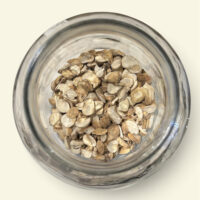
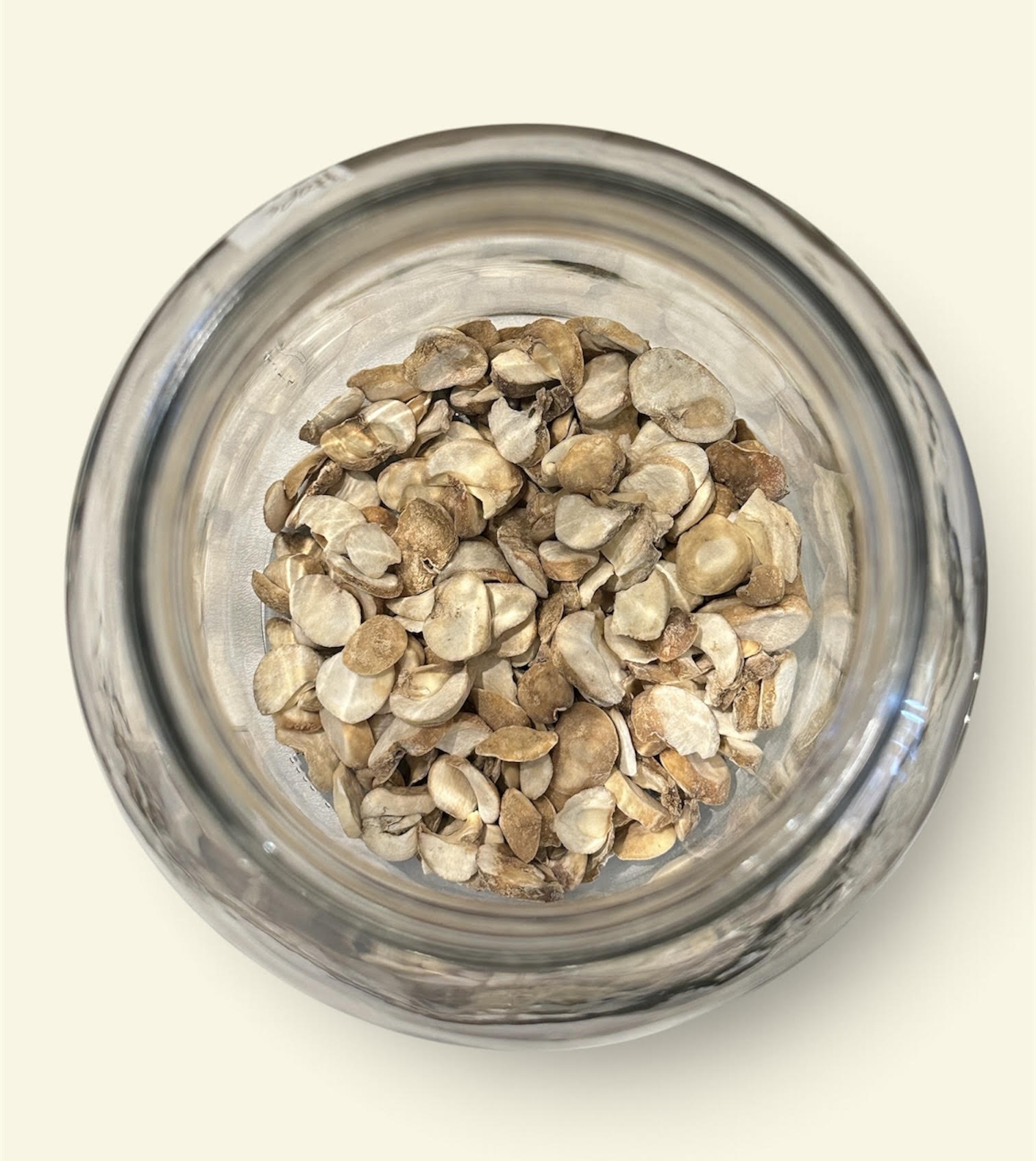
Zhe Bei Mu (浙贝母), also known as Zhejiang Fritillaria Bulb or Thunberg Fritillary Bulb, is a traditional Chinese herbal medicine prepared from the dried bulb of Fritillaria thunbergii Miq., a plant in the Liliaceae family. It is traditionally valued for clearing Heat, resolving Phlegm, and relieving cough according to Traditional Chinese Medicine (TCM) principles.
In TCM, Zhe Bei Mu is associated primarily with the Lung and Heart meridians. It is traditionally used in formulas for cough with thick sputum, chest discomfort associated with Phlegm-Heat, and certain patterns involving nodules or swellings.
Zhe Bei Mu is traditionally considered a cooling herb and is commonly selected when cough and Phlegm are associated with Heat patterns. It differs from Chuan Bei Mu (川贝母), another Fritillaria herb with distinct traditional applications.
Modern research has investigated its naturally occurring alkaloids and other plant compounds for potential respiratory, anti-inflammatory, antioxidant, and other biological activities. However, further clinical research is needed to establish specific benefits in humans.
Benefits:
- Traditionally used to clear Heat and resolve Phlegm
- Traditionally used to relieve cough associated with Phlegm-Heat patterns
- Traditionally used to support respiratory comfort
- Traditionally used to help loosen thick sputum
- Traditionally used to relieve chest discomfort associated with Phlegm
- Traditionally used in selected formulas for nodules and swellings
- Traditionally used to address certain throat-related concerns
- Contains naturally occurring steroidal alkaloids
- Provides naturally occurring plant compounds investigated for anti-inflammatory activity
- Contains phytochemicals studied for potential antioxidant effects
- Traditionally used as an ingredient in classical TCM herbal formulas
Other Names:
Zhe Bei Mu, Zhe Bei Mu (浙贝母), Zhejiang Fritillaria Bulb, Thunberg Fritillary Bulb, Thunberg Fritillaria, Fritillaria Bulb, Zhebeimu, Xiang Bei Mu (象贝母), Bei Mu (贝母), Fritillariae Thunbergii Bulbus, and Fritillaria thunbergii Miq.
Persian names: فریتیلاریا (Fritillaria), پیاز فریتیلاریا (Fritillaria Bulb), and پیاز زِهبیمو (Zhe Bei Mu Bulb). These are descriptive transliterations rather than established traditional Persian herbal names.
Indian names: शंखपुष्पी is sometimes encountered in Indian herbal naming, but it refers to other plants and should not be treated as a verified name for Zhe Bei Mu. More reliable descriptive names are Chinese Fritillary and Thunberg Fritillary.
Traditional Uses:
In Traditional Chinese Medicine, Zhe Bei Mu is traditionally used to clear Heat, resolve Phlegm, and relieve cough, particularly when thick sputum accompanies a Phlegm-Heat pattern.
It is also traditionally included in formulas for chest discomfort, throat symptoms, and certain nodules or swellings associated with Phlegm accumulation.
Zhe Bei Mu is traditionally considered a cooling herb and is selected according to the individual’s TCM pattern and symptoms. These uses reflect traditional practice and do not establish proven treatment effects.
Side Effects:
The safety of medicinal doses of Zhe Bei Mu has not been fully established in humans. Possible adverse effects may depend on the preparation, dose, and individual sensitivity.
Its bulb contains naturally occurring alkaloids, and concentrated extracts have shown dose-related toxicity in preclinical research.
Gastrointestinal discomfort or allergic reactions may occur. Stop use and consult a healthcare practitioner if unwanted symptoms develop.
Precautions:
Consult a qualified healthcare practitioner before use, particularly if you have a medical condition or take prescription medications.
Avoid use during pregnancy or breastfeeding unless specifically directed by a qualified healthcare practitioner, as safety information is limited.
Seek professional guidance if you have a persistent cough, breathing difficulty, fever, chest pain, or blood in your sputum. These symptoms may require medical assessment.
Use only correctly identified Fritillaria thunbergii products. Zhe Bei Mu should not be confused with other Fritillaria species, which have different chemical profiles and traditional applications.
Interactions:
Consult a healthcare practitioner before combining Zhe Bei Mu with medications or other herbal products.
Prescription medications: Clinically established interaction data are limited. Research on Fritillaria alkaloids suggests that interactions warrant further investigation.
Other cough and respiratory products: Combining multiple herbal or medicinal products for cough may complicate dosing and increase the chance of unwanted effects.
Other Fritillaria species: Do not substitute Zhe Bei Mu for Chuan Bei Mu or other Fritillaria bulbs without professional guidance.
Dosing:
Use according to the product label or as directed by a qualified Traditional Chinese Medicine practitioner.
Traditional Chinese Medicine references commonly describe dried Zhe Bei Mu in an approximate range of 5–10 g for decoction use. The appropriate amount depends on the preparation, formula, and individual circumstances.
Because the safety of medicinal dosing is not fully established, do not treat this range as a recommendation for self-treatment.
For a 50 g bulk-herb product, the package quantity should not be interpreted as a recommended daily dose.
Storage:
Store in a cool, dry place away from direct sunlight. Keep tightly closed and out of reach of children.
Protect the dried bulbs from moisture, humidity, insects, and excessive heat. Discard if there are signs of mold, unusual odor, or spoilage.
Preparation:
Zhe Bei Mu is traditionally prepared as a decoction by simmering the dried bulb in water according to a qualified practitioner’s instructions.
It is commonly combined with other herbs in traditional formulas for cough, Phlegm, and Heat patterns.
Use only the preparation and amount recommended by your practitioner. Do not assume that extracts, powders, and whole dried bulbs are interchangeable.
Scientific Support:
Zhe Bei Mu is derived from the dried bulb of Fritillaria thunbergii Miq. It contains naturally occurring steroidal alkaloids, essential-oil constituents, and other phytochemicals.
Modern research has investigated its traditional use for cough and sputum, as well as potential anti-inflammatory, antioxidant, and other biological activities. Some findings come from laboratory and animal studies rather than human clinical trials.
Although these findings are scientifically interesting, they do not establish that whole dried Zhe Bei Mu is effective for treating specific medical conditions. More high-quality clinical research is needed to establish its effectiveness, appropriate dosing, and safety in humans.
References & Scientific Support:
PubMed – Fritillariae Thunbergii Bulbus: Traditional Uses, Phytochemistry, Pharmacodynamics, Pharmacokinetics and Toxicity. This review examines the traditional uses, chemical constituents, pharmacological activities, and toxicity of Zhe Bei Mu, including research into cough relief, expectorant effects, inflammation, and safety. View Research.
PubMed – Fritillaria thunbergii Miq. (Zhe Beimu): A Review on Its Traditional Uses, Phytochemical Profile and Pharmacological Properties. This review summarizes the traditional applications of Fritillaria thunbergii, its naturally occurring compounds, and research into potential respiratory, anti-inflammatory, antioxidant, and other biological effects. View Research.
Health Canada – Licensed Natural Health Products Database: Fritillaria Bulb. This Health Canada record lists a licensed natural health product containing Fritillaria bulb and provides product-specific licensing information. The listed product is not marketed according to the database, and its licensing information should not be interpreted as approval of every standalone Zhe Bei Mu product. View Health Canada Reference.