Description:
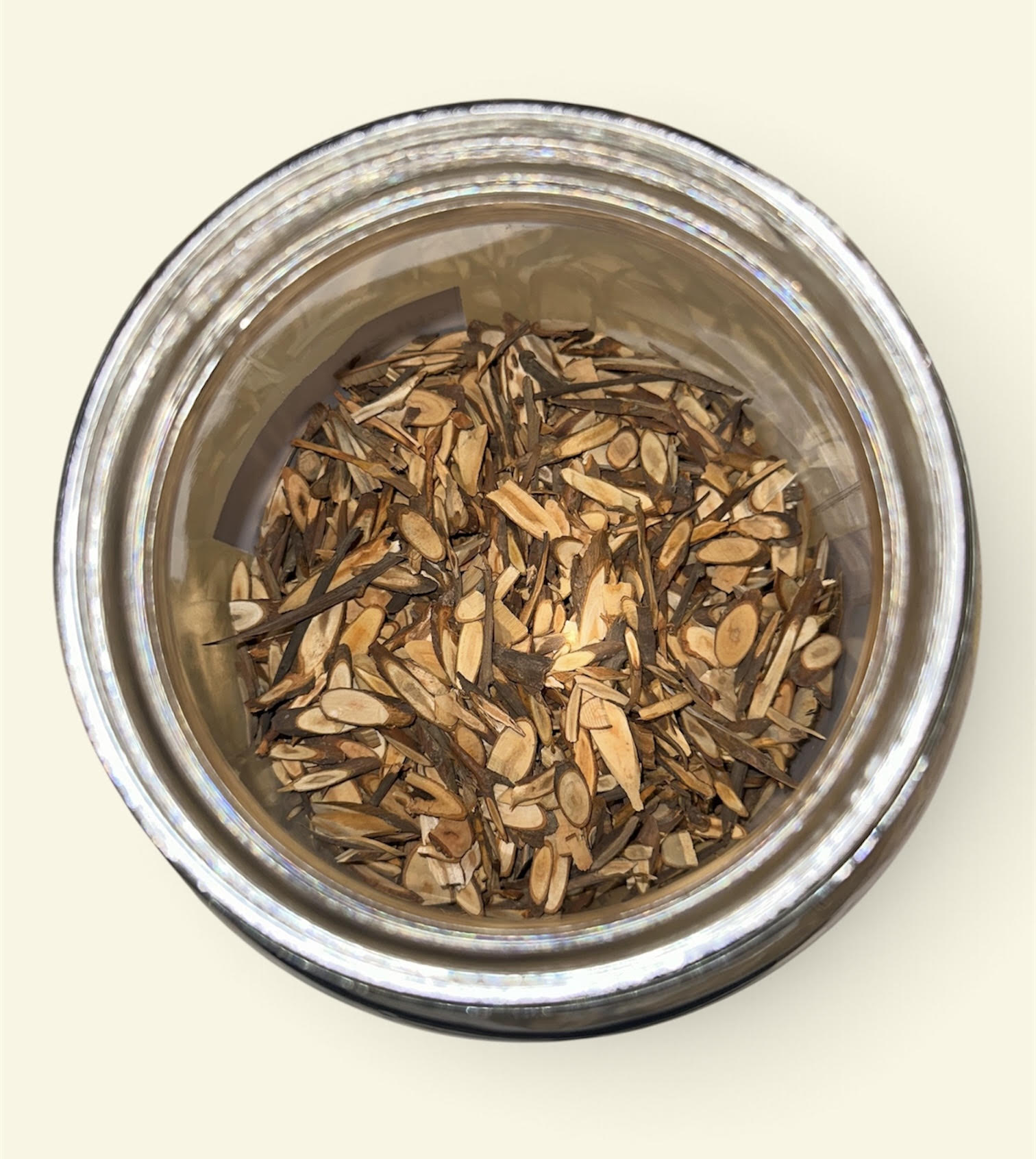
Gui Zhi (Cinnamomum cassia) is a traditional Chinese herbal medicine prepared from the dried young twigs of Cinnamomum cassia (L.) J. Presl, a plant in the Lauraceae family. It is commonly known as Gui Zhi, Cinnamon Twig, Cinnamon Twig Herb, Cinnamomi Ramulus, Ramulus Cinnamomi, and Cassia Twig. In Traditional Chinese Medicine (TCM), Gui Zhi is traditionally valued for its ability to release the Exterior, warm and unblock the channels, support circulation of Qi and Blood, and warm and support Yang according to traditional TCM principles.
Gui Zhi is traditionally considered an important herb for patterns involving Wind-Cold Exterior conditions and impaired circulation of Qi and Blood. It is traditionally associated primarily with the Heart, Lung, and Bladder meridians and is commonly included in formulas intended to release Exterior Wind-Cold, warm the channels, promote circulation, and harmonize the movement of Qi and Blood.
Gui Zhi is traditionally used to release the Exterior and disperse Wind-Cold. In TCM, it may be selected in traditional formulas for chills, mild fever, headache, body aches, and other symptoms associated with traditional Wind-Cold patterns.
Gui Zhi is also traditionally used to warm and unblock the channels and promote circulation. It may be included in traditional formulas for muscle discomfort, joint discomfort, stiffness, and other concerns associated with cold or impaired circulation according to traditional TCM pattern differentiation.
Gui Zhi is traditionally used to warm and support Yang and regulate the movement of fluids and Qi. It is commonly combined with other herbs in classical TCM formulas according to the individual’s constitution, traditional pattern, and specific symptoms.
Benefits:
- Traditionally used to release Exterior Wind-Cold according to Traditional Chinese Medicine principles
- Traditionally used to disperse Wind-Cold
- Traditionally used to support healthy respiratory comfort during seasonal cold exposure
- Traditionally used to warm and unblock the channels
- Traditionally used to promote the circulation of Qi and Blood
- Traditionally used to support comfortable muscle and joint function associated with cold patterns
- Traditionally used to support comfortable movement and circulation
- Traditionally used to warm and support Yang according to TCM principles
- Traditionally used to regulate and harmonize the movement of Qi
- Traditionally used to support healthy circulation
- Traditionally used to support digestive warmth and comfortable digestion
- Traditionally used as an aromatic warming herbal ingredient
- Provides naturally occurring cinnamaldehyde and other aromatic compounds
- Provides naturally occurring polyphenols and other phytochemicals
- Contains naturally occurring volatile oils characteristic of Cinnamomum species
- Traditionally used as an ingredient in classical TCM herbal formulas
- Traditionally used to support overall wellness according to TCM principles
Other Names:
Gui Zhi, Gui Zhi (桂枝), Gui Zhi Herb, Gui Zhi Cao, Guizhi, Cinnamon Twig, Cinnamon Twigs, Cassia Twig, Cassia Twigs, Cinnamomi Ramulus, Ramulus Cinnamomi, Cinnamomum Ramulus, Cinnamomum cassia Twig, Cinnamomum cassia Young Branch, and Cassia Cinnamon Twig.
Persian names: دارچین (Darchin), چوب دارچین (Cinnamon), و شاخه دارچین (Cinnamon Twig).
Indian names: जंगली दालचीनी (Jangli Dalchini), दालचीनी (Dalchini), त्वक् (Twak / Tvak), तज (Taj / Tajj), इलवंगपट्टै (Ilavangapattai), लवंगपट्टा (Lavangapatta), दालचीनी चक्का (Dalchini Chekka), and കറുവപ്പട്ട (Karuvapatta).
Traditional Uses:
In Traditional Chinese Medicine, Gui Zhi is traditionally used to release the Exterior and disperse Wind-Cold. It is traditionally selected for chills, mild fever, headache, body aches, and other symptoms associated with traditional Exterior Wind-Cold patterns.
Gui Zhi is traditionally used to warm and unblock the channels and promote circulation of Qi and Blood. It may be included in traditional formulas for muscle stiffness, joint discomfort, body aches, and other concerns associated with cold or impaired circulation.
Gui Zhi is also traditionally used to warm and support Yang and regulate the movement of Qi and fluids. It may be included in traditional formulas for cold-related digestive discomfort and other symptoms associated with traditional Yang deficiency or cold patterns.
Traditionally, Gui Zhi is commonly combined with other TCM herbs rather than used alone. Its selection, combination, and amount depend on the individual’s traditional pattern, constitution, symptoms, and the formulation being used.
Side Effects:
Gui Zhi is generally used in relatively small amounts as part of traditional herbal preparations. Some individuals may experience gastrointestinal discomfort, nausea, stomach irritation, or allergic reactions.
Because Gui Zhi is derived from Cinnamomum cassia, it contains naturally occurring aromatic compounds and may contain coumarin. The concentration of these constituents can vary according to species, plant part, cultivation, processing, and preparation.
Large amounts or prolonged use of cassia-derived cinnamon products may be of particular concern for individuals with liver disease because coumarin exposure may affect the liver in susceptible individuals.
Allergic reactions are possible in sensitive individuals, including skin irritation or other hypersensitivity reactions.
Discontinue use and consult a healthcare practitioner if unwanted or persistent symptoms occur.
Precautions:
Consult a healthcare practitioner prior to use if you are taking prescription medications or other natural health products, or if you have a medical condition.
Consult a qualified healthcare practitioner or Traditional Chinese Medicine practitioner before use during pregnancy or breastfeeding.
Individuals with liver disease should consult a healthcare practitioner before using concentrated or prolonged preparations containing cassia-derived cinnamon because of naturally occurring coumarin.
Individuals taking medications for blood sugar, blood pressure, cardiovascular conditions, or other chronic conditions should consult a healthcare practitioner before using concentrated cinnamon preparations.
Individuals with known allergies or sensitivities to cinnamon or plants in the Lauraceae family should use caution.
Do not use during pregnancy unless directed by a qualified healthcare practitioner or Traditional Chinese Medicine practitioner.
Consult a healthcare practitioner before use if you have a serious or major medical condition.
Discontinue use and consult a healthcare practitioner if symptoms persist or worsen or if new symptoms develop.
Interactions:
Consult a healthcare practitioner before using Gui Zhi with prescription medications or other natural health products.
Human clinical interaction data specifically concerning whole Gui Zhi twigs are limited. The potential for interactions may vary according to the preparation, amount used, duration of use, and concentration of active constituents.
Anticoagulant and antiplatelet medications: Cinnamon-derived compounds and coumarin have been investigated for effects relevant to coagulation. Individuals taking anticoagulant or antiplatelet medications should consult a healthcare practitioner before using concentrated preparations.
Blood-sugar medications: Cinnamon and its constituents have been investigated for potential effects on glucose metabolism. Individuals taking glucose-lowering medications should seek professional guidance before using concentrated preparations.
Blood-pressure medications: Cinnamon constituents have been investigated for cardiovascular and vascular effects. Individuals taking blood-pressure medication should consult a healthcare practitioner before using concentrated preparations.
Liver medications or hepatotoxic substances: Because cassia-derived cinnamon can contain varying amounts of coumarin, individuals with liver disease or those taking medications that affect the liver should seek professional guidance.
Individuals taking multiple medications or combining Gui Zhi with concentrated herbal extracts should consult a qualified healthcare practitioner before use.
Dosing:
Use according to the product label or as directed by a qualified healthcare practitioner or Traditional Chinese Medicine practitioner.
Traditional Chinese Medicine references commonly describe Gui Zhi in an approximate range of 3–9 g when used as a dried herb or decoction, although the appropriate amount depends on the preparation, formula, individual constitution, and clinical circumstances.
For a 50 g bulk-herb product, the package quantity should not be interpreted as a recommended daily dose.
Storage:
Store in a cool, dry place away from direct sunlight. Keep tightly closed and out of reach of children.
Protect dried Gui Zhi from moisture, humidity, insects, and excessive heat. Discard if there are signs of mold, unusual odor, insect contamination, or spoilage.
Preparation:
If using dried Gui Zhi, prepare according to the directions provided by your Traditional Chinese Medicine practitioner or product instructions.
Traditionally, Gui Zhi is commonly prepared as a decoction by simmering the dried herb with water. It is frequently combined with other herbs in classical TCM formulas according to the individual’s traditional pattern and intended use.
Because Gui Zhi is traditionally used as part of formulas, preparation and dosage should be determined according to the specific herbal combination and professional guidance.
Scientific Support:
Gui Zhi, also known as Cinnamomi Ramulus, refers specifically to the young branch or twig of Cinnamomum cassia. Modern pharmacognostic literature distinguishes this plant part from Cinnamomi Cortex, which refers to the dried bark.
Cinnamomum species contain numerous naturally occurring phytochemicals, including volatile oils, phenylpropanoids, terpenoids, flavonoids, coumarins, and other compounds. Cinnamaldehyde is among the important aromatic constituents associated with cassia cinnamon and cinnamon twig preparations.
Modern experimental research has investigated Cinnamomum species for potential antioxidant, anti-inflammatory, antimicrobial, metabolic, cardiovascular, and other biological activities. However, much of this research involves extracts, isolated compounds, animal studies, or in-vitro models, and these findings should not automatically be interpreted as evidence that whole dried Gui Zhi treats specific medical conditions in humans.
A review specifically examining Cinnamomi Ramulus describes its traditional applications, phytochemical constituents, pharmacological research, pharmacokinetics, and toxicology. More than 121 compounds have been reported from Cinnamomi Ramulus, including volatile oils, organic acids, triterpenoid saponins, coumarins, tannins, flavonoids, steroids, and polysaccharides.
Modern research on cinnamon more broadly remains difficult to interpret because studies often differ in the cinnamon species, plant part, preparation, dose, and extraction method. The U.S. National Center for Complementary and Integrative Health notes that current research does not clearly establish cinnamon as an effective treatment for a specific health condition.
Clinical evidence for Gui Zhi specifically remains limited compared with its long history of traditional use. Research differs according to the plant material, preparation, extraction method, dose, and condition studied. Additional high-quality human clinical studies are needed to establish specific therapeutic applications, effectiveness, safety, and dosing.
References & Scientific Support:
PubMed – The traditional uses, phytochemistry, pharmacology and toxicology of Cinnamomi ramulus: a review. This review specifically examines Cinnamomi Ramulus (Gui Zhi), including its traditional applications, botanical identity, phytochemical constituents, pharmacological research, pharmacokinetics, and toxicology. View Research.
PubMed – Cinnamomum cassia Presl: A Review of Its Traditional Uses, Phytochemistry, Pharmacology and Toxicology. This review summarizes traditional uses, phytochemistry, pharmacological research, and safety considerations concerning Cinnamomum cassia. View Research.
Canadian Food Inspection Agency (CFIA) – Coumarin in Cinnamon, Cinnamon-Containing Foods and Licorice Flavoured Foods. This Government of Canada targeted survey examines naturally occurring coumarin in cinnamon and cinnamon-containing foods, including differences between Cassia and Ceylon cinnamon, and provides Canadian surveillance data on coumarin concentrations and related food-safety considerations. The survey notes that Cassia cinnamon generally contains higher levels of coumarin and that Health Canada determined the levels observed in the surveyed foods were not expected to pose a concern to human health. View Health Canada Reference.