
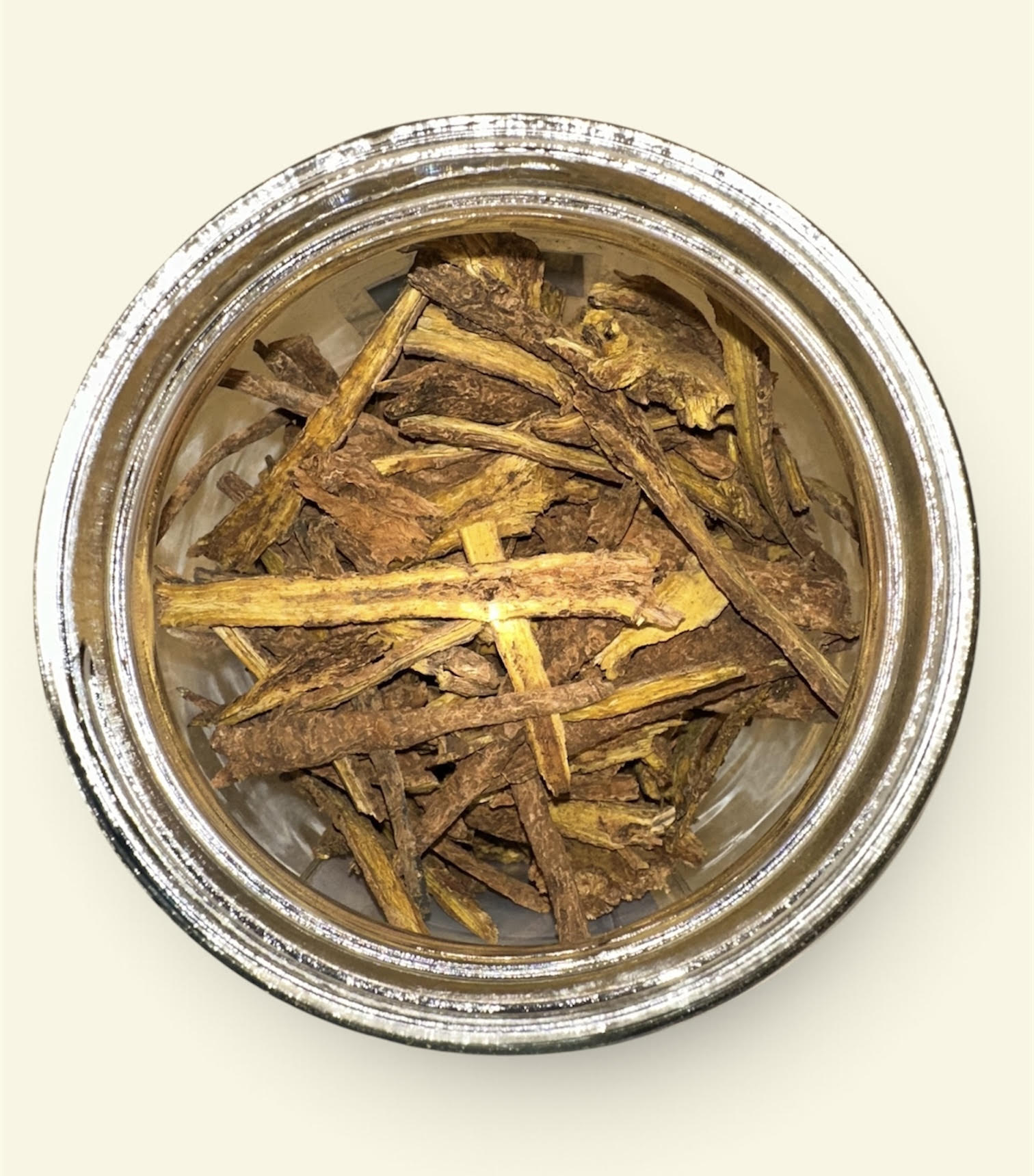
Description:
Huang Qin (Scutellaria Root) is a traditional Chinese herbal medicine prepared from the dried root of Scutellaria baicalensis Georgi, a perennial plant in the Lamiaceae family. It is commonly known as Huang Qin, Scutellaria Root, Chinese Skullcap Root, Baikal Skullcap, Baical Skullcap, and Scutellaria baicalensis. In Traditional Chinese Medicine (TCM), Huang Qin is traditionally valued for clearing Heat, drying Dampness, cooling Blood, and supporting healthy respiratory and digestive function.
Huang Qin is traditionally considered an important herb for traditional patterns involving Heat and Dampness. It is primarily associated with the Lung, Stomach, Gallbladder, and Large Intestine meridians and is commonly included in formulas intended to clear Heat, dry Dampness, support healthy digestion, and maintain comfortable respiratory function.
Huang Qin is traditionally used to clear Heat from the Lung and may be selected in traditional formulas for symptoms associated with traditional Lung Heat patterns, including cough, throat discomfort, and excess phlegm.
Huang Qin is also traditionally used to clear Heat and dry Dampness in the digestive system. In TCM, it may be included in traditional formulas for digestive discomfort, loose stools, diarrhea, abdominal discomfort, and other symptoms associated with traditional Damp-Heat patterns.
Huang Qin is traditionally used to cool Blood and may be included in formulas for traditional Heat-in-the-Blood patterns. It may also be combined with other herbs when traditional formulas are used to address inflammatory-type symptoms or excessive internal Heat according to TCM principles.
Huang Qin is also traditionally associated with supporting healthy Liver and Gallbladder function according to TCM principles and may be incorporated into formulas addressing traditional Damp-Heat patterns affecting these systems.
Modern research has identified numerous naturally occurring compounds in Scutellaria baicalensis, particularly flavonoids such as baicalin, baicalein, wogonin, and wogonoside. Laboratory and preclinical studies have investigated antioxidant, anti-inflammatory, antimicrobial, and other biological activities, although these findings do not establish that whole-herb Huang Qin treats specific medical conditions in humans.
Benefits:
- Traditionally used to clear Heat according to Traditional Chinese Medicine principles
- Traditionally used to clear Heat from the Lung
- Traditionally used to dry Dampness according to TCM principles
- Traditionally used to support healthy respiratory function
- Traditionally used to support comfortable breathing and throat health
- Traditionally used to support healthy digestive function
- Traditionally used to support comfortable digestion
- Traditionally used to support normal bowel function
- Traditionally used to cool Blood according to traditional TCM principles
- Traditionally used to support healthy Liver and Gallbladder function according to TCM principles
- Traditionally used to support healthy inflammatory balance
- Traditionally used to support the body’s normal response to oxidative stress
- Traditionally used in formulas addressing traditional Damp-Heat patterns
- Traditionally used in formulas addressing traditional Lung Heat patterns
- Traditionally used in traditional herbal formulas for overall wellness
- Contains naturally occurring flavonoids including baicalin, baicalein, wogonin, and wogonoside
- Traditionally used to support overall balance and vitality according to TCM principles
Other Names:
Huang Qin, Huang Qin (黄芩), Huangqin, Scutellaria Root, Chinese Skullcap Root, Baikal Skullcap, Baical Skullcap, Chinese Scullcap, Scutellaria baicalensis, Scutellaria baicalensis Georgi, Radix Scutellariae, Scutellariae Radix, and Baikalensis Root.
Chinese names: 黄芩 (Huang Qin), 黄芩根 (Huang Qin Root), 子芩 (Zi Qin), and 枯芩 (Ku Qin).
Persian names: هوانگ چین (Huang Qin), ریشه هوانگ چین (Huang Qin Root), اسکوتلاریا (Scutellaria), ریشه اسکوتلاریا (Scutellaria Root), و اسکالکپ چینی (Chinese Skullcap).
Traditional Uses:
In Traditional Chinese Medicine, Huang Qin is traditionally used to clear Heat and dry Dampness. It is traditionally selected for symptoms associated with Heat and Dampness affecting the Lung, Stomach, Gallbladder, and Large Intestine systems.
Huang Qin is traditionally used to clear Lung Heat and may be included in traditional formulas for cough, throat discomfort, excess phlegm, and other respiratory symptoms associated with traditional Lung Heat patterns.
Huang Qin is traditionally used to clear Damp-Heat from the digestive system. It may be included in traditional formulas for loose stools, diarrhea, abdominal discomfort, and other digestive symptoms associated with traditional Damp-Heat patterns.
Huang Qin is also traditionally used to cool Blood and may be included in formulas for traditional Heat-in-the-Blood patterns.
Traditionally, Huang Qin may also be used to support healthy Liver and Gallbladder function and is included in formulas addressing traditional Damp-Heat patterns affecting these systems.
Huang Qin is often combined with other TCM herbs according to the individual’s traditional pattern, constitution, and specific symptoms.
Side Effects:
Huang Qin is generally used as a traditional herbal preparation under the guidance of a qualified practitioner. Some individuals may experience gastrointestinal discomfort, nausea, abdominal discomfort, diarrhea, or other digestive symptoms.
Because Huang Qin is traditionally considered a bitter and cooling herb, excessive use may not be appropriate for individuals with traditional Cold or Spleen deficiency patterns.
Allergic reactions are possible in sensitive individuals.
Rare liver-related adverse reactions have been reported with some Scutellaria baicalensis-containing herbal preparations. The safety profile can vary according to the species, plant part, extract, dose, and combination of herbs used.
Discontinue use and consult a healthcare practitioner if unwanted symptoms occur.
Precautions:
Consult a healthcare practitioner prior to use if you are taking prescription medications or other natural health products, or if you have a medical condition.
Consult a qualified healthcare practitioner or Traditional Chinese Medicine practitioner before use if you have significant digestive weakness, persistent diarrhea, or a traditional Cold or Spleen deficiency pattern.
Consult a healthcare practitioner before use if you have a known allergy to plants in the Lamiaceae family.
Consult a healthcare practitioner before use if you have a liver or gallbladder disorder or a history of liver-related problems.
Consult a healthcare practitioner before use if you are taking medications that significantly affect liver function or medications with a narrow therapeutic range.
Do not use during pregnancy or breastfeeding unless directed by a qualified healthcare practitioner or Traditional Chinese Medicine practitioner.
Consult a healthcare practitioner before use if you have a serious or major medical condition.
Discontinue use and consult a healthcare practitioner if symptoms persist or worsen or if new symptoms develop.
Interactions:
Consult a healthcare practitioner before using Huang Qin with prescription medications or other natural health products.
Human clinical interaction data for whole-herb Huang Qin preparations are limited. The potential for interactions may vary according to the preparation, dose, duration of use, extract concentration, and other ingredients used in a formula.
Laboratory research suggests that compounds from Scutellaria baicalensis, including baicalin, baicalein, and wogonin, may affect certain drug-metabolizing enzymes and transport pathways. The clinical significance of these findings for ordinary whole-root preparations is not fully established.
Individuals taking anticoagulant or antiplatelet medications, medications metabolized extensively by the liver, or medications with a narrow therapeutic range should seek professional guidance before use.
Individuals taking multiple medications or combining Huang Qin with concentrated herbal extracts should consult a qualified healthcare practitioner before use.
Dosing:
Use according to the product label or as directed by a qualified healthcare practitioner or Traditional Chinese Medicine practitioner.
Traditional Chinese Medicine references commonly describe Huang Qin in an approximate range of 3–9 g when used as a decoction, although the appropriate amount depends on the preparation, formula, individual constitution, and clinical circumstances.
For a 50 g bulk-herb product, the package quantity should not be interpreted as a recommended daily dose.
Storage:
Store in a cool, dry place away from direct sunlight. Keep tightly closed and out of reach of children.
Preparation:
If using dried Huang Qin root, prepare according to the directions provided by your Traditional Chinese Medicine practitioner or product instructions. Traditionally, Huang Qin is commonly prepared as a decoction or used as part of a TCM herbal formula.
Huang Qin may also be powdered or incorporated into traditional herbal preparations. Preparation methods can vary according to the intended traditional application and the other herbs included in the formula.
Scientific Support:
Huang Qin is primarily derived from Scutellaria baicalensis Georgi, a member of the Lamiaceae family. The dried root, known as Huang Qin or Scutellariae Radix, has a long history of use in Traditional Chinese Medicine, particularly in traditional applications involving Heat, Dampness, respiratory discomfort, digestive concerns, and traditional inflammatory patterns.
Scutellaria baicalensis contains numerous naturally occurring flavonoids and other phytochemicals. Important compounds investigated in scientific research include baicalin, baicalein, wogonin, wogonoside, oroxylin A, and related flavonoids.
Modern pharmacological research has investigated Scutellaria baicalensis and its constituents for potential antioxidant, anti-inflammatory, antimicrobial, antiviral, neuroprotective, and other biological activities.
Laboratory and animal studies have investigated Huang Qin extracts and isolated constituents for effects involving inflammatory pathways, oxidative stress, microbial activity, immune responses, and other biological processes. These findings provide scientific interest in the herb but do not establish that whole-herb Huang Qin is effective for treating specific medical conditions in humans.
Clinical research on Scutellaria baicalensis has investigated several health applications, but the quality and quantity of human evidence vary considerably. Research also differs according to the plant material, extract, dose, formulation, and health condition studied.
The safety profile of Huang Qin should also be considered. Some reports have associated Scutellaria baicalensis-containing herbal products with liver-related adverse events, although causality may be difficult to establish because many products contain multiple herbs and ingredients.
Additional high-quality human clinical studies are needed to establish specific therapeutic applications, effectiveness, safety, and dosing for whole-herb Huang Qin.
References & Scientific Support:
PubMed – Scutellaria baicalensis Georgi: a review of its phytochemistry, pharmacology, and clinical applications. Scientific literature reviews Scutellaria baicalensis, including its traditional uses, flavonoid constituents such as baicalin and baicalein, pharmacological research, and clinical evidence. View Research.
PubMed – Scutellaria baicalensis and its bioactive compounds. Research has examined Scutellaria baicalensis root and compounds including baicalin, baicalein, wogonin, and wogonoside, with studies investigating antioxidant, anti-inflammatory, antimicrobial, and other biological activities. View Research.
Health Canada – Licensed Natural Health Product Database (LNHPD). Health Canada provides regulatory information for licensed natural health products and Traditional Chinese Medicine products. Product-specific licensing information should be verified according to the exact formulation, dosage form, medicinal ingredients, processing method, and recommended use. View Health Canada Reference.


