
Description:
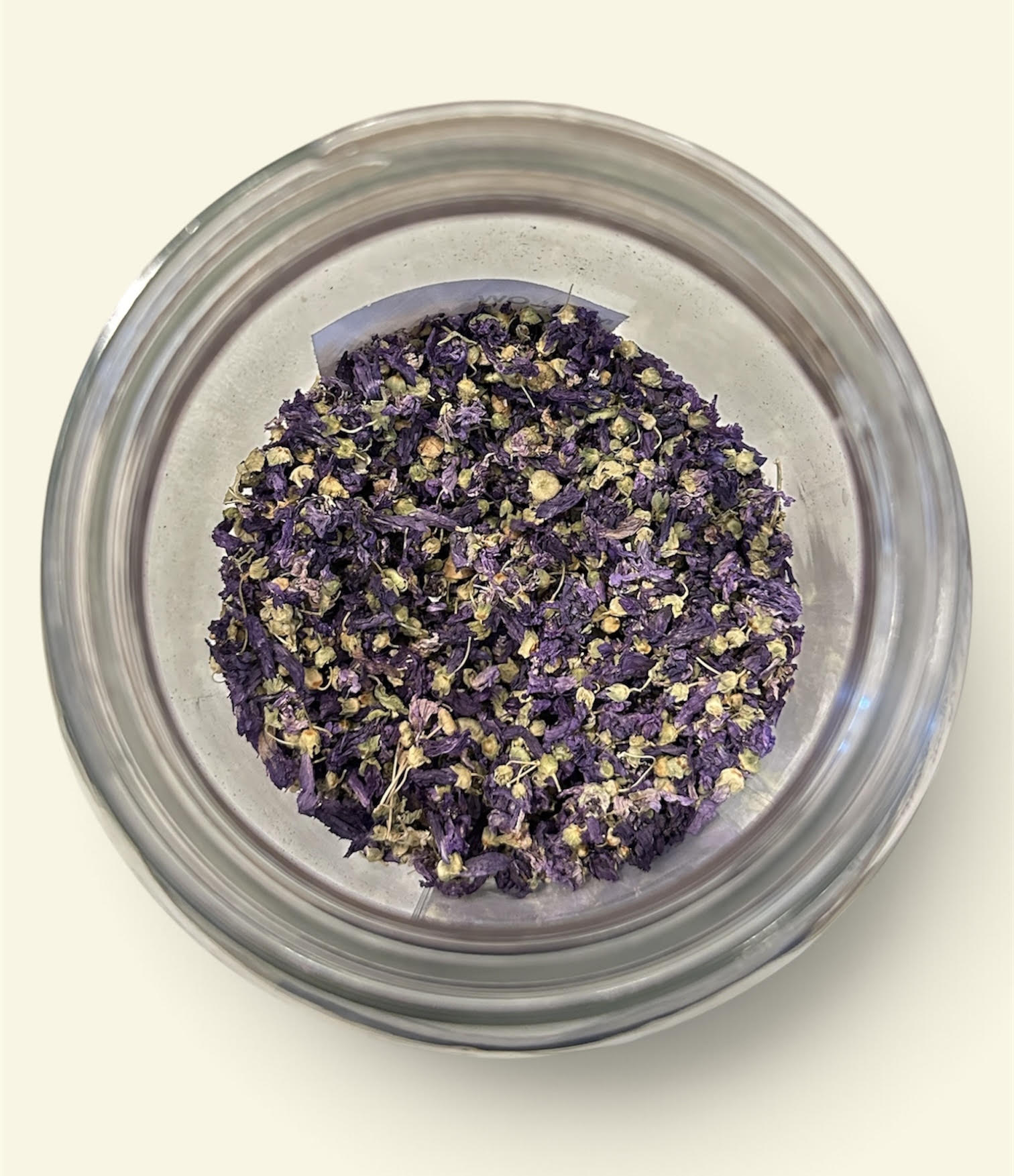
Mallow (Panirak) ( Malva sylvestris L.) is a traditional herbal medicine prepared from the leaves and flowers of the common mallow plant, a member of the Malvaceae family. It is commonly known as Panirak, Mallow, Common Mallow, High Mallow, Blue Mallow, Cheeseweed, Malva, Malva sylvestris, and Khobazi. In Persian traditional medicine, Panirak (پنیرک) is valued for its naturally occurring mucilage and its traditional use in soothing the throat, supporting comfortable digestion, and helping maintain skin comfort. The product listing identifies this 25 g Attari herb as Malva sylvestris. However, the exact plant part and botanical identity should be confirmed from the package or supplier because the common name Mallow can refer to several Malva species.
Panirak has a long history of use in Persian, traditional European, and other herbal medicine traditions. Its leaves and flowers contain mucilage, a naturally occurring mixture of polysaccharides that becomes slippery when mixed with water. This property is associated with the herb’s traditional use as a soothing preparation for the mouth, throat, and digestive tract.
In traditional herbal practice, Mallow is commonly used to soothe occasional throat irritation and support respiratory comfort. It is traditionally prepared as an herbal infusion and consumed when appropriate for the intended use.
Mallow is also traditionally used to support digestive comfort. Its mucilage-containing plant material has been used in traditional preparations for occasional digestive irritation and to support normal bowel movements. Traditional use does not establish that Mallow treats chronic constipation or gastrointestinal disease.
Mallow has also been used traditionally in external preparations for skin comfort. Its mucilage and other naturally occurring plant compounds have attracted scientific interest for their potential soothing and skin-conditioning properties.
Modern research has investigated Malva sylvestris for its phytochemical composition and potential antioxidant, anti-inflammatory, antimicrobial, and other biological activities. However, much of the evidence comes from laboratory and animal studies, and additional high-quality human clinical research is needed to establish specific therapeutic effects.
Benefits:
- Traditionally used to soothe the throat
- Traditionally used to support comfortable respiratory function
- Traditionally used to relieve occasional throat irritation
- Traditionally used to support digestive comfort
- Traditionally used to soothe the digestive tract
- Traditionally used to support normal bowel movements
- Traditionally used in traditional herbal preparations for occasional constipation
- Traditionally valued for its naturally occurring mucilage
- Traditionally used to support oral and throat comfort
- Traditionally used in soothing herbal infusions
- Traditionally used in external preparations for skin comfort
- Traditionally used to help maintain soft, comfortable skin
- Provides naturally occurring polysaccharides and mucilage
- Provides naturally occurring flavonoids and phenolic compounds
- Contains naturally occurring plant compounds investigated for antioxidant activity
- Contains phytochemicals investigated for potential anti-inflammatory activity
- Has been investigated in laboratory studies for potential antimicrobial properties
- Traditionally used in Persian herbal medicine
- Traditionally used in herbal preparations for general soothing and moisturizing purposes
- Provides a traditional herbal option for supporting everyday throat and digestive comfort
These benefits describe traditional uses and areas of scientific investigation. They do not establish that Mallow can prevent, diagnose, or treat specific medical conditions.
Other Names:
Panirak, Panirak (پنیرک), Mallow, Common Mallow, High Mallow, Blue Mallow, Cheeseweed, Malva, Malva sylvestris L., Malva neglecta Wallr., Malva parviflora L., Khobazi, and Khobaza. These botanical names refer to different species within the mallow group and should not be treated as interchangeable without verifying the plant’s identity.
Persian names: پنیرک (Panirak), گل پنیرک (Gol-e Panirak), خبازی (Khobazi), ختمی کوچک (Khatmi-ye Kuchak), توله (Toleh), نان کلاغ (Nān-e Kalāgh), and آفتابگردک (Aftab-gardak). Regional names vary, and some may refer to related plants rather than specifically to Malva sylvestris.
Indian names: गुलखैरा (Gulkhaira), कंगनी (Kangani, reported regionally), and मालवा (Malva, botanical-derived name). English-language botanical literature associates Gulkhaira and Kangani with mallow in parts of India and Pakistan. Regional vernacular names may also refer to other plants, so botanical identification is recommended.
Traditional Uses:
In Persian traditional medicine, Panirak is traditionally used as a soothing herb, particularly for its mucilage content. It is commonly prepared as an infusion using dried plant material and is traditionally valued for supporting throat comfort and general wellness.
Mallow is traditionally used to soothe occasional throat irritation and support respiratory comfort. Its mucilage-containing leaves and flowers have historically been used in herbal teas for cough-associated throat discomfort. These traditional uses should not be interpreted as evidence that Mallow treats asthma, pneumonia, respiratory infections, or other serious respiratory conditions.
Mallow is also traditionally used to support digestive comfort. Herbal preparations have been used for occasional digestive irritation and to support normal bowel movements. The herb’s mucilage has properties that may help explain its traditional soothing applications, although the clinical effectiveness of a particular preparation depends on its composition, dose, and intended use.
In traditional herbal practice, Mallow has also been used externally in preparations intended to soothe and moisturize the skin. These uses are consistent with its historical role as a mild soothing herb, but strong clinical evidence for specific skin conditions remains limited.
Mallow has additionally been investigated for its naturally occurring phytochemicals, including flavonoids, phenolic compounds, and polysaccharides. Research into these compounds is ongoing, and laboratory findings should not be confused with established clinical benefits in humans.
Traditionally, Panirak is selected according to the intended preparation and the individual’s needs. It may be used as a simple herbal infusion or incorporated into traditional herbal combinations.
Side Effects:
Mallow is generally regarded as a mild traditional herb, but comprehensive clinical safety data for all preparations and doses remain limited.
Possible unwanted effects may include gastrointestinal discomfort, nausea, loose stools, or allergic reactions. The likelihood of these effects may depend on the amount consumed, the plant part used, the preparation, and individual sensitivity.
Individuals who are sensitive to plants in the Malvaceae family or who have previously experienced allergic reactions to herbal products should exercise caution.
Mallow contains mucilage, which may affect the absorption of certain orally administered medicines when taken at the same time. The extent of this effect has not been adequately established for every preparation.
Discontinue use and consult a healthcare practitioner if unwanted or persistent symptoms occur.
Seek urgent medical attention if you experience difficulty breathing or swelling of the face, lips, tongue, or throat after using the product.
Precautions:
Consult a healthcare practitioner before using Mallow medicinally if you have an existing medical condition or are taking prescription medications or other natural health products.
Do not use during pregnancy or breastfeeding for medicinal purposes unless advised by a qualified healthcare practitioner. Reliable safety information for medicinal doses during these periods is limited.
Individuals with known allergies to Mallow or related plants should avoid the product unless a healthcare practitioner confirms that it is appropriate.
Consult a healthcare practitioner before using Mallow for persistent constipation, chronic digestive symptoms, ongoing cough, or prolonged throat irritation. These symptoms may require assessment to identify an underlying condition.
If using Mallow to support digestive comfort, maintain adequate fluid intake as appropriate for your health circumstances.
Use only products with reliable botanical identification. Common mallow names may refer to several species, including Malva sylvestris, Malva neglecta, and Malva parviflora. The species and plant part should be verified when botanical identity is important.
Keep this product out of reach of children. Do not use it as a substitute for prescribed treatment or appropriate medical care.
Discontinue use and consult a healthcare practitioner if symptoms persist or worsen or if new symptoms develop.
Interactions:
Consult a healthcare practitioner before combining Mallow with prescription medications, over-the-counter medicines, or other natural health products.
Oral medications: Mallow’s mucilage may theoretically affect the absorption of some medicines taken by mouth. As a precaution, ask a pharmacist or healthcare practitioner whether doses should be separated. A specific evidence-based separation interval has not been established for every Mallow preparation.
Diabetes medications: Reliable clinical evidence about interactions between Mallow and glucose-lowering medications is insufficient. Individuals taking these medications should consult a healthcare practitioner before medicinal use.
Anticoagulants and antiplatelet medications: Clinically significant interactions with Mallow have not been adequately established. Individuals taking blood-thinning medications should seek professional advice before using medicinal preparations.
Other herbal products: Combining Mallow with other herbs may change the overall effects of a preparation. Review multi-herb products with a qualified healthcare practitioner, particularly if you take prescription medicines.
Laxatives and digestive remedies: If Mallow is used alongside other products intended to influence bowel function, monitor for changes in bowel habits or gastrointestinal discomfort and seek professional advice when needed.
There is insufficient clinical evidence to establish a comprehensive interaction profile for Mallow. Absence of documented interactions does not guarantee that combining it with medicines is risk-free.
Dosing:
Use according to the product label or as directed by a qualified healthcare practitioner or traditional herbal medicine practitioner.
Traditional preparations of Mallow commonly involve steeping the dried leaves or flowers in hot water to make an herbal infusion. The appropriate amount depends on the species, plant part, preparation method, intended use, and individual circumstances.
There is no universally established clinical dose for all products sold as Mallow or Panirak. Do not assume that traditional amounts used for one species or preparation apply to every Mallow product.
For a 25 g bulk-herb product, the package quantity should not be interpreted as a recommended daily dose.
Follow the supplier’s preparation instructions, and consult a qualified healthcare practitioner if you intend to use Mallow regularly or medicinally.
Storage:
Store in a cool, dry place away from direct sunlight, excessive heat, and humidity. Keep the package tightly closed and out of reach of children.
Protect the dried herb from moisture, insects, dust, and contamination. Store in a clean, airtight container when appropriate.
Do not use the product if there are signs of mold, unusual odor, moisture damage, insect contamination, or spoilage.
Preparation:
If using dried Panirak, prepare according to the product instructions or the directions provided by a qualified healthcare practitioner.
Traditional herbal infusion: Place the recommended amount of dried Mallow leaves or flowers in a clean cup or suitable heat-resistant container. Add hot water and allow the herb to steep according to the product instructions. Strain before drinking if loose plant material is present.
Traditional external preparation: Mallow has historically been used in certain external herbal preparations for skin comfort. Use only when the product is suitable for external application and follow appropriate hygiene and preparation instructions. Do not apply contaminated or spoiled herbal material to the skin or open wounds.
Mallow may also be included in traditional herbal combinations. The plant part and preparation method should be appropriate for the intended use.
Because the precise plant part supplied in the 25 g Attari package has not been independently confirmed, check the packaging or supplier information to determine whether the product contains dried flowers, leaves, or a mixture of both.
Scientific Support:
Mallow, particularly Malva sylvestris L., is a flowering plant in the Malvaceae family that has been used in traditional herbal medicine across Europe, Asia, and North Africa. Its leaves and flowers are commonly used in traditional preparations, including herbal infusions intended to soothe the throat and support digestive comfort.
The plant contains naturally occurring mucilage, polysaccharides, flavonoids, phenolic compounds, terpenoids, coumarins, and other phytochemicals. Mucilage is of particular interest because it forms a slippery substance when mixed with water, which may help explain Mallow’s traditional use in soothing preparations for the mouth, throat, and digestive tract.
Modern research has investigated Malva sylvestris for potential antioxidant, anti-inflammatory, antimicrobial, laxative, and other biological activities. A 2023 review published in Naunyn-Schmiedeberg’s Archives of Pharmacology examines the plant’s phytochemical composition, traditional uses, pharmacological research, and safety. The authors discuss findings from laboratory, animal, and clinical studies while identifying areas requiring further investigation.
A 2024 review, Phytochemistry and Pharmacological Activity of Malva sylvestris L: A Detailed Insight, examines the plant’s naturally occurring compounds and reported biological activities, including antioxidant, anti-inflammatory, and skin-related research. These findings provide a basis for further scientific investigation but do not establish that dried Mallow is effective for treating specific medical conditions.
A separate review of the Malva genus discusses its chemical composition and potential pharmacological applications, including the reported properties of polysaccharides, flavonoids, and other plant constituents. The authors emphasize the need for additional clinical research to clarify the therapeutic potential of different species and preparations.
Although these studies provide scientific interest in Mallow, much of the evidence concerns laboratory experiments, animal studies, or extracts rather than the whole dried herb sold in bulk. The effectiveness and safety of a 25 g Panirak product depend on its exact species, plant part, preparation, and use. Additional high-quality human clinical studies are needed to establish specific therapeutic benefits, appropriate dosing, long-term safety, and potential interactions.
References & Scientific Support:
PubMed – The phytochemical profiling, pharmacological activities, and safety of malva sylvestris: a review. This review examines the traditional uses, chemical constituents, pharmacological activities, and safety of Malva sylvestris. It discusses the plant’s naturally occurring mucilage, flavonoids, and other phytochemicals, along with research into potential anti-inflammatory, antioxidant, antimicrobial, and laxative properties. The authors highlight the need for further research to establish clinical effectiveness and safety. View Research.
PubMed – Phytochemistry and Pharmacological Activity of Malva sylvestris L: A Detailed Insight. This review examines the phytochemical composition and reported pharmacological activities of Malva sylvestris, including its traditional use for digestive discomfort, inflammation, and skin-related concerns. It discusses the potential biological activities of naturally occurring plant compounds while highlighting the distinction between preliminary research findings and established clinical applications. View Research.
Health Canada – Licensed Natural Health Products Database. This official Canadian database provides information about licensed natural health products, including their approved ingredients, product licensing details, and applicable safety information. It can be used to investigate the regulatory status of products containing Mallow or related botanical ingredients. A database listing or general regulatory reference should not be interpreted as confirmation that this specific 25 g bulk-herb product is licensed or that all traditional uses are approved. View Health Canada Reference.


