
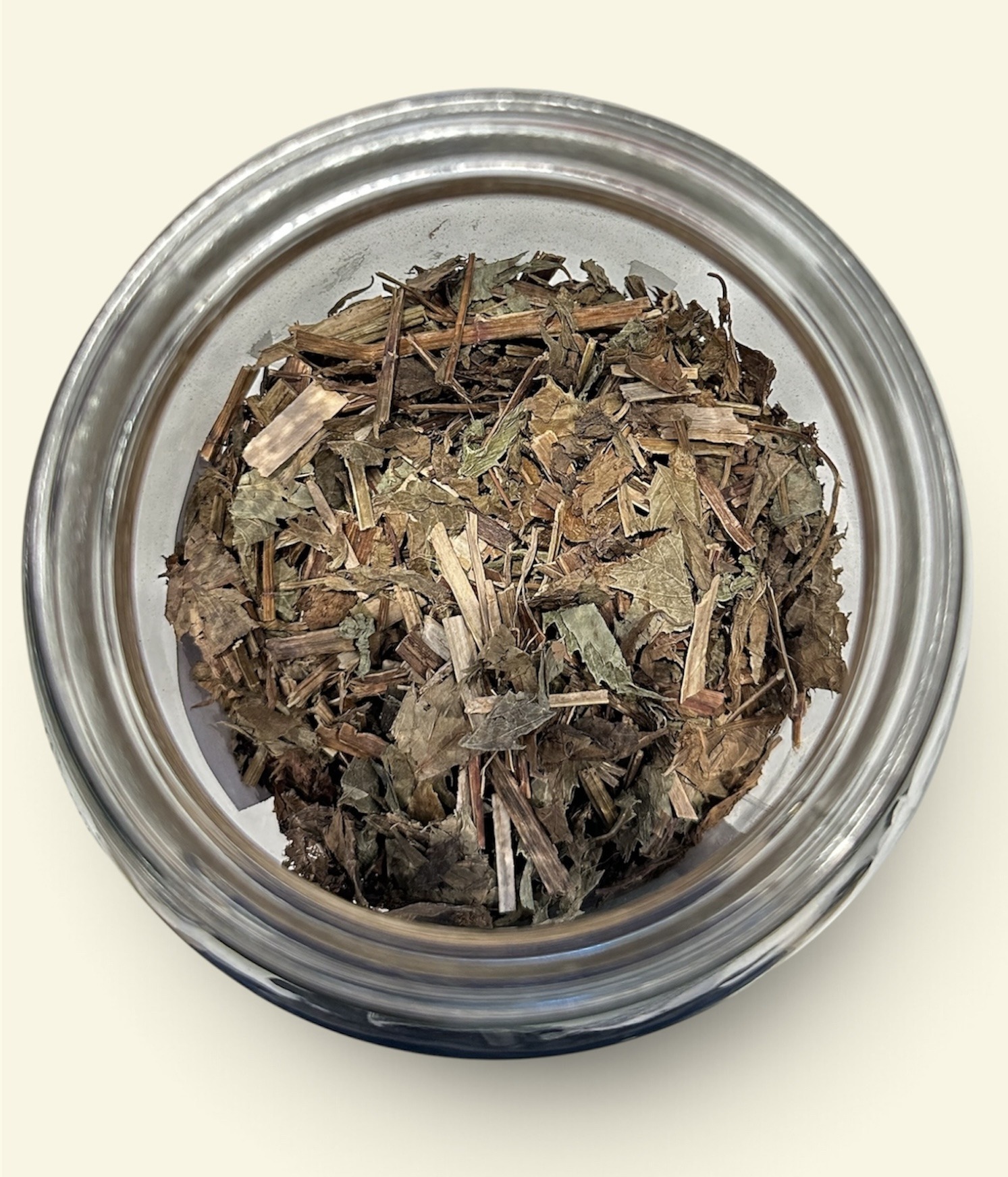
Description:
Ze Lan (泽兰) (Lycopus lucidus Turcz. ex Benth., commonly associated with the botanical variety Lycopus lucidus var. hirtus Regel in Chinese medicinal references) is a traditional Chinese herbal medicine prepared from the dried aerial parts of the plant, a member of the Lamiaceae (mint) family. It is commonly known as Ze Lan, Herba Lycopi, Bugleweed Herb, Chinese Bugleweed, Lycopus Herb, Lycopi Herba, and Chinese Lycopus. In Traditional Chinese Medicine (TCM), Ze Lan is traditionally valued for invigorating Blood, promoting the movement of Qi and Blood, supporting menstrual regularity, and promoting the movement of fluids according to traditional TCM principles. The exact botanical variety should be verified against the supplier’s product specification.
Ze Lan is traditionally considered an important herb for patterns involving Blood stasis, particularly when associated with menstrual irregularities, absent menstruation, painful menstruation, and abdominal discomfort following childbirth. It is traditionally associated primarily with the Liver and Spleen meridians.
Ze Lan is traditionally used to invigorate Blood and regulate menstruation. In TCM, it may be selected in traditional formulas for irregular menstrual cycles, menstrual discomfort, and other symptoms associated with Blood stasis.
Ze Lan is also traditionally used to promote the movement of fluids and address swelling. It may be included in traditional formulas for fluid accumulation and edema associated with traditional patterns of Blood stasis and impaired fluid movement.
Another traditional application of Ze Lan is to support recovery following childbirth when symptoms are associated with retained Blood stasis. It may be included in traditional formulas for postpartum abdominal discomfort according to traditional TCM pattern differentiation.
Ze Lan has also been traditionally used in external herbal preparations for certain skin conditions associated with swelling and inflammation. Such traditional applications do not establish that the herb is effective for treating infections, abscesses, or other medical conditions.
Modern scientific research has investigated Lycopus lucidus for its naturally occurring phenolic acids, flavonoids, triterpenoids, polysaccharides, and other phytochemicals. Laboratory studies have examined potential antioxidant, anti-inflammatory, and other biological activities. However, these findings do not establish that whole dried Ze Lan is effective for treating specific medical conditions in humans.
Benefits:
- Traditionally used to invigorate Blood according to Traditional Chinese Medicine principles
- Traditionally used to promote the movement of Qi and Blood
- Traditionally used to support menstrual regularity
- Traditionally used for menstrual discomfort associated with Blood stasis patterns
- Traditionally used for irregular menstruation according to traditional TCM principles
- Traditionally used in traditional formulas for absent menstruation associated with Blood stasis.
- Traditionally used to address postpartum abdominal discomfort associated with Blood stasis
- Traditionally used to promote the movement of fluids
- Traditionally used to address swelling associated with traditional fluid-retention patterns
- Traditionally used to support fluid balance according to TCM principles
- Traditionally used in traditional formulas for patterns involving Blood stasis and edema
- Traditionally used in certain external herbal preparations for skin swelling
- Provides naturally occurring phenolic acids and flavonoids
- Contains naturally occurring triterpenoids and other phytochemicals
- Provides naturally occurring polysaccharides
- Contains plant compounds investigated for potential antioxidant activity
- Has been investigated in laboratory studies for potential anti-inflammatory properties
- Has been investigated for its chemical composition and potential biological activities
- Traditionally used in Chinese herbal formulas according to individual TCM patterns
These benefits describe traditional uses and areas of scientific investigation. They do not establish that Ze Lan can prevent, diagnose, or treat specific medical conditions.
These benefits describe traditional uses and areas of scientific investigation. They do not establish that Ze Lan can prevent, diagnose, or treat specific medical conditions.
Other Names:
Ze Lan, Ze Lan (泽兰), Herba Lycopi, Lycopi Herba, Bugleweed Herb, Chinese Bugleweed, Chinese Lycopus, Lycopus Herb, Lycopus lucidus Turcz., Lycopus lucidus Turcz. var. hirtus Regel, and Chinese Medicinal Lycopus. Botanical naming conventions may vary between references, so the species and plant part should be confirmed with the supplier.
Persian names: گیاه لیکوپوس (Lycopus Herb), زِه لان (Ze Lan), گیاه دارویی زلان (Ze Lan Medicinal Herb), and گیاه باگلوید (Bugleweed). These are descriptive or transliterated names rather than verified traditional Persian names for this specific Chinese medicinal herb.
Indian names: ज़े लान (Ze Lan), लाइकोपस जड़ी-बूटी (Lycopus Herb), and चीनी बग़लवीड (Chinese Bugleweed). These are descriptive names, not established Indian Ayurvedic synonyms for Lycopus lucidus. Do not substitute other plants sold as Bugleweed without confirming the botanical species.
Traditional Uses:
In Traditional Chinese Medicine, Ze Lan is traditionally used to invigorate Blood and promote the movement of Qi and Blood, particularly in patterns involving Blood stasis. It may be included in traditional formulas for irregular menstruation, absent menstruation, painful menstruation, and abdominal discomfort associated with Blood stasis.
Ze Lan is traditionally used to support menstrual regularity according to TCM principles. It may be combined with other herbs selected to promote Blood movement and address the individual’s particular menstrual pattern.
Ze Lan is also traditionally used in formulas for postpartum abdominal discomfort when associated with Blood stasis. Such traditional applications require appropriate professional assessment, particularly after childbirth, when abdominal pain or abnormal bleeding may indicate a condition requiring medical care.
Another traditional use of Ze Lan is to promote the movement of fluids and address swelling. In TCM, it may be selected when fluid accumulation occurs alongside patterns of Blood stasis.
Ze Lan has also been used traditionally in external preparations for certain swellings and skin conditions. These historical uses should not be interpreted as proof of effectiveness against infections, abscesses, or inflammatory diseases.
In traditional Chinese herbal practice, Ze Lan is generally selected according to the individual’s TCM pattern, constitution, symptoms, and the other herbs included in a formula. It is not considered suitable for every type of menstrual irregularity or swelling.
Side Effects:
The comprehensive human safety profile of Ze Lan has not been established through extensive clinical trials. Although traditional references describe its use in prescribed herbal formulas, safety depends on the botanical identity, preparation, amount used, duration, and individual health circumstances.
Possible unwanted effects may include gastrointestinal discomfort, nausea, abdominal discomfort, or allergic reactions. The frequency of these effects has not been reliably established for all preparations.
Because Ze Lan is traditionally used to invigorate Blood, inappropriate use in individuals without a corresponding traditional pattern may be unsuitable. It should not be assumed to be safe for individuals experiencing heavy menstrual bleeding or unexplained bleeding.
Allergic reactions are possible in sensitive individuals.
Discontinue use and consult a healthcare practitioner if unwanted or persistent symptoms occur.
Seek urgent medical attention for severe abdominal pain, unusually heavy bleeding, fainting, or other potentially serious symptoms.
Precautions:
Consult a qualified healthcare practitioner or Traditional Chinese Medicine practitioner before using Ze Lan medicinally, especially if you have an existing medical condition or take prescription medications.
Pregnancy: Do not use during pregnancy unless specifically directed by a qualified healthcare practitioner with appropriate expertise. Because Ze Lan is traditionally used to invigorate Blood and promote its movement, unsupervised medicinal use during pregnancy is inappropriate.
Breastfeeding: Reliable safety information for medicinal use during breastfeeding is limited. Consult a healthcare practitioner before use.
Menstrual or other bleeding disorders: Avoid self-treatment with Ze Lan if you have heavy menstrual bleeding, unexplained vaginal bleeding, a bleeding disorder, or active bleeding. Seek medical assessment to identify the cause.
Blood deficiency: Traditional Chinese medicine references advise caution when Blood deficiency is present without Blood stasis. A qualified TCM practitioner should determine whether the herb is appropriate for the individual’s pattern.
After childbirth: Consult a healthcare practitioner before using Ze Lan for postpartum symptoms. Significant abdominal pain, fever, dizziness, or heavy bleeding requires prompt medical assessment.
Chronic medical conditions: Consult a healthcare practitioner if you have liver disease, kidney disease, cardiovascular disease, or another significant medical condition before medicinal use.
Use only products with reliable botanical identification. Ze Lan should not be confused with other plants sold under the common name Bugleweed.
Discontinue use and consult a healthcare practitioner if symptoms persist or worsen or if new symptoms develop.
Interactions:
Consult a healthcare practitioner before combining Ze Lan with prescription medications, over-the-counter medicines, or other natural health products.
Anticoagulants and antiplatelet medications: The clinical significance of interactions between Ze Lan and blood-thinning medications has not been adequately established. Because Ze Lan is traditionally used to invigorate Blood, individuals taking anticoagulants or antiplatelet drugs should seek professional advice before medicinal use.
Medications affecting blood clotting: Individuals using medications that affect clotting or who have a bleeding disorder should consult a healthcare practitioner before using Ze Lan.
Hormonal medications: Reliable clinical evidence about interactions between Ze Lan and hormonal contraceptives or hormone therapies is insufficient. Individuals using these medications should obtain professional advice before medicinal use.
Diuretics: Ze Lan is traditionally used to promote the movement of fluids, but clinically significant interactions with diuretic medications have not been established. Individuals taking diuretics should consult a healthcare practitioner before combining them with Ze Lan.
Other herbal products: Combining Ze Lan with other Blood-moving herbs or formulas may change the overall effects and safety of the preparation. A qualified practitioner should review the full combination.
Other prescription medications: Reliable human interaction studies are limited. Consult a pharmacist or healthcare practitioner if you take multiple medications or use concentrated herbal extracts.
The absence of documented interactions does not guarantee that Ze Lan is safe to combine with medications.
Dosing:
Use according to the product label or as directed by a qualified healthcare practitioner or Traditional Chinese Medicine practitioner.
Traditional Chinese Medicine references commonly describe Ze Lan in an approximate range of 6–12 g of dried aerial herb when used in a decoction. The appropriate amount depends on the botanical identity, preparation method, formula, individual constitution, and clinical circumstances.
This traditional range is not a clinically established dose for treating a medical condition and should not be interpreted as a recommendation for unsupervised use.
For a 50 g bulk-herb product, the package quantity should not be interpreted as a recommended daily dose.
Because Ze Lan is traditionally used to promote Blood movement, dosing and suitability should be assessed carefully, especially in individuals with bleeding concerns or those taking medications that affect clotting.
Storage:
Store in a cool, dry place away from direct sunlight, excessive heat, and humidity. Keep the package tightly closed and out of reach of children.
Protect the dried herb from moisture, insects, dust, and contamination. Store in a clean, airtight container when appropriate.
Discard the product if there are signs of mold, unusual odor, moisture damage, insect contamination, or spoilage.
Preparation:
If using dried Ze Lan, prepare according to the product instructions or the directions provided by a qualified Traditional Chinese Medicine practitioner.
Traditional decoction: Ze Lan is traditionally prepared by simmering the dried aerial parts in water, either alone or as part of a prescribed multi-herb formula. The amount of water, preparation time, and combination of ingredients depend on the specific formula.
Traditional herbal combinations: Ze Lan may be combined with other Chinese medicinal herbs traditionally selected to invigorate Blood, regulate menstruation, or promote fluid movement. The choice of herbs should be based on the individual’s TCM pattern and health circumstances.
External preparations: Some traditional practices use Ze Lan in external herbal preparations. Use only when the product is suitable for external application and follow appropriate preparation and hygiene instructions. Do not apply contaminated herbal material to open wounds or suspected infections.
The product should be used only for its intended purpose and according to appropriate professional guidance. Confirm that the supplied material is Lycopus lucidus or the specific accepted medicinal variety of Ze Lan before preparing it.
Scientific Support:
Ze Lan is a traditional Chinese medicinal herb commonly associated with Lycopus lucidus Turcz. and, in certain Chinese medicinal references, Lycopus lucidus var. hirtus Regel. The medicinal material is generally prepared from the dried aerial parts of the plant. Botanical identification is important because the name Lycopus is used for several related species with different chemical profiles and traditional applications.
Scientific research on Lycopus lucidus has identified naturally occurring phenolic acids, flavonoids, triterpenoids, organic acids, and other phytochemicals. Rosmarinic acid and related phenolic compounds have received particular attention in studies examining the plant’s chemical composition and potential antioxidant properties.
A 2016 study published in Biomedical Chromatography investigated the chemical identification and quality evaluation of Lycopus lucidus. Researchers tentatively identified 37 compounds, including phenolic acids, flavonoids, triterpenoids, and organic acids. This work provides information about the plant’s chemical composition and methods that may help support botanical identification and quality assessment.
A 2004 study published in Archives of Pharmacal Research isolated several phenolic compounds and flavonoids from the aerial parts of Lycopus lucidus. The isolated compounds demonstrated antioxidant activity in a laboratory assay. These results indicate that the plant contains constituents worthy of further investigation, but they do not establish clinical antioxidant benefits from consuming the whole dried herb.
Additional research has investigated Lycopus lucidus for potential anti-inflammatory, antimicrobial, and other biological activities. However, these findings largely involve laboratory experiments, isolated compounds, or extracts. They should not be interpreted as proof that Ze Lan can treat menstrual disorders, edema, cardiovascular disease, or other medical conditions in humans.
Clinical evidence for whole-herb Ze Lan remains limited. Further high-quality human studies are needed to establish its effectiveness, appropriate dosing, long-term safety, and potential interactions with medications. Research involving one Lycopus species or a concentrated extract should not automatically be applied to a 50 g package of dried Herba Lycopi.
References & Scientific Support:
PubMed – Chemical identification and quality evaluation of Lycopus lucidus Turcz by UHPLC-Q-TOF-MS and HPLC-MS/MS and hierarchical clustering analysis. This study investigates the chemical composition and quality evaluation of Lycopus lucidus. Researchers identified numerous naturally occurring compounds, including phenolic acids, flavonoids, triterpenoids, and organic acids, and developed analytical methods to support chemical characterization and quality assessment. View Research.
PubMed – Antioxidative constituents from Lycopus lucidus. This study examines phenolic compounds and flavonoids isolated from the aerial parts of Lycopus lucidus. Several isolated compounds demonstrated antioxidant activity in a laboratory assay, providing preliminary evidence of biological activity while leaving their clinical significance in humans undetermined. View Research.
Health Canada – Licensed Natural Health Products Database. This official Canadian database provides information about natural health products licensed for sale in Canada, including their medicinal ingredients, recommended uses, and applicable warnings. It can be used to investigate licensed products and regulatory information relevant to herbal ingredients. A general database reference does not establish that this specific 50 g bulk-herb product is licensed or approved for any therapeutic purpose. View Health Canada Reference.


