
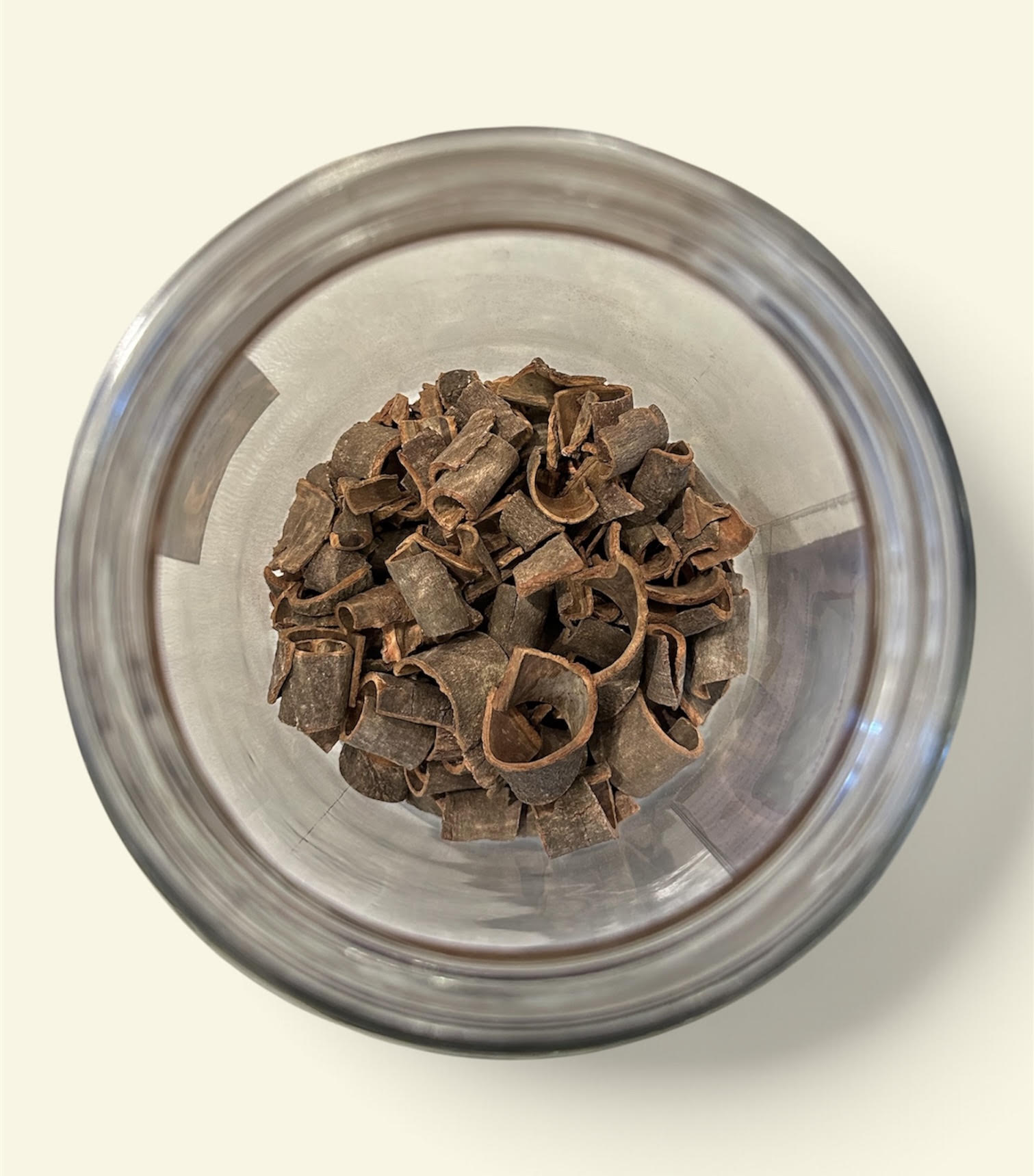
Description:
Rou Gui (肉桂) (Cinnamomum cassia (L.) J. Presl), also known as Cinnamomum aromaticum, is a traditional Chinese herbal medicine prepared from the dried bark of the cinnamon tree, a member of the Lauraceae family. It is commonly known as Rou Gui, Chinese Cinnamon Bark, Cassia Cinnamon Bark, Chinese Cassia, Cinnamon Bark, Cinnamomi Cortex, Cortex Cinnamomi, and Chinese Medicinal Cinnamon. In Traditional Chinese Medicine (TCM), Rou Gui is traditionally valued for warming the interior, dispelling Cold, supporting Kidney Yang, warming the channels, and promoting the movement of Qi and Blood according to traditional TCM principles. The botanical name Cinnamomum aromaticum is recognized by Health Canada’s Natural Health Products Ingredients Database as an approved herbal ingredient name associated with Cassia, Chinese cinnamon, and Rou Gui.
Rou Gui is traditionally considered an important herb for patterns involving Kidney Yang deficiency, interior Cold, and Cold-related stagnation. It may be selected in traditional formulas for cold sensations, cold extremities, discomfort in the lower back and knees associated with Kidney Yang deficiency, and abdominal discomfort associated with internal Cold. It is traditionally associated primarily with the Kidney, Spleen, Heart, and Liver meridians.
Rou Gui is traditionally used to warm the interior and dispel Cold. In TCM, it may be included in traditional formulas for coldness, abdominal discomfort, and other symptoms associated with Cold patterns affecting the Spleen, Stomach, or lower abdomen.
Rou Gui is also traditionally used to support Kidney Yang. It may be selected in traditional formulas for cold sensations, weakness of the lower back and knees, and other symptoms associated with traditional Kidney Yang deficiency patterns.
Another traditional application of Rou Gui is to warm the channels and promote the movement of Qi and Blood. It may be included in traditional formulas for discomfort associated with Cold and stagnation according to TCM pattern differentiation.
Rou Gui is also traditionally used in formulas that combine warming herbs with other ingredients to address complex patterns involving Cold and deficiency. Its strong warming nature means that it is not traditionally suitable for every constitution or symptom pattern, particularly patterns involving excess Heat.
Modern scientific research has investigated Rou Gui for its naturally occurring essential oils, cinnamaldehyde, polyphenols, flavonoids, and other phytochemicals. Studies have examined potential antioxidant, anti-inflammatory, antimicrobial, metabolic, and other biological activities. However, laboratory findings and research involving concentrated extracts do not establish that whole dried Rou Gui bark is effective for treating specific medical conditions in humans.
Benefits:
- Traditionally used to warm the interior according to Traditional Chinese Medicine principles
- Traditionally used to dispel Cold
- Traditionally used to support Kidney Yang
- Traditionally used to support Spleen Yang according to traditional TCM principles
- Traditionally used to warm the channels
- Traditionally used to promote the movement of Qi and Blood
- Traditionally used to support comfortable digestion in patterns involving internal Cold
- Traditionally used to address abdominal discomfort associated with Cold
- patternsTraditionally used to address cold sensations and cold extremities associated with Yang deficiency
- Traditionally used to support the lower back and knees in traditional Kidney Yang deficiency patterns
- Traditionally used to address discomfort associated with Cold and stagnation
- Traditionally used in traditional formulas for patterns involving interior Cold and deficiency
- Provides naturally occurring cinnamaldehyde and other aromatic compounds
- Contains naturally occurring essential oils and polyphenols
- Provides naturally occurring flavonoids and other phytochemicals
- Contains compounds investigated in laboratory research for potential antioxidant activity
- Has been investigated for potential anti-inflammatory and antimicrobial properties
- Has been investigated for potential effects on glucose and lipid metabolism
- Traditionally used as a warming ingredient in classical Chinese herbal formulas
- Traditionally used to support general wellness according to TCM principles
These benefits describe traditional uses and areas of scientific investigation. They do not establish that Rou Gui can prevent, diagnose, or treat specific medical conditions.
Other Names:
Rou Gui, Rou Gui (肉桂), Chinese Cinnamon Bark, Cassia Cinnamon Bark, Chinese Cassia, Cassia Bark, Cinnamon Bark, Cinnamomi Cortex, Cortex Cinnamomi, Cinnamomum cassia (L.) J. Presl, Cinnamomum aromaticum Nees, and Chinese Medicinal Cinnamon. Rou Gui refers specifically to the medicinal bark used in Traditional Chinese Medicine and should not be confused with Gui Zhi (桂枝), which is prepared from the twigs of the cinnamon plant.
Persian names: دارچین (Darchin), پوست دارچین (Cinnamon Bark), دارچین چینی (Chinese Cinnamon), پوست کاسیا (Cassia Bark), and دارچین کاسیا (Cassia Cinnamon). These are common or descriptive Persian names; the exact botanical species should be confirmed when distinguishing medicinal Rou Gui from culinary cinnamon.
Indian names: दालचीनी (Dalchini), दारुचिनी (Daruchini), त्वक (Tvak), दारुसिता (Darusita), and सिनेमन बार्क (Cinnamon Bark). Dalchini and Daruchini are widely used regional names for cinnamon, while Tvak is a traditional Sanskrit name associated with cinnamon bark. These names can refer to different Cinnamomum species and do not necessarily identify the specific Chinese medicinal material Rou Gui.
Traditional Uses:
In Traditional Chinese Medicine, Rou Gui is traditionally used to warm the interior and dispel Cold, particularly in patterns involving Kidney Yang deficiency and internal Cold. It may be included in traditional formulas for cold sensations, cold extremities, abdominal discomfort, and other symptoms associated with traditional Cold patterns.
Rou Gui is traditionally used to support Kidney Yang. It may be selected in formulas for coldness, soreness or weakness of the lower back and knees, and other symptoms associated with traditional Kidney Yang deficiency patterns.
Rou Gui is also traditionally used to warm the Spleen and Stomach in patterns involving internal Cold. It may be included in traditional formulas for abdominal discomfort, reduced digestive comfort, and other symptoms associated with traditional Spleen and Stomach Cold patterns.
Another traditional application of Rou Gui is to warm the channels and promote the movement of Qi and Blood. It may be included in traditional formulas for discomfort associated with Cold and stagnation, according to TCM pattern differentiation.
Rou Gui is traditionally used in some formulas to support the movement of Blood and address patterns involving Cold-related stagnation. Because of its warming nature, it requires particular caution in individuals with Heat patterns or bleeding concerns.
In traditional Chinese herbal practice, Rou Gui is generally combined with other herbs according to the individual’s TCM pattern, constitution, and symptoms. It is not considered suitable for every type of abdominal discomfort, cold sensation, or lower back pain.
These traditional applications reflect TCM theory and historical herbal practice. They should not be interpreted as proof that Rou Gui treats the underlying medical causes of these symptoms.
Side Effects:
Rou Gui is an aromatic herbal material, but medicinal use can cause unwanted effects, particularly when consumed in excessive amounts or for prolonged periods. Its safety depends on the botanical species, preparation, amount used, duration, and individual health circumstances.
Possible unwanted effects may include gastrointestinal irritation, nausea, abdominal discomfort, mouth irritation, or allergic reactions. Concentrated cinnamon oils can be more irritating than whole dried bark and should not be treated as interchangeable with the bulk-herb product.
Rou Gui may contain coumarin, a naturally occurring compound associated with potential liver toxicity at sufficiently high or prolonged exposures. Coumarin content varies by cinnamon species and preparation. Research involving cinnamon-containing traditional herbal medicines has examined coumarin exposure and its potential relationship to liver-related safety concerns.
Individuals with liver disease or those who regularly consume large quantities of cassia cinnamon may be at greater risk of excessive coumarin exposure.
Allergic reactions are possible in sensitive individuals.
Discontinue use and consult a healthcare practitioner if unwanted or persistent symptoms occur. Seek medical attention if you develop signs that may indicate liver problems, such as yellowing of the skin or eyes, dark urine, or persistent unexplained nausea.
Precautions:
Consult a qualified healthcare practitioner or Traditional Chinese Medicine practitioner before using Rou Gui medicinally, particularly if you have an existing medical condition or take prescription medications.
Pregnancy: Do not use medicinal doses during pregnancy unless specifically directed by a qualified healthcare practitioner. Rou Gui is traditionally used to warm the interior and promote Blood movement, and unsupervised medicinal use during pregnancy is inappropriate.
Breastfeeding: Reliable safety information for medicinal doses during breastfeeding is limited. Consult a healthcare practitioner before medicinal use.
Liver disease: Consult a healthcare practitioner before using Rou Gui if you have liver disease or a history of liver injury. Coumarin exposure depends on the species, product, and amount consumed.
Bleeding disorders: Individuals with bleeding disorders or unexplained bleeding should seek professional advice before medicinal use, particularly when Rou Gui is combined with other Blood-moving herbs.
Heat patterns: In TCM, Rou Gui is considered strongly warming. It is traditionally used cautiously or avoided in patterns involving excess Heat, Yin deficiency Heat, or other presentations for which warming herbs may be unsuitable.
Diabetes: Individuals with diabetes or those taking glucose-lowering medications should consult a healthcare practitioner before medicinal use because the clinical significance of potential effects on glucose metabolism is not established for every preparation.
Long-term use: Avoid prolonged or excessive medicinal use without professional supervision, particularly when the product’s coumarin content and botanical species have not been independently verified.
Use only products with reliable botanical identification. Do not assume that all cinnamon products have the same chemical composition or safety profile.
Discontinue use and consult a healthcare practitioner if symptoms persist or worsen or if new symptoms develop.
Interactions:
Consult a healthcare practitioner before combining Rou Gui with prescription medications, over-the-counter medicines, or other natural health products.
Anticoagulants and antiplatelet medications: The clinical significance of interactions between medicinal Rou Gui and blood-thinning medications is not fully established. Individuals taking these medications or those with bleeding disorders should seek professional advice before using concentrated cinnamon preparations.
Diabetes medications: Cinnamon and its constituents have been investigated for potential effects on glucose metabolism. The clinical relevance of these findings varies by preparation, and Rou Gui should not be used to replace prescribed diabetes treatment. Individuals taking glucose-lowering medication should consult a healthcare practitioner before medicinal use.
Liver-metabolized medications: Coumarin exposure and other constituents of cinnamon may be relevant to liver-related safety. Individuals taking medications associated with liver injury should consult a healthcare practitioner before regular medicinal use.
Other cinnamon products: Combining Rou Gui with cassia cinnamon supplements, concentrated extracts, or other cinnamon-containing products may increase overall exposure to coumarin and other constituents.
Other warming or Blood-moving herbs: Combining Rou Gui with other TCM herbs may change the overall effects and safety of a formula. A qualified practitioner should determine appropriate combinations based on the individual’s traditional pattern.
Other prescription medications: Comprehensive human interaction data for Rou Gui are limited. Consult a pharmacist or healthcare practitioner if you take multiple medications or use concentrated herbal preparations.
The absence of documented interactions does not guarantee that Rou Gui is safe to combine with medications.
Dosing:
Use according to the product label or as directed by a qualified healthcare practitioner or Traditional Chinese Medicine practitioner.
Traditional Chinese Medicine references commonly describe Rou Gui in an approximate range of 1–5 g of dried bark when used in a decoction. The appropriate amount depends on the botanical material, preparation method, formula, individual constitution, and clinical circumstances.
This traditional range is not a clinically established dose for treating a medical condition and should not be interpreted as a recommendation for unsupervised use.
Rou Gui is a strongly warming medicinal herb, so the appropriate amount and duration should be determined carefully. Some traditional preparations add the bark toward the end of the decoction process to preserve aromatic constituents, depending on the formula and practitioner instructions.
For a 50 g bulk-herb product, the package quantity should not be interpreted as a recommended daily dose.
Storage:
Store in a cool, dry place away from direct sunlight, excessive heat, and humidity. Keep the package tightly closed and out of reach of children.
Protect the dried bark from moisture, insects, dust, and contamination. Store in a clean, airtight container when appropriate.
Keep the product away from strong odors and sources of excessive heat that may affect its aromatic constituents.
Discard the product if there are signs of mold, unusual odor, moisture damage, insect contamination, or spoilage.
Preparation:
If using dried Rou Gui, prepare according to the product instructions or the directions provided by a qualified Traditional Chinese Medicine practitioner.
Traditional decoction: Rou Gui is traditionally prepared by simmering the dried bark in water, either alone or as part of a prescribed multi-herb formula. The amount of water, preparation time, and combination of ingredients depend on the formula.
Traditional herbal combinations: Rou Gui may be combined with other Chinese medicinal herbs traditionally selected to warm the interior, support Kidney Yang, or address patterns involving Cold and stagnation. The combination should be chosen according to the individual’s TCM pattern and health circumstances.
Preparation timing: Some traditional formulas add Rou Gui near the end of decoction preparation to preserve aromatic constituents. Follow the practitioner’s or product supplier’s instructions rather than assuming that every formula requires the same preparation method.
Rou Gui should not be confused with Gui Zhi (桂枝), the twig of the cinnamon plant, or with culinary cinnamon products that may contain different Cinnamomum species.
Use only botanically authenticated material intended for medicinal preparation. Do not consume concentrated cinnamon essential oil as a substitute for dried bark.
Scientific Support:
Rou Gui is derived primarily from Cinnamomum cassia (L.) J. Presl, a member of the Lauraceae family. In Traditional Chinese Medicine, the dried bark is known as Cinnamomi Cortex and is traditionally used for warming the interior, dispelling Cold, and supporting Kidney Yang.
Cinnamon bark contains naturally occurring phytochemicals, including cinnamaldehyde, essential oils, polyphenols, flavonoids, diterpenes, sesquiterpenes, and coumarin. The concentration of these compounds varies according to the species, growing conditions, harvesting, processing, and storage.
Modern scientific research has investigated Rou Gui and related cinnamon bark preparations for potential antioxidant, anti-inflammatory, antimicrobial, metabolic, and other biological activities. A 2022 review published in RSC Advances examines the botany, traditional uses, phytochemistry, pharmacology, and pharmacokinetics of Cinnamomi Cortex. It describes more than 300 compounds reported in the bark and discusses findings from experimental research. The authors emphasize that further research is needed to clarify the mechanisms of action and establish clinical applications.
Research has also examined the safety of coumarin found in cinnamon bark. A clinical observational study published in 2016 investigated coumarin exposure among patients taking traditional Japanese herbal medicines containing cinnamon bark. The researchers assessed coumarin intake and liver-function measurements, highlighting the importance of considering total exposure when multiple cinnamon-containing preparations are used. The findings should be interpreted in the context of the specific formulations and patients studied rather than applied directly to every Rou Gui product.
Health Canada’s Natural Health Products Ingredients Database recognizes Cinnamomum aromaticum as an approved herbal ingredient name associated with Cassia, Chinese cinnamon, and Rou Gui. This provides a Canadian regulatory reference for the botanical ingredient but does not establish that every Rou Gui product is licensed or approved for a particular therapeutic claim.
Although these studies provide scientific interest in cinnamon bark, much of the evidence for its medicinal applications comes from laboratory experiments, animal research, or studies of specific extracts and multi-herb formulas. Findings from these preparations cannot automatically be applied to a 50 g package of whole dried Rou Gui bark.
Additional high-quality human clinical studies are needed to establish specific therapeutic applications, appropriate dosing, long-term safety, and potential medication interactions.
References & Scientific Support:
PubMed – A review: the botany, ethnopharmacology, phytochemistry, pharmacology of Cinnamomi cortex. This review examines the botanical characteristics, traditional medicinal uses, chemical composition, pharmacological activities, and pharmacokinetics of cinnamon bark. It discusses naturally occurring essential oils, polyphenols, flavonoids, diterpenes, and other constituents, alongside research into potential antioxidant, anti-inflammatory, antimicrobial, and metabolic activities. The authors highlight the need for further research to clarify mechanisms of action and clinical applications. View Research.
PubMed – The Relation between Hepatotoxicity and the Total Coumarin Intake from Traditional Japanese Medicines Containing Cinnamon Bark. This study examines coumarin exposure in patients taking traditional Japanese herbal medicines containing cinnamon bark and evaluates its relationship with liver-function measurements. The findings highlight the importance of considering total coumarin exposure when using multiple cinnamon-containing preparations, although the results should not be interpreted as proof that all cinnamon bark products cause liver injury. View Research.
Health Canada – Natural Health Products Ingredients Database. This official Canadian database identifies Cinnamomum aromaticum as an approved herbal ingredient name associated with Cassia, Cassia cinnamon, Chinese cinnamon, and Rou Gui. It provides regulatory reference information about recognized natural health product ingredients. Ingredient recognition does not mean that this specific 50 g bulk-herb product is licensed or that all traditional uses are approved. View Health Canada Reference.


