
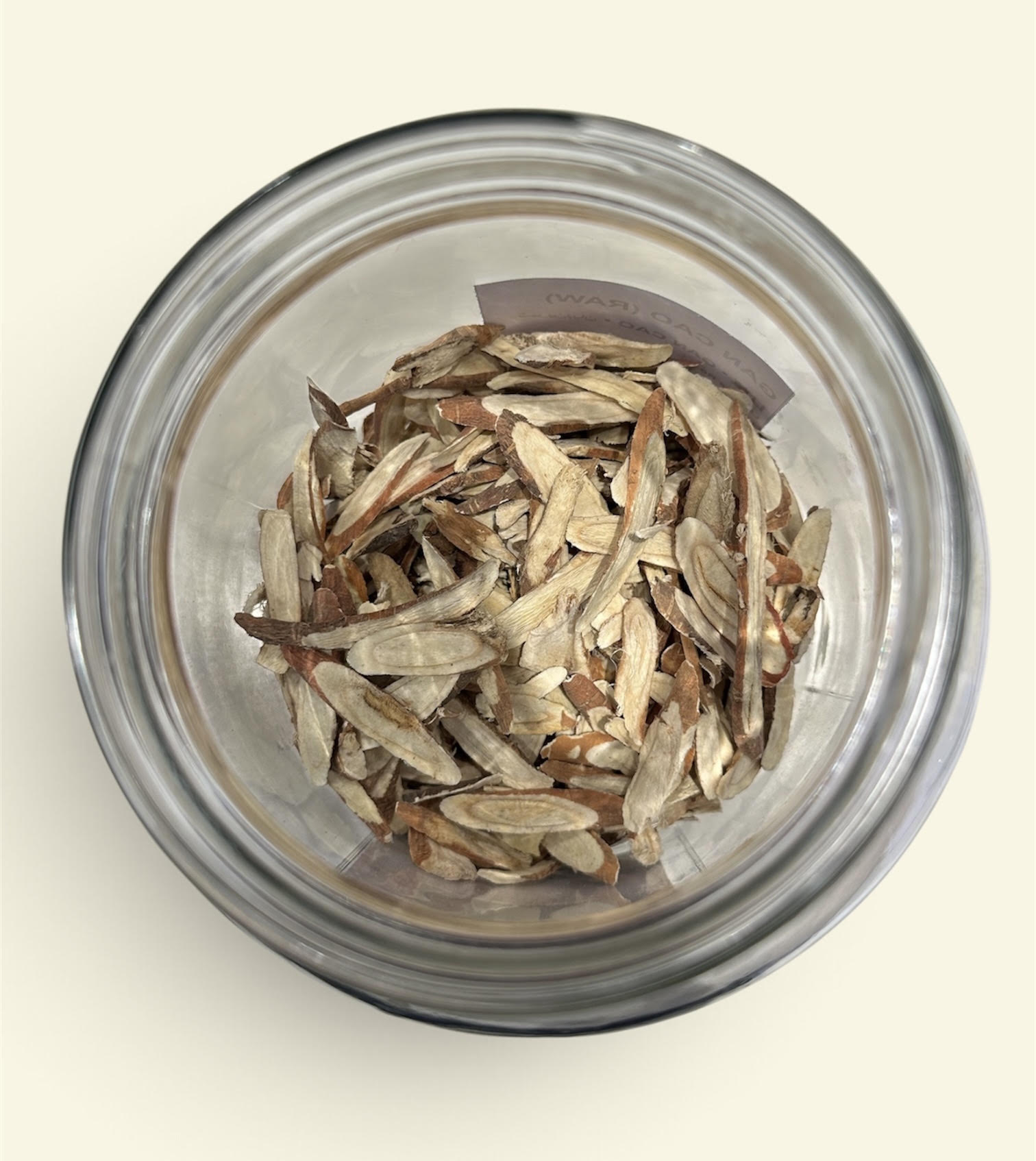
Description:
Gan Cao (Raw) (Glycyrrhiza uralensis) is a traditional Chinese herbal medicine prepared from the dried root and rhizome of Glycyrrhiza uralensis Fisch., a plant in the Fabaceae family. It is commonly known as Gan Cao, Raw Licorice Root, Licorice Root, Chinese Licorice, Sweet Root, Gan Zao, Glycyrrhiza Root, Glycyrrhizae Radix et Rhizoma, and Radix Glycyrrhizae. In Traditional Chinese Medicine (TCM), Gan Cao is traditionally valued for its ability to tonify Qi, relieve spasms and pain, moderate and harmonize the properties of other herbs, and clear Heat and relieve cough according to traditional TCM principles.
Gan Cao is traditionally considered an important herb for patterns involving Spleen and Stomach Qi deficiency, cough, sore throat, spasms, and disharmony between other herbs in a traditional formula. It is traditionally associated primarily with the Heart, Lung, Spleen, and Stomach meridians and is commonly included in formulas intended to support Qi, harmonize herbal combinations, soothe the throat, and support comfortable digestion.
Gan Cao is traditionally used to tonify and support Qi. In TCM, it may be selected in traditional formulas for weakness, fatigue, reduced appetite, and other symptoms associated with traditional Spleen and Stomach Qi deficiency patterns.
Gan Cao is also traditionally used to relieve spasms and pain. It may be included in traditional formulas for muscle spasms, abdominal discomfort, and other symptoms associated with traditional Qi and Blood disharmony.
Gan Cao is traditionally used to support respiratory comfort and soothe the throat. It may be included in traditional formulas for cough, throat discomfort, and other respiratory symptoms according to traditional TCM pattern differentiation.
Gan Cao is also traditionally valued for harmonizing and moderating other herbs in a formula. It is one of the most frequently used herbs in traditional Chinese medicine and is commonly combined with other TCM ingredients according to the individual’s traditional pattern, constitution, and specific symptoms.
Benefits:
- Traditionally used to tonify and support Qi according to Traditional Chinese Medicine principles
- Traditionally used to support Spleen and Stomach Qi
- Traditionally used to harmonize and moderate the properties of other TCM herbs
- Traditionally used to support comfortable digestion
- Traditionally used to relieve occasional muscle spasms and discomfort
- Traditionally used to support comfortable abdominal function
- Traditionally used to soothe the throat
- Traditionally used to support healthy respiratory function
- Traditionally used to relieve cough according to traditional TCM principles
- Traditionally used to clear Heat according to traditional TCM principles
- Traditionally used to support comfortable muscle function
- Traditionally used to support overall vitality associated with traditional Qi deficiency patterns
- Provides naturally occurring glycyrrhizin and glycyrrhetinic acid
- Provides naturally occurring flavonoids and saponins
- Provides naturally occurring polysaccharides and other phytochemicals
- Contains naturally occurring antioxidant compounds investigated in modern scientific research
- Traditionally used as a harmonizing ingredient in classical TCM herbal formulas
- Traditionally used to support overall wellness according to TCM principles
Other Names:
Gan Cao, Gan Cao (甘草), Gan Zao, Raw Gan Cao, Raw Licorice Root, Licorice Root, Chinese Licorice, Licorice, Liquorice, Sweet Root, Glycyrrhiza Root, Glycyrrhizae Radix et Rhizoma, Radix Glycyrrhizae, Glycyrrhiza uralensis Fisch., Glycyrrhiza glabra L., Glycyrrhiza inflata Batalin, and Licorice Rhizome.
Persian names: شیرین بیان (Shirin Bayan), ریشه شیرین بیان (Licorice Root), و گیاه شیرین بیان (Licorice Plant).
Indian names: यष्टिमधु (Yashtimadhu), मुलेठी (Mulethi), ज्येष्ठमधु (Jyeshthamadh / Jeshtamadhu), यष्टि (Yashti), मधुका (Madhuka), and अतिमधुरम् (Atimadhuram).
Traditional Uses:
In Traditional Chinese Medicine, Gan Cao is traditionally used to tonify and support Qi, particularly in patterns involving Spleen and Stomach Qi deficiency. It may be included in traditional formulas for weakness, fatigue, reduced appetite, and other symptoms associated with traditional Qi deficiency patterns.
Gan Cao is traditionally used to relieve spasms and pain. It may be included in traditional formulas for abdominal discomfort, muscle spasms, cramps, and other symptoms associated with traditional Qi and Blood disharmony.
Gan Cao is traditionally used to support respiratory comfort and soothe the throat. It may be included in traditional formulas for cough, throat discomfort, hoarseness, and other symptoms associated with traditional Lung patterns.
Gan Cao is also traditionally used to clear Heat and relieve toxicity according to traditional TCM principles. It may be included in traditional formulas for sore throat, mouth discomfort, and other Heat-related patterns.
One of the distinctive traditional functions of Gan Cao is its ability to harmonize and moderate other herbs in a formula. It is therefore commonly included in multi-herb TCM formulas to coordinate the properties of other ingredients.
Traditionally, Raw Gan Cao is generally selected according to the individual’s TCM pattern, constitution, symptoms, and the other herbs included in the formula.
Side Effects:
Gan Cao is generally well tolerated when used appropriately and for short periods, but excessive intake or prolonged use of licorice containing glycyrrhizin can cause clinically significant adverse effects.
Glycyrrhizin and its metabolite glycyrrhetinic acid can produce effects similar to excessive mineralocorticoid activity. This may result in sodium and water retention, increased blood pressure, decreased potassium levels, swelling, weakness, and abnormal heart rhythms. In severe cases, serious cardiovascular complications can occur.
Individuals who consume large amounts of licorice or use concentrated preparations for prolonged periods may be at greater risk of adverse effects.
Gastrointestinal discomfort, headache, fluid retention, or other unwanted symptoms may also occur.
Allergic reactions are possible in sensitive individuals.
Discontinue use and consult a healthcare practitioner if unwanted or persistent symptoms occur.
Precautions:
Consult a healthcare practitioner prior to use if you are taking prescription medications or other natural health products, or if you have a medical condition.
Do not use without professional guidance if you have high blood pressure, low potassium levels, heart disease, kidney disease, or liver disease. Canadian licensed natural health products containing licorice identify high blood pressure, hypokalemia, and kidney or cardiovascular disorders among contraindications for certain licorice preparations.
Consult a qualified healthcare practitioner before use if you are taking diuretics, corticosteroids, cardiac glycosides, stimulant laxatives, or medications that can affect potassium or electrolyte balance.
Do not use during pregnancy or breastfeeding unless directed by a qualified healthcare practitioner or Traditional Chinese Medicine practitioner. Canadian licensed licorice products include pregnancy and breastfeeding contraindications.
Individuals with diabetes or those taking glucose-lowering medications should consult a healthcare practitioner before use.
Consult a healthcare practitioner before use if you have a serious or major medical condition.
Discontinue use and consult a healthcare practitioner if symptoms persist or worsen or if new symptoms develop.
Interactions:
Consult a healthcare practitioner before using Gan Cao with prescription medications or other natural health products.
Diuretics: Licorice can contribute to potassium loss and fluid retention and may interfere with the effects or safety of diuretic medications.
Corticosteroids: Interactions between licorice and corticosteroids have been reported. Licorice may influence corticosteroid-related effects and electrolyte balance.
Cardiac glycosides, including digoxin: Licorice-associated potassium depletion may increase the risk of adverse cardiac effects in susceptible individuals. Professional guidance is appropriate when combining licorice with cardiac glycosides.
Antihypertensive medications: Licorice may increase blood pressure in some individuals and may therefore interfere with blood-pressure management.
Potassium-depleting medications: Combining licorice with medications or products that lower potassium may increase the risk of hypokalemia.
Stimulant laxatives: Combined use may increase the risk of electrolyte imbalance, particularly potassium depletion.
Blood-sugar medications: Licorice may affect glucose metabolism, so individuals taking glucose-lowering medications should seek professional guidance.
Individuals taking multiple medications or combining Gan Cao with concentrated herbal extracts should consult a qualified healthcare practitioner before use.
Dosing:
Use according to the product label or as directed by a qualified healthcare practitioner or Traditional Chinese Medicine practitioner.
Traditional Chinese Medicine references commonly describe Gan Cao in an approximate range of 1.5–9 g when used as a dried herb or decoction, although the appropriate amount depends on the preparation, formula, individual constitution, and clinical circumstances.
Because Gan Cao contains glycyrrhizin, the appropriate amount and duration of use should be determined carefully, particularly when used regularly or in concentrated preparations.
For a 50 g bulk-herb product, the package quantity should not be interpreted as a recommended daily dose.
Storage:
Store in a cool, dry place away from direct sunlight. Keep tightly closed and out of reach of children.
Protect dried Gan Cao from moisture, humidity, insects, and excessive heat. Discard if there are signs of mold, unusual odor, insect contamination, or spoilage.
Preparation:
If using dried Raw Gan Cao, prepare according to the directions provided by your Traditional Chinese Medicine practitioner or product instructions.
Traditionally, Gan Cao is prepared as a decoction by simmering the dried root and rhizome with water. It is frequently combined with other herbs in classical TCM formulas according to the individual’s traditional pattern and intended use.
Gan Cao may also be prepared with other herbs to create traditional TCM formulas. Raw Gan Cao should not be confused with Zhi Gan Cao (炙甘草), which is a processed form traditionally prepared with honey.
Scientific Support:
Gan Cao is primarily derived from species of the Glycyrrhiza genus, including Glycyrrhiza uralensis, Glycyrrhiza glabra, and Glycyrrhiza inflata. In Traditional Chinese Medicine, Glycyrrhiza uralensis is one of the principal botanical sources of Gan Cao.
Licorice root contains numerous naturally occurring compounds, including triterpenoid saponins, flavonoids, polysaccharides, coumarins, and other phytochemicals. Glycyrrhizin is one of the principal characteristic constituents of licorice and is metabolized to glycyrrhetinic acid in the body.
Modern research has investigated Glycyrrhiza species and their constituents for potential anti-inflammatory, antioxidant, antimicrobial, gastrointestinal, respiratory, metabolic, and other biological activities. These findings provide scientific interest in licorice but do not establish that whole dried Raw Gan Cao is effective for treating specific medical conditions in humans.
Research has also investigated Gan Cao’s potential effects on the absorption, metabolism, and transport of other compounds. A pharmacokinetic review describes interactions between Gan Cao constituents and drug-metabolizing enzymes and transporters, supporting the importance of considering possible herb-drug interactions when it is used with medications.
Modern clinical and safety research has established that excessive or prolonged exposure to glycyrrhizin can cause hypertension, hypokalemia, fluid retention, and potentially serious cardiovascular effects. A 2026 updated review describes licorice-induced pseudohyperaldosteronism as an important adverse effect associated with Glycyrrhiza uralensis and Glycyrrhiza glabra.
Clinical evidence for Raw Gan Cao varies according to the preparation, species, dose, duration, and health condition studied. Evidence from concentrated extracts or isolated compounds should not automatically be applied to a 50 g whole-herb product. Additional high-quality human clinical studies are needed to establish specific therapeutic applications, effectiveness, safety, and dosing.
References & Scientific Support:
PubMed – A Review of the Pharmacological Efficacy and Safety of Licorice Root from Corroborative Clinical Trial Findings. This review examines clinical trial findings concerning the pharmacological effects and safety of licorice root, including its potential anti-inflammatory, antioxidant, anti-allergic, and antimicrobial properties, while highlighting the risks associated with chronic exposure to glycyrrhizin, including hypokalemia and hypertension. View Research.
PubMed – Liquorice Toxicity: A Comprehensive Narrative Review. This comprehensive narrative review examines the toxicological effects of liquorice, including glycyrrhizin-related mineralocorticoid effects, hypertension, hypokalemia, fluid retention, cardiovascular complications, and factors that may influence individual susceptibility to liquorice toxicity. View Research.
Health Canada – Licensed Natural Health Products Database. This Health Canada licensing record provides Canadian regulatory information for a licensed natural health product containing licorice and identifies relevant product-specific medicinal ingredients, recommended uses, directions, warnings, precautions, and other safety information applicable to licorice-containing natural health products. View Health Canada Reference.


